What Federal Exhaust and Emission Limits Apply to Boat Engines?
Federal regulations establish strict boundaries for the exhaust output of new marine propulsion engines to protect air quality and public health. The primary standard governing this area is found in 40 CFR Part 1045, which sets specific limits for carbon monoxide (CO) emissions. For conventional sterndrive and inboard gasoline engines, the federal limit is set at 75.0 g/kW-hr. This threshold ensures that new engines entering the market do not exceed permissible levels of toxic exhaust gases during operation.
These limits apply specifically to spark-ignition engines used for propulsion. Manufacturers must ensure their designs meet these standards before the engine can be sold or installed on a vessel. The regulation focuses on the exhaust system’s ability to manage combustion byproducts effectively. While the specific numerical limit is a fixed federal standard, the practical implication for boat owners is that newer engines are required to be cleaner than older models that predate these stricter guidelines.
It is important to distinguish between exhaust emission limits and other environmental rules. The CO limit in 40 CFR Part 1045 addresses airborne pollutants from the exhaust pipe. It does not cover liquid discharges, noise levels, or the physical labeling requirements for compliance, which are handled under separate regulatory frameworks. Understanding this distinction helps boaters identify which federal rules apply to their specific maintenance and operational practices.
The following table summarizes the key federal and state regulatory standards governing marine exhaust emissions, noise levels, and discharge restrictions.
| Regulation / Standard | Authority / Source | Requirement / Limit |
|---|---|---|
| Oil/Hazardous Substance Discharge | Clean Water Act Section 311 (33 U.S.C. § 1321); 40 CFR Part 110 | Prohibits discharge causing visible film, sheen, or discoloration on navigable waters. |
| Discharge Notification | 33 CFR § 153.203 | Mandates immediate notification of the USCG National Response Center for any discharge creating an oil sheen or hazardous residue. |
| CO Exhaust Emissions (Gasoline) | EPA 40 CFR Part 1045 (§ 1045.105) | Federal limit of 75.0 g/kW-hr for conventional sterndrive and inboard gasoline marine engines. |
| Emissions Labeling | EPA 40 CFR Part 1045 | Requires a permanent, legible manufacturer emissions compliance label on all new spark-ignition marine propulsion engines. |
| Engine Compartment Ventilation | USCG 33 CFR Part 183 Subpart K (§ 183.610) | Mandates powered mechanical ventilation blowers for enclosed engine compartments on gasoline-powered boats. |
| Stationary Noise (Post-1993 Engines) | NASBLA Model Legislation / State Marine Patrol | Maximum 88 dB(A) for engines built on or after January 1, 1993 (SAE J2005 protocol). |
| Stationary Noise (Pre-1993 Engines) | NASBLA Model Legislation / State Marine Patrol | Maximum 90 dB(A) for engines built before January 1, 1993 (SAE J2005 protocol). |
| Shoreline Pass-by Noise | SAE J1970 | Maximum 75 dB(A) measured from shore. |
| Muffler/Exhaust System | Federal and State Navigation Statutes | Requires effective underwater exhaust or muffler system; prohibits un-muffled bypasses or exhaust cutouts. |
| California Emission Tiers | California Air Resources Board (CARB) | One-Star (~75% lower than pre-1998 two-stroke), Two-Star (~20% lower than One-Star), Three-Star (~65% lower than EPA 2006 baseline). |
| No-Discharge Zones (NDZs) | EPA and USCG Clean Water Act (33 U.S.C. § 1322) | Prohibits discharge of any sewage or treated wastewater; MSDs must be secured against discharge. |
Why Does the Clean Water Act Prohibit Oil Sheens and Bilge Discharges?
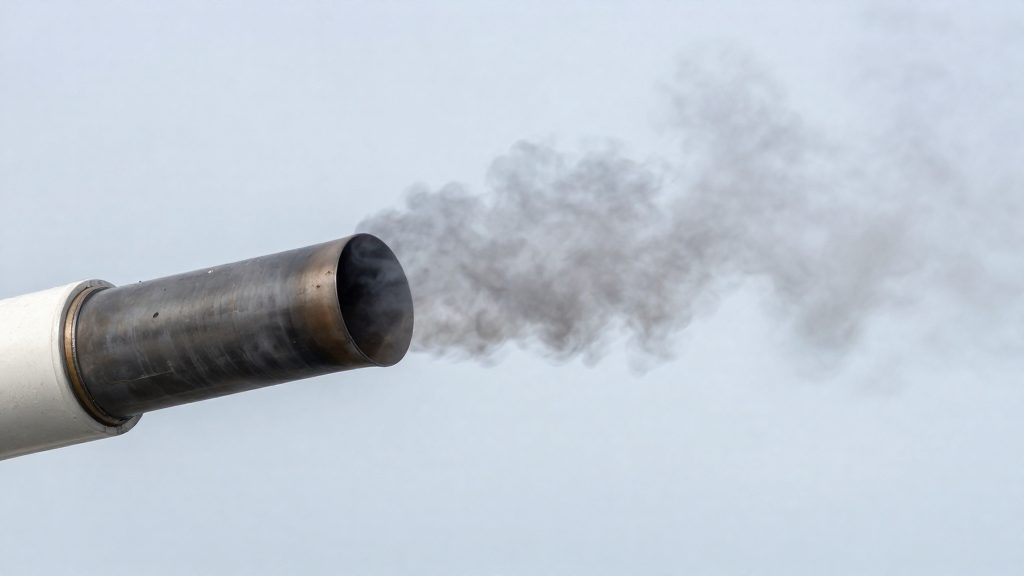
The legal framework governing recreational boating in the United States is strict regarding water quality. Under Clean Water Act Section 311 (33 U.S.C. § 1321), it is illegal to discharge oil or hazardous substances that result in a visible film, sheen, or discoloration on the surface of navigable waters or contiguous zones. This prohibition extends to bilge water containing fuel residues or hydraulic fluids, even if the discharge appears minor. The intent is to prevent the accumulation of pollutants that harm aquatic ecosystems and water usability.
Compliance is not merely about avoiding visible spills; it involves adhering to specific federal regulations. 40 CFR Part 110 outlines the standards for reporting and responding to oil spills. Crucially, 33 CFR § 153.203 mandates that any person in charge of a vessel must immediately notify the USCG National Response Center upon any discharge that creates an oil sheen or leaves hazardous residue. Failure to report is a separate violation that can compound penalties for the initial discharge.
Boaters must understand that “small” amounts do not exempt them from liability. If a discharge causes any visible alteration to the water’s surface, the legal obligation to report is triggered. This applies regardless of whether the substance is gasoline, diesel, or lubricating oil. The regulatory focus is on the visible impact on the water body, making routine maintenance and proper waste containment essential for legal compliance.
How Are Boat Exhaust Sound Levels and Mufflers Regulated by Law?
Regulatory frameworks for recreational boating distinguish between stationary and moving noise to ensure compliance with acoustic decibel thresholds. For vessels equipped with internal combustion engines, federal and state navigation statutes mandate the installation of an effective underwater exhaust or muffler system. This requirement explicitly prohibits the use of un-muffled bypasses or exhaust cutouts on public waterways, ensuring that sound attenuation is maintained during operation.
Enforcement of noise levels relies on specific testing protocols established by the Society of Automotive Engineers. When a boat is stationary, authorities measure exhaust noise using SAE J2005 standards. Under model legislation adopted by state marine patrols, engines built on or after January 1, 1993, must not exceed a maximum of 88 dB(A). For older vessels with pre-1993 engines, the allowable limit is slightly higher at 90 dB(A). These stationary limits help identify non-compliant modifications or failing muffler components while the vessel is docked or idling.
In contrast, noise generated while the boat is in motion is governed by different criteria. Shoreline pass-by noise limits, defined under SAE J1970, cap recreational boat exhaust sound at 75 dB(A) when measured from the shore. This distinction ensures that operators are held accountable for both idle noise and the acoustic impact of moving vessels on coastal communities.
EPA Engine Certification and Mandatory Cowling Labels
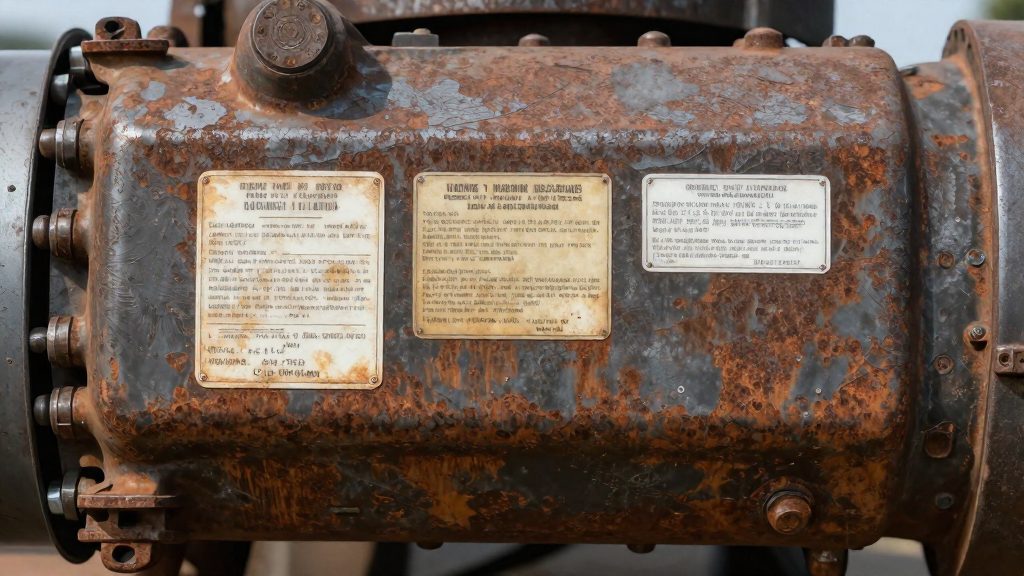
When purchasing a new marine propulsion engine, verifying federal emissions compliance is a fundamental step in ensuring legal operation and environmental responsibility. Under EPA 40 CFR Part 1045, all new spark-ignition marine engines are required to display a permanent, legible manufacturer emissions compliance label. This physical marking serves as the primary proof that the engine meets current federal regulations regarding exhaust emissions.
The label must be affixed in a location that remains visible and readable throughout the engine’s service life. It typically specifies the engine model, serial number, and the specific federal emission standard with which the unit complies. For conventional sterndrive and inboard gasoline engines, this certification confirms adherence to established carbon monoxide limits. Buyers and operators should inspect this label before installation to confirm the engine is certified for the intended use.
It is important to distinguish this federal certification label from other markings, such as state-specific hang-tags or noise compliance stickers. While state agencies like the California Air Resources Board may require additional tier-based labels indicating lower emission levels, the federal label remains the baseline requirement for all new engines sold in the United States. Ensuring this label is intact and legible is not just a regulatory formality; it is a critical component of maintaining a compliant vessel. If a label is missing, damaged, or illegible, the engine may be considered non-compliant, potentially affecting resale value and legal standing during inspections.
Ventilation Standards and Onboard Carbon Monoxide Safety Rules
Federal safety regulations, specifically 33 CFR Part 183 Subpart K, establish strict requirements for gasoline-powered vessels with enclosed engine compartments. These rules are designed to mitigate the risks of fire, explosion, and toxic gas accumulation before the engine is started. The core mandate involves the installation of powered mechanical ventilation blowers. These systems are not optional accessories; they are mandatory equipment that must be operational to ensure the safe removal of hazardous fumes.
The primary function of this ventilation system is to purge the engine compartment of toxic exhaust vapors and explosive fuel gases. Under 33 CFR § 183.610, compartments with a permanently installed gasoline engine with a cranking motor must be open to the atmosphere or ventilated by a powered exhaust blower system. Before starting the engine, the blower must run for a sufficient duration to clear the compartment. This procedure is critical because gasoline vapors are heavier than air and can settle in low-lying areas of the engine bay, creating an explosive atmosphere. Additionally, carbon monoxide, a colorless and odorless gas produced by internal combustion engines, can accumulate in enclosed spaces. Without adequate mechanical ventilation, this gas poses a severe health hazard to anyone entering the compartment.
Operators must verify that the ventilation system is functioning correctly before each launch. This includes checking that the blower switches are accessible and that the airflow is directed appropriately to exhaust the compartment. The regulation requires a warning label near each ignition switch mandating that operators run the blower for 4 minutes before starting the engine to purge heavier-than-air explosive gasoline vapors from the bilge. Failure to comply with these ventilation standards can result in regulatory penalties and, more importantly, catastrophic safety incidents.
Regional Restrictions and Waterway No-Discharge Zones
While federal laws set baseline standards, state-level enforcement and specific geographic zones often impose stricter operational limits. The National Association of State Boating Law Administrators (NASBLA) provides model legislation that many states adopt, creating a patchwork of local rules. State marine patrols actively enforce these regulations, focusing heavily on noise control and discharge prohibitions.
Noise restrictions are a primary area of state intervention. Under NASBLA guidelines, stationary boat exhaust noise is capped at specific decibel levels, with stricter limits for newer engines compared to older models. Additionally, shoreline pass-by noise limits apply when boats are moving near the coast, ensuring that recreational activity does not disturb adjacent communities. Boaters must be aware that these limits are enforced through specific testing protocols, and violations can result in fines or impoundment.
Beyond noise, No-Discharge Zones (NDZs) are critical geographic restrictions. In designated NDZs, the discharge of any sewage or treated wastewater is strictly prohibited. This means that even if a boat is equipped with a marine sanitation device (MSD), it must be secured against discharge while operating within these boundaries. Boaters must consult local charts and navigation aids to identify NDZ boundaries before entering protected waters. Failure to comply with NDZ regulations is a significant environmental violation, distinct from general federal discharge rules.
Frequently asked questions
What are the federal limits for carbon monoxide emissions from boat engines?
New spark-ignition marine engines must comply with 40 CFR Part 1045, which sets a specific carbon monoxide limit of 75.0 g/kW-hr for conventional sterndrive and inboard gasoline units. This standard ensures that new propulsion systems do not exceed permissible levels of toxic exhaust gases during operation.
How is boat exhaust noise regulated on public waterways?
State marine patrols enforce noise restrictions based on engine age, typically capping stationary exhaust sound at 88 dB(A) for engines built after 1993 and 90 dB(A) for older models. Additionally, shoreline pass-by measurements are limited to 75 dB(A) under SAE J1970 standards to minimize disturbance to coastal areas.
Are there rules regarding the physical exhaust system and oil discharge?
Federal and state statutes require all recreational powerboats to have an effective underwater exhaust or muffler system, prohibiting un-muffled bypasses or cutouts. Furthermore, discharging oil that creates a visible sheen on navigable waters is illegal under the Clean Water Act and requires immediate notification to the U.S. Coast Guard.