To shrink wrap a boat for winter storage, you cover the hull and superstructure with polyethylene film, then heat it with a propane shrink-wrap tool so the film tightens into a weatherproof skin. The method works only when three conditions are met: the boat is clean, dry and winterized before wrapping; a rigid frame gives the film a steep ridge so snow and rain run off; and vents on both sides let moisture escape. The film thickness, usually 6-mil or 7-mil, should match the boat’s size and the exposure of the storage site. The official sources consulted do not specify shrink-wrap rules for Canadian winters, so the steps below rely on marine installation guidance and on the general safety rules for heat tools and boat ventilation.
Why shrink-wrap, and when is it the right choice?
A wrapped boat is sealed on all sides, which keeps wind-driven snow and rain out of the open areas that a loose cover often exposes. When the frame is built correctly, the film sheds water and snow quickly, and it protects the hull, the upholstery and the electronics from the worst of the weather. The trade-off is labour and cost, and the wrap must be removed and disposed of properly each spring.
Shrink-wrapping makes most sense for a boat stored outdoors on a trailer, stands or a cradle in a yard that gets heavy snow. A boat kept in heated indoor storage usually does not need it. Before you commit, check the rules of your marina, storage yard and insurer, because some of them set requirements for how a boat must be covered or ventilated.
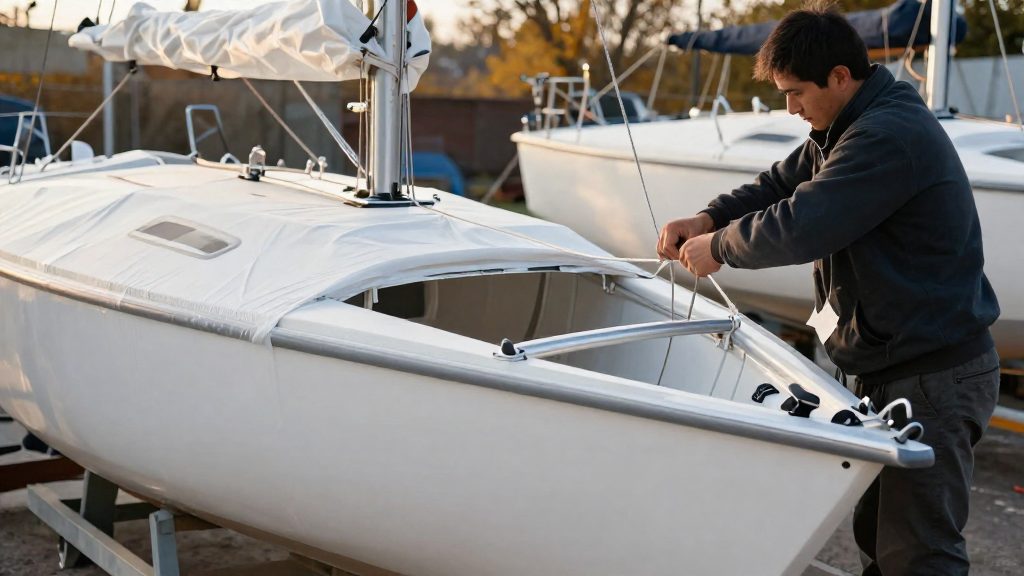
How do you prepare the boat before wrapping?
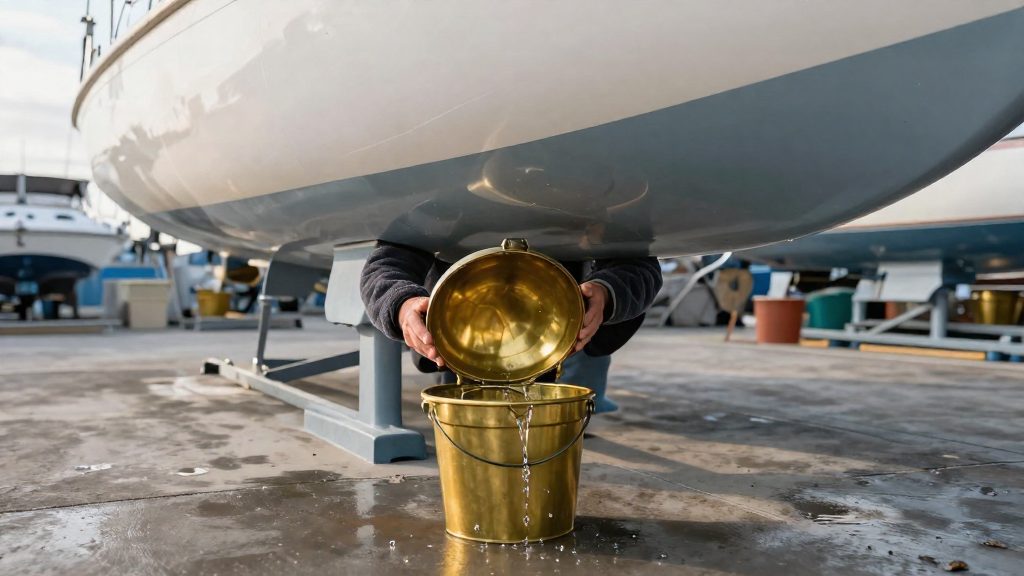
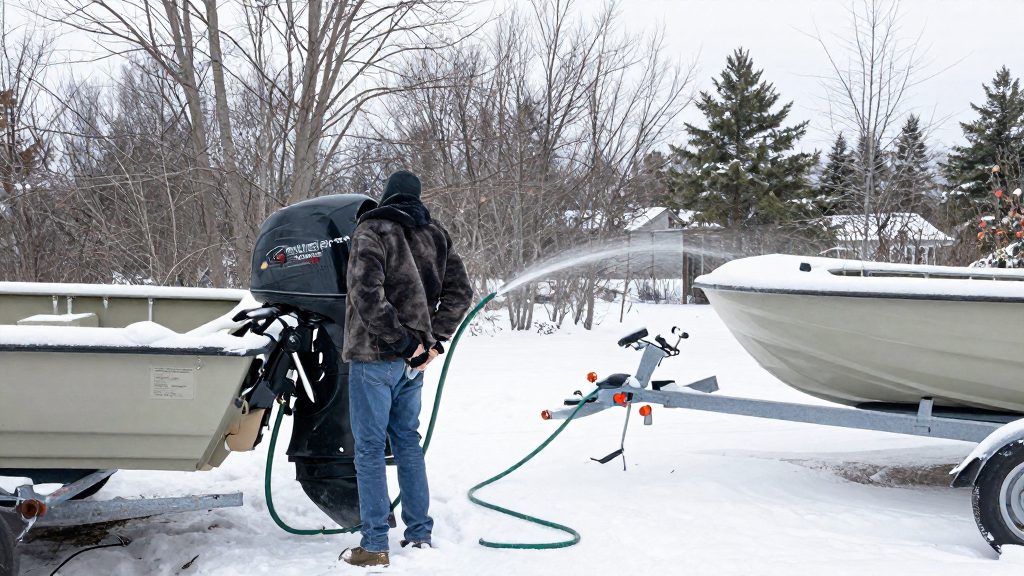
Winterize the engine, fuel system, cooling system and fresh-water system first, following the manufacturer’s manual for each component. Wrapping a boat that is not winterized protects nothing that matters: any water left in the engine or plumbing can freeze and crack parts, and the film will hide the damage until spring. Tape over the fuel vents before wrapping so the tank can still breathe, a step recommended by a marine supplier’s installation guide (2026).
Next, wash the boat and let it dry completely. Remove food, bait, trash, valuables and loose fabrics, and open the lockers so they can dry out. Lower antennas and other projections where possible, and secure doors, hatches and the steering wheel. Pad sharp edges such as windshield corners, cleats and rail ends with foam so they cannot cut or puncture the film. Confirm that the hull is well supported and that the trailer or stands are stable, because the wrapped boat will carry the added weight of snow.
Keep the wrap off the ground. Film that touches soil or wet gravel collects moisture and abrades easily, so lift the boat or raise the bottom edge of the film clear of the ground.
How do you measure the boat and choose the film?
Measure after the boat is in its winter position and removable accessories are stowed. Measure the overall length, including components that will stay under the wrap. For the width, run the measurement from the lowest point on one side, over the highest point of the planned frame, to the lowest point on the other side. Add extra length for the perimeter band and for the pleats at the bow and stern. Do not size the film from the advertised length or beam of the boat; use the sizing chart published by the film manufacturer, because the actual wrap dimensions depend on the frame and the shape of the hull.
Film thickness is measured in mil, and the choice depends on the boat and the site. A 6-mil film is generally suitable for smaller recreational boats in typical seasonal conditions, and it is lighter and easier for a first-time installer to handle. A 7-mil film adds strength for larger boats, more exposed storage and areas with heavier snow or harsher winters. A thicker film cannot compensate for a weak or low frame, so the frame deserves as much attention as the film.
How do you build a frame that sheds snow?
The frame is what keeps the film off the boat and lets water and snow run off. Set vertical posts along the centreline of the boat and connect them with tightly tensioned straps running fore and aft. The ridge must be high enough to give a steep, consistent slope to both sides, but not so high that the posts become unstable. A flat or uneven ridge lets snow and meltwater collect on the film, and the weight can tear it or stretch it at the seams.
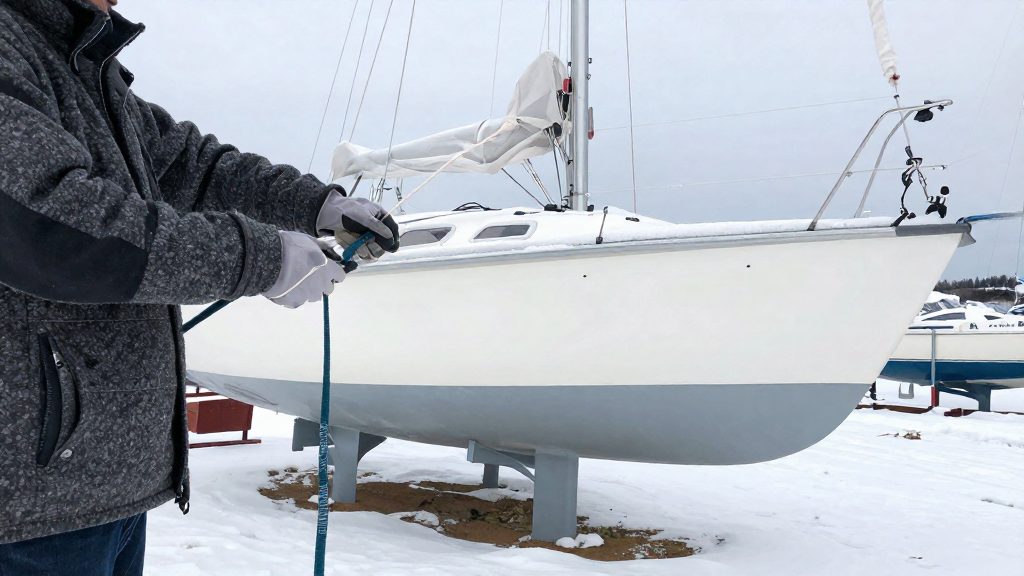
Brace the centreline with straps running down to strong points on the boat or the trailer, so that wind cannot push the frame out of shape. Cap or pad the end of every post so that it cannot press through the film, and keep the straps snug enough that the film does not flap in the wind. Check the frame before you drape the film over it; any loose post or slack strap will show up as a weak point once the film is heated.
How do you apply and shrink the film safely?
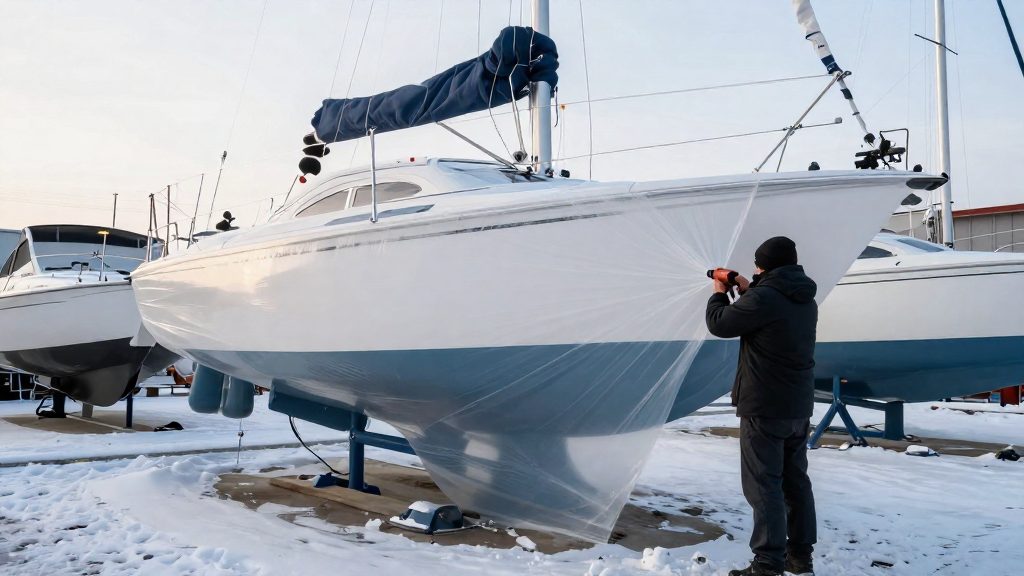
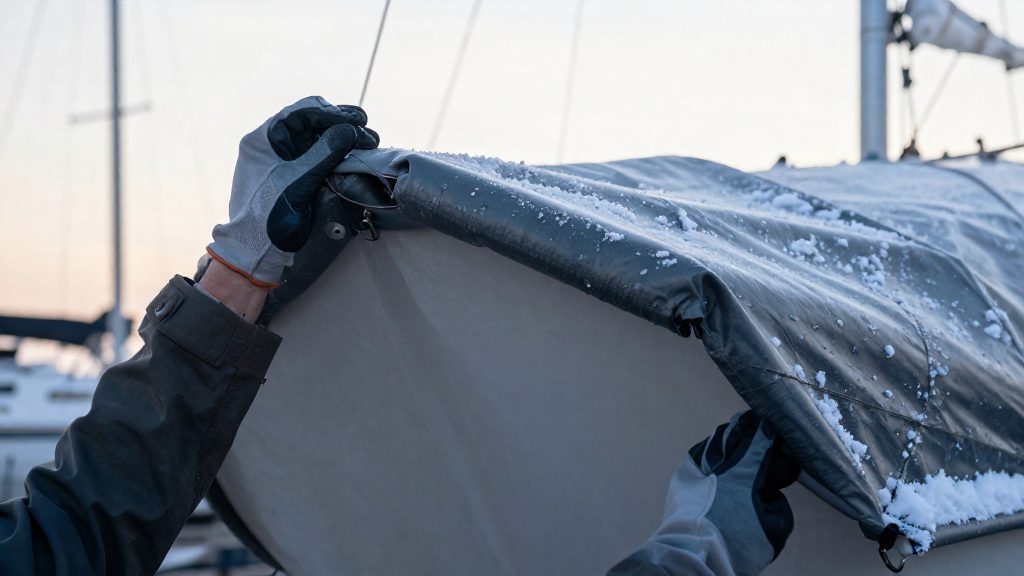
Drape the film over the frame and tuck the bottom edge under the perimeter band. Form pleats at the bow, the stern and other shape changes, and tape the seams where the installation guide directs. Then heat the folded bottom edge in small sections so that the layers fuse without burning through. Shrink the sides next, starting near the bottom of one side and working upward with smooth, sweeping passes. Continue around the boat in sections, and finish the top only after the sides are complete, so that the surface stays smooth and the ridge keeps its pitch. Once the film has cooled, inspect it for pinholes, cuts, thin spots, loose pleats and gaps.
The heat tool needs more care than the film itself. Use a propane-fired shrink-wrap tool designed for the job. An ordinary torch or a small electric heat gun does not give the controlled, even heat the film needs, and it increases the risk of scorching or melting. Read the instructions for both the film and the tool before you start. Work outdoors in a clear area, away from combustibles, and never work in wind. Wear heat-resistant gloves, safety glasses, long sleeves, long trousers and closed-toe footwear. Keep a fully charged fire extinguisher within immediate reach, and keep the heat moving so that it never concentrates on one spot.
Do not work beneath the cover, and never aim heat into an enclosed space. Keep the flame and the hot tool away from the propane hose, fuel-system components, upholstery, padding and paint. If a wrinkle will not release, let the area cool and reassess rather than concentrating heat on it. Provincial guidance on propane cylinders, such as the one published by Technical Safety BC (2021), says cylinders must be stored upright and never indoors, and that they must be inspected and requalified every ten years. Those rules are written for other propane appliances, so treat them as good practice and check the rules in your province.
Where should vents and access go?
Install vents only after the film has been fully shrunk and inspected, because a vent cut into film that is still loose or wrinkled will tear as it tightens. Place the vents on both sides of the boat so that air can move across the interior, and keep them away from spots where rain or melting snow could run in. Do not cluster them in one area. Follow the vent or film manufacturer’s sizing chart to decide how many to install, since the number depends on the boat’s length, its interior volume and the vent design.
Vents matter because a wrap that is too tight traps moisture. Condensation forms when warm, damp air meets the cold film, and it can cause mildew and odours during the winter. Moisture absorbers do not replace vents, and the cover should never be airtight. Add an access door where you will need to reach the interior, and seal it so that it does not admit driving snow.
Ventilation is also a carbon monoxide question. Transport Canada’s guidance on carbon monoxide, published in its guide for small commercial vessels (2010), warns that engines left idling in poorly ventilated areas can create dangerous concentrations of CO, and it advises against heating cabins or cooking unless they are well ventilated. The same guidance recommends a marine-grade CO detector installed according to the manufacturer’s instructions. Those points apply to any enclosed space on a boat, including a wrapped one.
When should you check the wrap through the winter?
Inspect the wrap after each major snowfall and after every windstorm. Look for a sagging ridge, pooled snow, loose straps and posts that have shifted. Remove heavy accumulations from the ridge carefully, from the ground, without standing on the film, because a fall through the frame can tear the wrap and injure you. Clear snow and ice from the vents so that they stay open.
When the weather warms, check the interior for condensation and for signs of water pooling in the hull or the cockpit. Look over the film for holes, tears and loose seams, and patch small holes with tape that is compatible with the film. A hole that is left open in winter lets in moisture and snow and can grow quickly under wind pressure, so repair it as soon as you find it. Keep a record of the checks, since a clear pattern of damage often points to a frame or strap problem that should be fixed before the next season.
Frequently asked questions
Can I leave the shrink wrap on until the boat is launched?
Leaving the film on past the point where it has deteriorated is not a good idea. Remove it in dry, calm weather, once the risk of heavy snow has passed and the boat has had time to dry out. Work from the ground where possible, and have a helper steady any ladder you need.
Can I run a heater or generator inside a wrapped boat to keep it dry?
No. A wrapped boat is not a well-ventilated space, and a fuel-burning heater or generator can produce carbon monoxide that builds up without warning. Transport Canada advises a marine-grade CO detector installed according to the manufacturer’s instructions, and fresh air through the boat at all times.
Can a homeowner shrink-wrap a boat alone?
It depends on the size of the boat, the height of the frame and your experience with a heat tool. Small boats can be done by one experienced person with a helper, but larger boats usually need a crew and a safe working platform. If you are not confident in the steps above, hire an experienced installer.