Winterizing an outboard motor at home means protecting its cooling passages, fuel system, lower unit and powerhead from freezing, corrosion and stale fuel before the boat goes into storage for the cold season. Most of the job is routine: stabilize the fuel, change the oil, flush and protect the cooling system, grease the moving parts and store the motor upright. Work outdoors, follow your owner’s manual for the exact steps, and stop if something looks wrong.
Why does an outboard need winterizing?
Water trapped in the cooling passages can freeze and crack the powerhead, and that damage is rarely cheap to repair. Gasoline left in the tank for months breaks down into varnish and gum that clog the carburetor or fuel injectors. Used engine oil and gear oil carry combustion acids, fuel residue and moisture from the season’s use, and left in the motor over winter those contaminants attack bearings, gears and internal metal. Temperature swings also produce condensation inside an unprotected tank or gearcase, so even a motor kept in a heated garage benefits from the same steps.
When is the right time to winterize?
Schedule the job after the last outing of the season and before the first hard freeze forecast for your area. Do not wait for the first frost. If you cannot finish in one session, prioritize the fuel treatment and the cooling-system protection, since freezing and fuel breakdown cause the most serious damage, and complete the oil and grease work before the motor is put away.
What do you need before you start?
Start with the owner’s manual. If you no longer have it, the manufacturer’s website or an authorized dealer can supply the service manual for your exact model and year. Where the manual’s oil grade, fogging method or antifreeze procedure differs from general advice, the manual wins. Gather a fuel stabilizer labelled for marine engines, fresh gasoline, the engine oil and gear oil the manual specifies, a new oil filter if your motor is a four-stroke, new drain and vent gaskets, flushing muffs with a garden hose, antifreeze made for engine cooling systems, marine grease, a corrosion inhibitor, catch pans, rags and gloves.
Most pump gasoline sold in Canada contains ethanol. Ethanol attracts water, and fuel left for months can separate into layers that stall an engine in spring. Check the manual’s fuel recommendation before you buy, since many engine makers advise ethanol-free fuel for marine use.
Before any work, disconnect the spark plug leads or remove the engine stop lanyard so the motor cannot start by accident. Work in an open, well-ventilated area, never in a closed garage where fuel vapour can settle. Keep a fire extinguisher within reach when handling fuel. Never run the motor out of water: the water pump can be damaged quickly, and an engine without cooling water overheats.
How do you stabilize the fuel and run the engine?
Top up the tank with fresh fuel so there is little empty space for moist air to condense in. Add the stabilizer at the dose printed on its label, then run the engine long enough for the treated fuel to reach the carburetor or fuel injectors. Run it with water supplied through the flushing setup, and shut it down afterwards. A stabilizer keeps fuel from turning gummy in the cold, but it does not clean a fuel system that already contains water or sediment. If the fuel smells sour, looks cloudy or has separated, do not run it. Take it to a hazardous waste depot as described below and start with fresh fuel.
Transport Canada’s Safe Boating Guide (TP 511E) stresses ventilating enclosed spaces and checking for fumes before starting a gasoline engine. Apply the same discipline on a test stand: run the motor outdoors, never in an enclosed space, because exhaust contains carbon monoxide.
How do you change the engine and lower-unit oil?
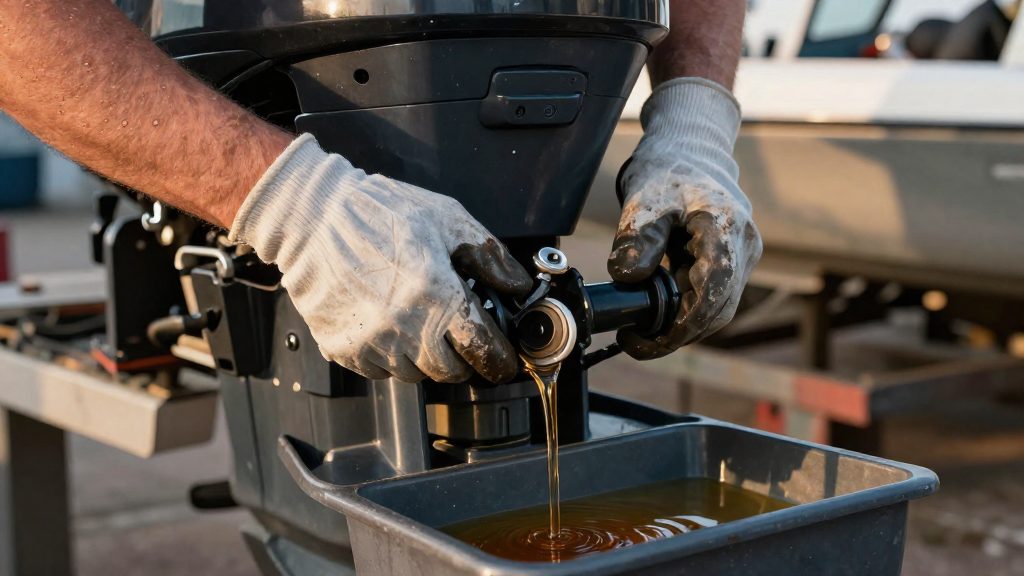
On a four-stroke motor, run the engine briefly so the oil warms and drains more easily, stop it, and drain the crankcase. Fit a new oil filter, then refill with the grade given in the manual and check the level as the manual describes. Summer use leaves contaminants in the oil, so changing it before storage removes them instead of letting them work on the engine all winter.
The lower unit, or gearcase, needs the same care. Drain the oil from the bottom plug first, then remove the vent plug, and inspect the oil that comes out. A milky or creamy look means water has entered past a seal, so do not run the motor until a marine mechanic has inspected it. Glittering metal particles are also a warning sign. Refill with gear oil through the lower port until oil shows at the vent hole, then fit new gaskets and tighten the plugs to the torque in the manual, without over-tightening.
How do you flush and protect the cooling system?
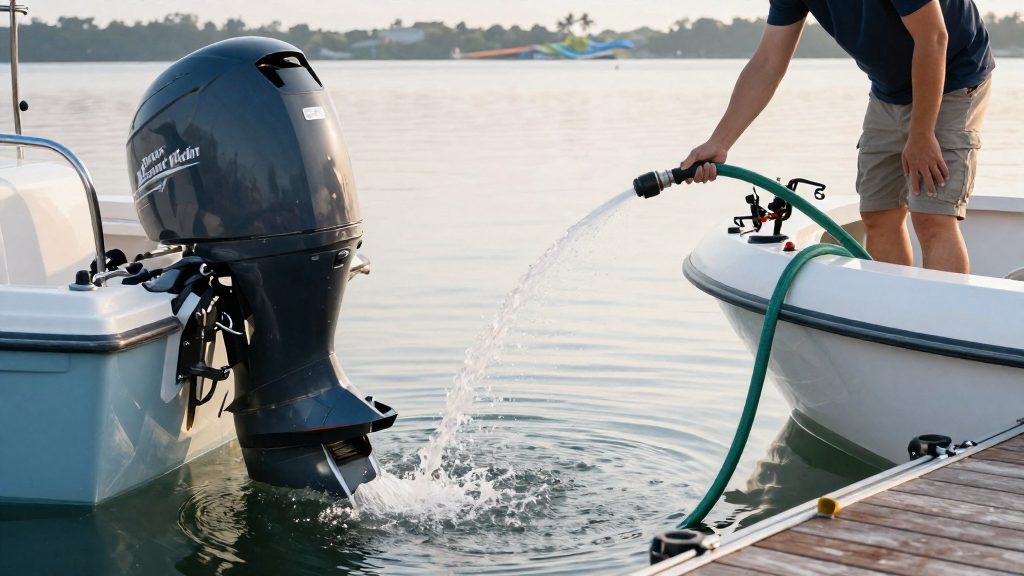
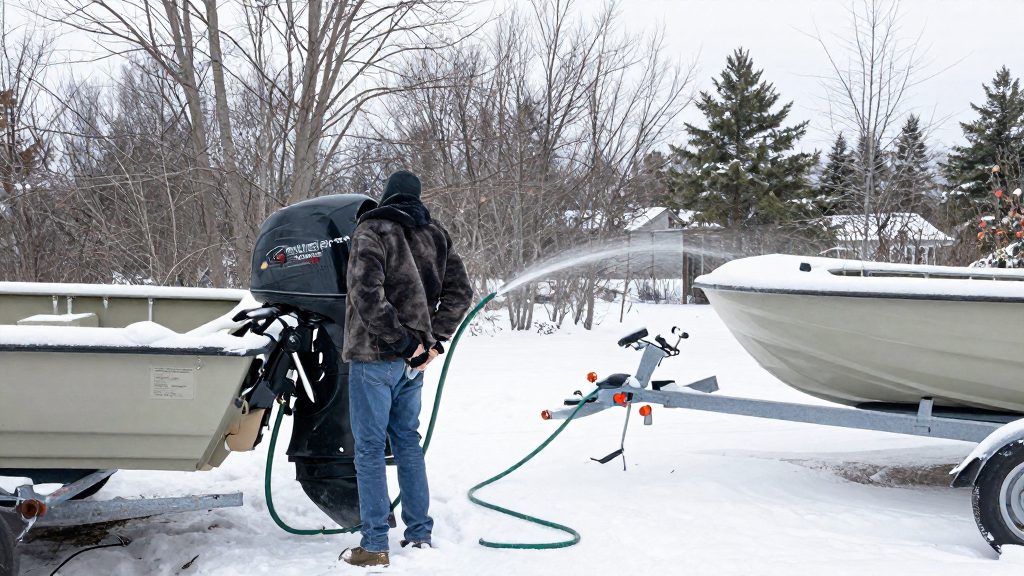
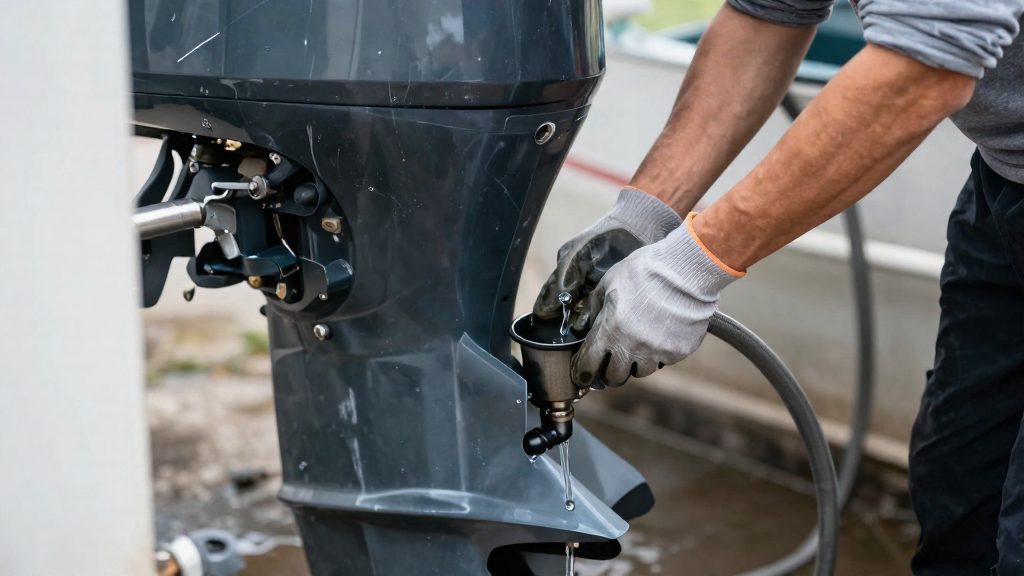
Fit flushing muffs over the water intakes on the lower unit and connect a garden hose with water running. Start the motor in neutral and let it reach normal operating temperature while water flows through, then shut it down. If the manual calls for a winterizing kit, connect it and run the motor briefly until antifreeze appears at the tell-tale outlet, the small stream that shows the cooling passages carry protective fluid. Once it appears, the powerhead is protected. Stop immediately if no coloured fluid comes out, because a blocked passage or a failed kit can leave water inside the engine.
Use only antifreeze made for engine cooling systems, typically propylene glycol-based. Most automotive coolants are ethylene glycol-based and are toxic to people, children and pets, so do not use them in an outboard.
How do you fog, grease and protect the powerhead?
On a carbureted motor, spray fogging oil into the intake while the engine idles, as the manual describes, so a protective film coats the cylinders. Fuel-injected motors use a different method, so follow the service manual rather than spraying into the intake. Grease every fitting at the steering, pivot and tilt points. Spray corrosion inhibitor on the outside of the powerhead and exposed metal, avoiding belts, hoses and electrical connectors.
Fully charge the battery, disconnect it, and store it cool and dry, away from freezing temperatures. Remove the propeller with the spark plug leads still disconnected. Check the shaft for fishing line and debris, since line wrapped around the shaft can damage the seal and let water in, then grease the splines before refitting.
Where should you store the motor over winter?
Store the motor fully trimmed down in the vertical position so any water drains out of the cooling passages instead of collecting and freezing inside. If it stays on a transom or in a cradle, make sure it can be lowered fully and held stable. Choose a cool, dry, ventilated spot away from heaters and open flames. Cover the motor loosely with a breathable cover; a sealed plastic bag traps condensation against the metal.
Old fuel, used oil, oil filters and spent antifreeze must not go down a drain, into a sewer or onto the ground. Environment and Climate Change Canada reports that consumer used oil is collected through municipal household hazardous waste programs, and that used oil filters and containers are handled in the same programs. The City of Calgary, for example, runs drop-off sites for motor oil, empty containers and filters. Check with your municipality for the nearest site, and keep used oil in its original container where possible.
The official sources consulted do not set out a spring procedure, so follow the owner’s manual to return the motor to service. Check that the antifreeze has been removed as the manual directs, look for water in the oil and fuel, and have a qualified marine mechanic inspect the motor if you find water, damage or unexplained noise.
Frequently asked questions
Can I winterize a two-stroke outboard the same way as a four-stroke?
Not exactly. Many two-stroke motors use oil mixed with fuel or a separate oil injection system, so there may be no separate crankcase oil change. Follow the manual for your specific motor, and treat the fuel, cooling and storage steps as the same in principle.
Is it acceptable to leave the motor on the boat over winter?
It can be, if the boat is stored in a way that keeps the motor upright and stable and the motor has been fully prepared. Leaving it mounted does not replace the fuel, oil and cooling steps, and a mounted motor still needs to be protected from water, snow and freezing.
What should I do if I cannot finish winterizing before a freeze arrives?
Prioritize the cooling-system protection and fuel treatment, since those prevent the most serious damage. Do not leave a motor partly drained with its cooling passages open. Complete the remaining steps as soon as possible, and ask a marine dealer or mechanic for advice if the job is not finished before freezing temperatures.
Can I winterize the motor myself if I have never done it before?
Many owners do this with the owner’s manual and careful work. If you cannot confirm the steps, cannot get a clear tell-tale flow, or find water in the oil, a qualified marine mechanic can complete or check the job safely.