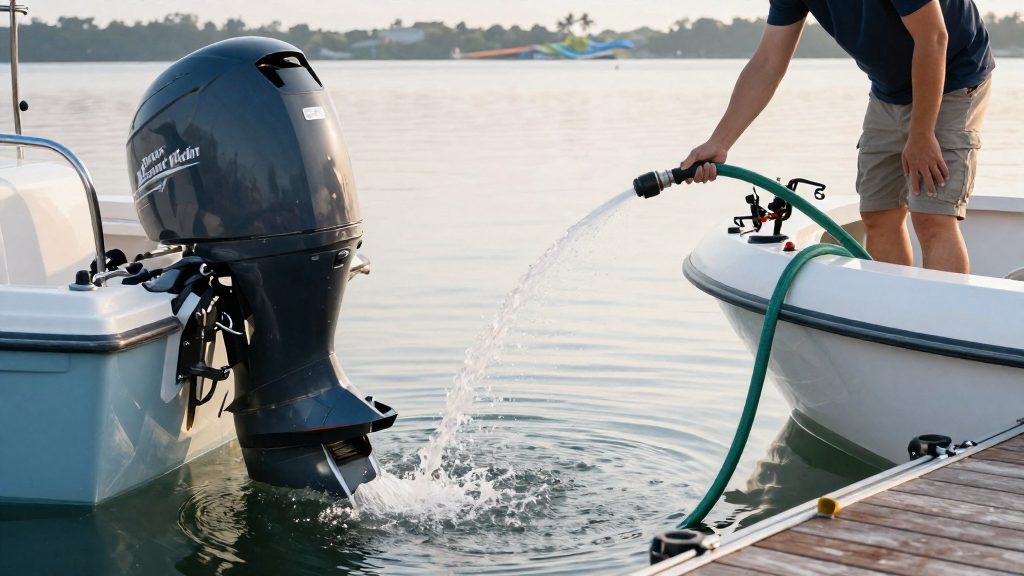
To flush an outboard after saltwater use, run fresh water through its cooling passages for about 10 minutes, or for the time your owner’s manual specifies, as soon as you finish boating. Salt residue and scale left in those passages can restrict cooling water flow. You can flush through a built-in port, with flush muffs fitted over the gearcase intakes, or with a flushing bag or bucket. Never start the motor until water is flowing, and drain all fresh water before the boat faces freezing temperatures.
Why does saltwater call for a flush after every use?
Discover Boating (NMMA) advises a fresh-water flush after every use in saltwater, and applies the same step to brackish water and to silty or muddy fresh water. Salt and sediment settle into narrow passages that you cannot see from the outside. A manufacturer’s owner’s manual states the same rule directly: after each use in salt or dirty water, thoroughly clean and flush the outboard with fresh water. Because procedures vary by brand and model, treat your owner’s manual as the final authority on duration and fittings.
What do you need before you start?
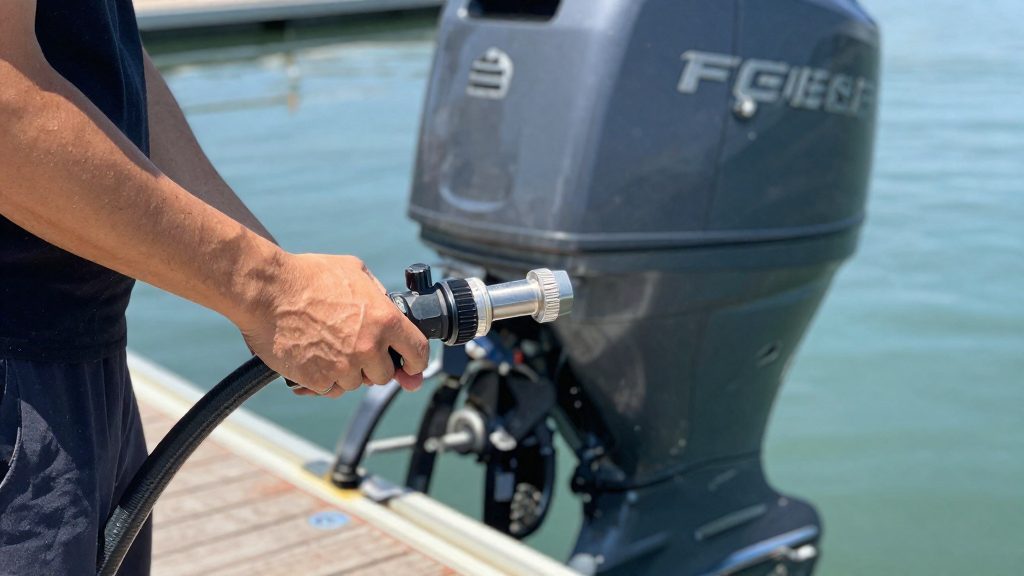
Gather a garden hose with a tap, your owner’s manual and the hardware your motor requires. Some built-in ports take a hose joint that replaces the flush plug connector. Some manuals also ask you to disconnect the fuel line before you begin. For flush muffs, check that the rubber cups seat firmly over both gearcase intakes and that the springs or clamps hold them in place. Some motors need unused inlets taped, and some require the propeller to be removed. Most flushing bags also require the propeller off. Before you handle the propeller, make the engine unable to start by removing the key or the engine stop lanyard, and keep your hands clear of the blades.
How do you flush through a built-in port?
Most outboards from roughly the last 10 to 15 years have a fitting for a garden hose. It may be on the motor, under the cowl or under a midsection cover. Discover Boating notes that some motors can be flushed without starting the engine, so check your manual before you start it. A typical sequence looks like this:
- Shut off the engine and wash the outside of the motor with fresh water.
- Tilt the motor as your manual directs, remove the flush plug connector and fit the hose joint in its place.
- Connect the hose, turn on the water and run it for at least 10 minutes, or as your manual specifies.
- Turn off the water, remove the hose and joint, and refit the flush plug connector.
- Tilt the motor up and move the tilt lock lever to the LOCK position.
How do flush muffs and flushing bags differ?
Flush muffs are rubber cups that fit over the gearcase intakes, held by a spring or clamp, with a garden hose attached. Turn on the water, start the motor in neutral and idle it for about 10 minutes. Confirm that water exits the tell-tale, and stay with the boat for the whole flush. If a muff loosens or loses its seal, shut the motor off immediately, because the water pump impeller can be damaged. Muffs can be used with the boat on its trailer or in the water at a dock or mooring.
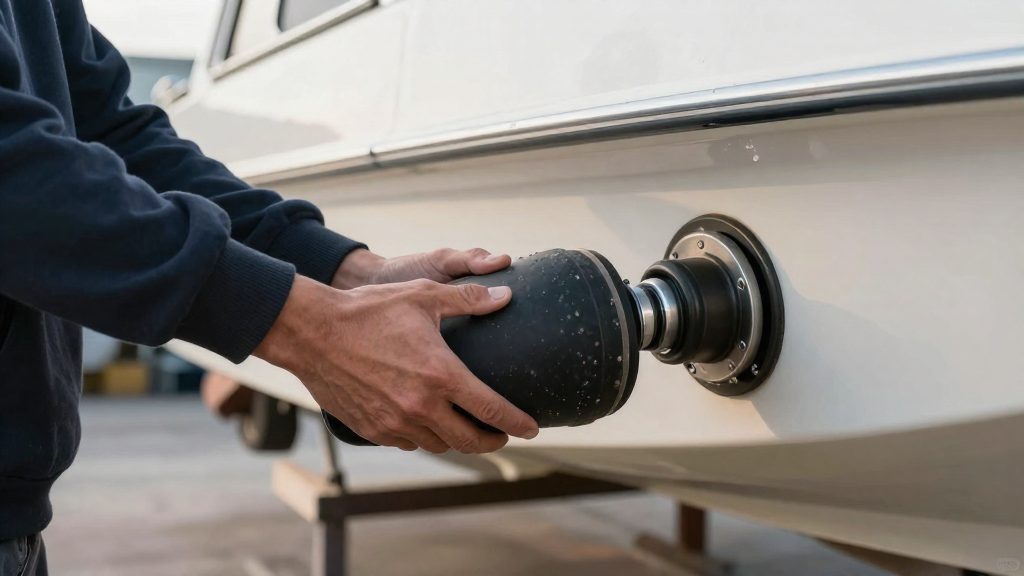
A flushing bag or bucket is normally used with the boat on its trailer. Tilt the motor down, fit the container around the gearcase so the inlets are covered, and keep it filled from a water supply that holds the level up. Most bags require removing the propeller first.
When should you drain, dry and protect the engine?
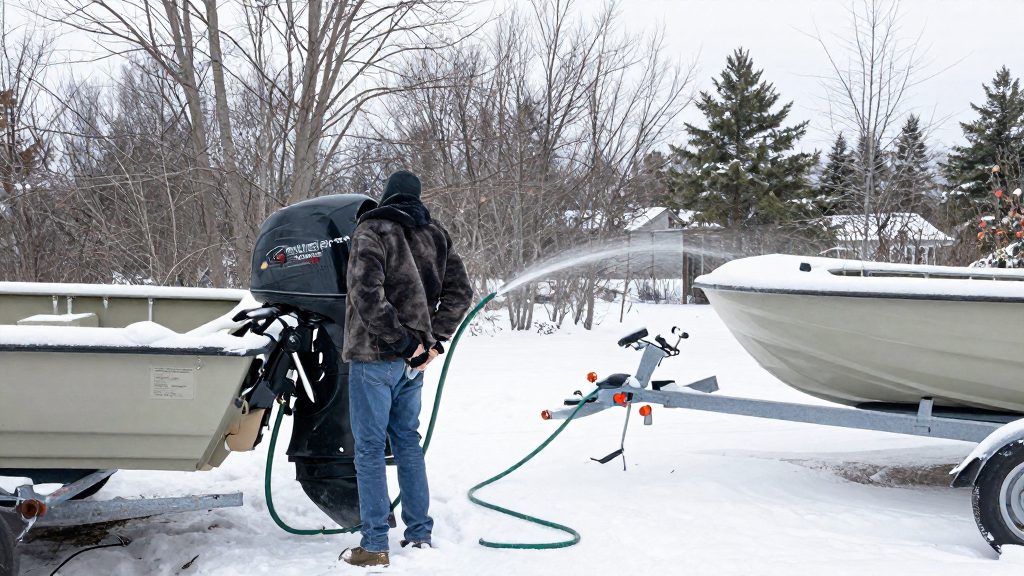
Drain all fresh water from the motor after flushing, following your owner’s manual. This matters most when temperatures will fall below freezing, because water that freezes inside the engine can damage the engine block. Discover Boating notes that lowering the motor fully, with the boat level on its trailer, usually accomplishes this.
Before you apply any corrosion inhibitor, cover the electrical components under the engine cover, such as the AC generator, the belts and the O2 sensor, with protective material. A manufacturer’s manual warns that if water or inhibitor penetrates these parts, they may be damaged. Never spray inhibitor directly onto them.
What pollution duties apply to you in Canada?
Transport Canada states that Canadian law holds boat owners accountable for preventing pollution. Owners are also responsible for clean-up and repair costs when their vessel causes pollution or damage. Keep fuel and oil out of the bilge and off the engine during service, wipe up any spill at once, and avoid overfilling fuel tanks. The official sources consulted do not describe a spill-reporting procedure for recreational boats, so confirm the current contact with Transport Canada before you need it.
What mistakes damage an outboard after saltwater use?
- Running without water flow: Discover Boating warns that running an outboard dry can damage the rubber water pump impeller within seconds.
- Leaving muffs unattended: an outboard with flush muffs must never be left running while nobody is with the boat.
- Skipping the drain: fresh water left in the engine before a freeze can crack the block.
- Leaving the tilt lever unlocked: lock it after the flush so the motor stays secure.
- Inhibitor on electrical parts: water or inhibitor reaching the generator, belts or sensors can cause damage, as the manufacturer’s manual warns.
Frequently asked questions
Does flushing replace scheduled servicing?
No. The flush is a step after each saltwater use. Regular tune-ups, oil and filter changes and inspections follow the manufacturer’s schedule and Transport Canada’s sample maintenance schedule.
What should I do if no water shows at the tell-tale during a muff flush?
Shut the motor off at once. Check the muffs’ seal, the hose connection and the water supply, and confirm the inlets are not blocked. Do not restart the engine until water flows from the tell-tale. If the problem continues, have a qualified technician inspect the cooling system before you run the engine again.
Is a flush needed after a short run in salt water?
Yes. Discover Boating advises a fresh-water flush after every saltwater use, so the length of the run does not change the requirement. Use the time and fittings in your owner’s manual.