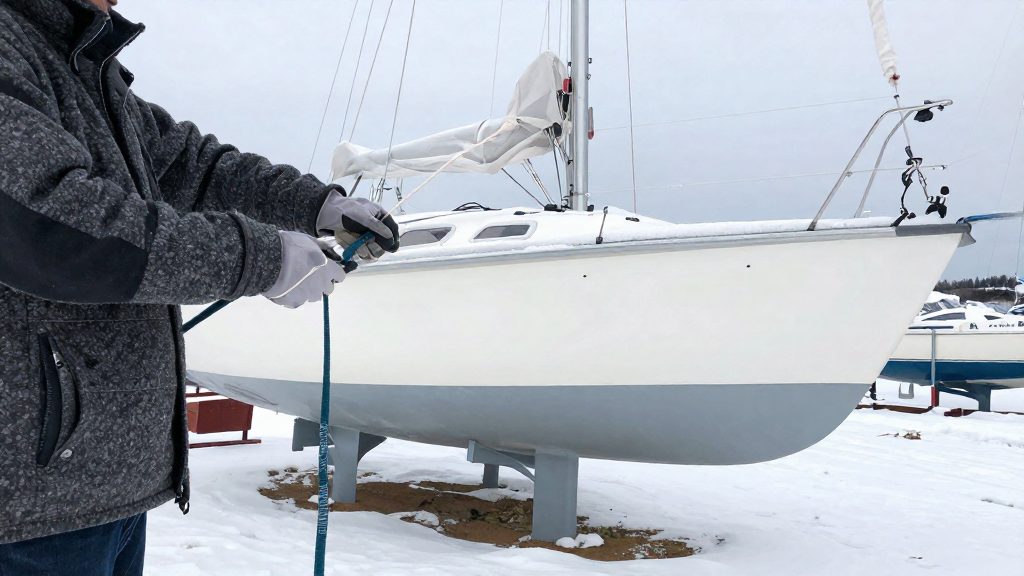
A boat can be stored outdoors through a Canadian winter if you protect it against the threats that cause most damage: water that freezes inside the hull, engine and plumbing, snow and ice loading the cover or frame, and condensation trapped under a wrap. Drain every low point, protect the engine with non-toxic propylene glycol antifreeze, support the hull on a stable frame, ventilate any cover, and deal with batteries and fuel before the first hard freeze. The steps below are general; the engine and boat manufacturers’ instructions always take precedence.
Why does water cause most winter damage?
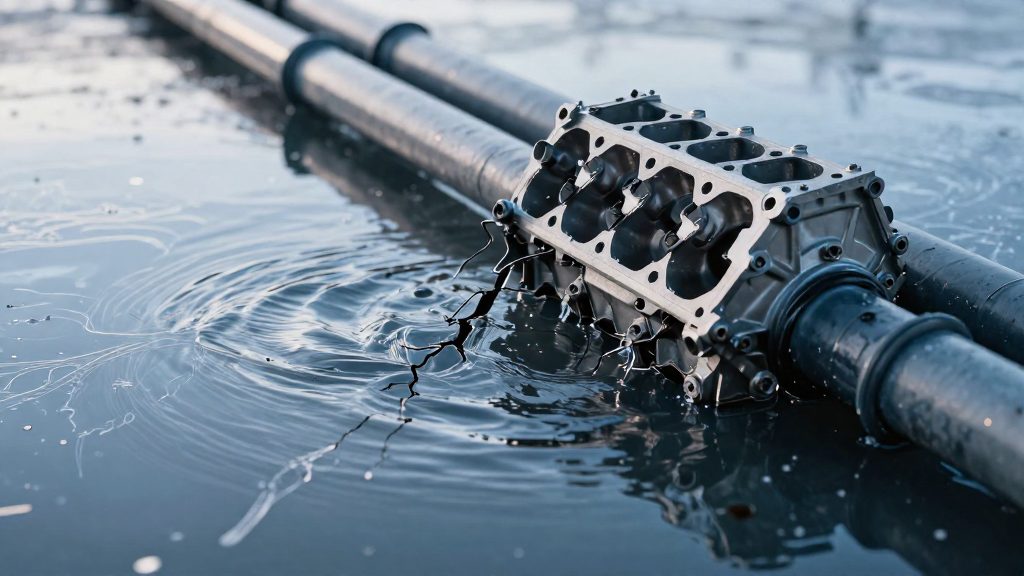
Water is the main enemy of a boat left outdoors. When it freezes it expands, and it can crack engine blocks, exhaust components, water heaters, pumps and freshwater lines. Water also collects in pockets that drain plugs do not reach, so draining alone is rarely enough. Sediment and rust can partly block the drain passages in an engine, which means a drain that looks open may still hold water. Treat winterizing as a sequence: drain first, then protect whatever remains.
Work through the boat systematically. Empty the bilge, the freshwater tank and any live well. Open or remove the drain plugs on the engine block and manifolds, and probe each opening with a thin tool to clear sediment or rust. Some large engines have several drains in different places, and the service manual shows where each one is. Do not assume a drain you cannot find is unnecessary; look it up before the first freeze.
How should you drain and protect the engine?
Once the boat is drained, the final step is to run non-toxic antifreeze through the cooling system, following the engine maker’s procedure for your model. According to Boating Magazine (2025), the antifreeze should reach the engine block, exhaust components, water heaters and freshwater lines, and it should not be run through water filters. Use only propylene glycol antifreeze labelled as non-toxic. Ethylene glycol, the main ingredient in most automotive antifreeze, is poisonous to people, pets and wildlife, and it should never be used in a boat’s cooling or plumbing systems.
According to Canadian Boating (2025), the fluid leaving the exhaust outlet can be tested with a refractometer to confirm that the antifreeze remaining in the engine, after dilution, still gives the protection you need. Compare the reading with the protection level the engine maker specifies for your expected low temperatures, and keep a record of the reading. Fuel delivery components and batteries need their own winter care, covered below.
For the hull itself, position the boat so any leftover water can run out. On land, tilt the boat bow-high. Trim a sterndrive or outboard fully down so the gear case drains, and cover the propeller hub opening so rain and snow cannot enter. Collect used antifreeze and drained fluids and take them to a household hazardous waste facility. Never pour them down drains, sinks or storm sewers, or onto the ground.
Is shrink wrap or a fitted cover the better choice?
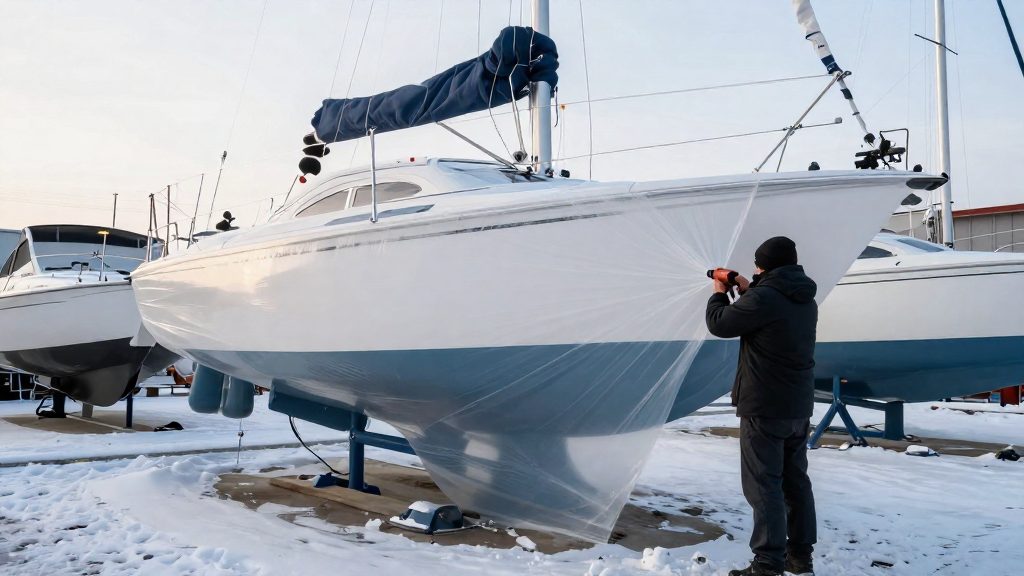
Both can work, and the right choice depends on your site, the boat’s size and how much time you can give to maintenance. A shrink wrap forms a sealed envelope that sheds snow when it sits on a sloped frame, but it needs careful ventilation to avoid trapping moisture. A fitted cover is often simpler to remove and reuse, but it must be chosen for snow-shedding and breathability. A cover that is only water-resistant may let water in at seams, and it still needs a frame so that snow does not pool on top. Whichever you choose, read the cover maker’s instructions for fitting, support and venting before you buy.
If you choose shrink wrap, rinse off salt residue before wrapping to reduce corrosion risk, pad every contact point to prevent chafing, and reinforce stress areas with tape. Use marine-grade film, and make sure heat is applied by trained professionals with approved equipment and fire-safety protocols. Plan the removal in spring at the same time, so that the film can be taken off and disposed of in an environmentally responsible way, as Boating Industry Canada (2026) advises.
How should you support the hull and the cover frame?
A stable support frame is the foundation of a safe winter cover. Boating Industry Canada (2026) recommends a frame sloped enough for snow to slide off, so that the cover does not hold a heavy load in one place. Use stands or cradles that spread the weight evenly along the hull, and check that they will not shift as the ground freezes and thaws. Where a boat is kept under a roof or in a building, the same source advises confirming that the structure meets local building code requirements for snow load and the manufacturer’s specifications. Avoid flat or low-slope roofs where you can, because they tend to collect snow. The official sources consulted do not specify snow-load values for a particular structure, so ask the local building authority or a qualified engineer rather than estimating one yourself.
How do you ventilate a wrapped or covered boat?
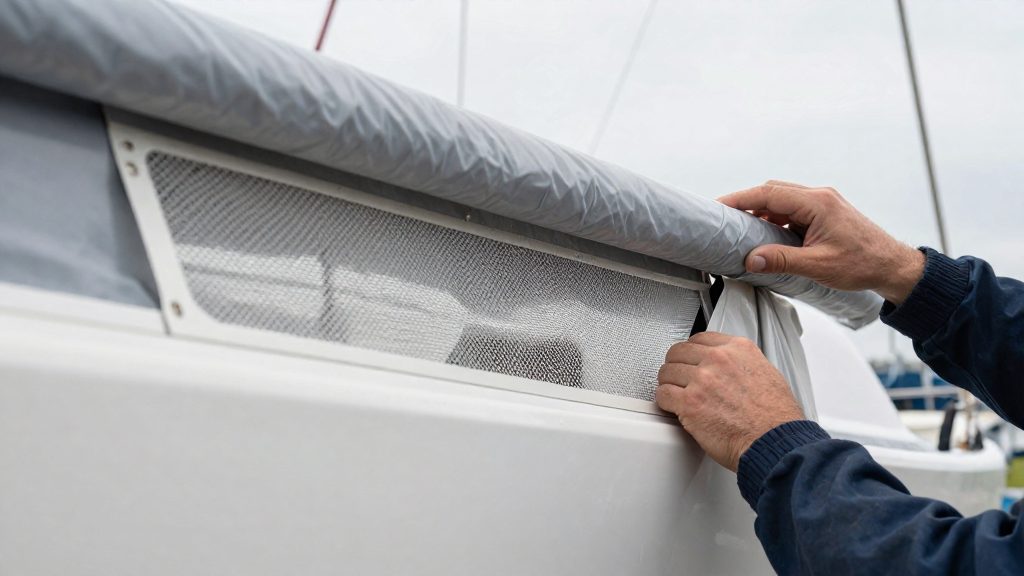
Condensation is the hidden risk of a sealed wrap. Warm, humid air trapped under a cover cools overnight and drops moisture onto the hull, upholstery and electronics, which encourages mould and corrosion. Boating Industry Canada (2026) advises installing vents to prevent condensation and adding desiccant bags where needed. Vents should create airflow through the boat rather than sit in a single spot. Their number and position depend on the boat’s length, shape and cabin layout, so follow the cover maker’s guidance and check the vents after storms or heavy snow. Keep vents clear of snow and debris, and look for signs of moisture inside the cabin during every winter visit.
What about batteries, fuel and onboard systems?
Remove batteries from the boat and store them somewhere cool but above freezing, out of direct sun, and keep them charged according to the battery maker’s recommendations. According to Boating Magazine (2025), uncharged batteries can crack in freezing temperatures, so a battery left discharged over winter is at risk. Clean the terminals before storing them.
Fuel needs attention too. Many owners leave tanks as low as practical and add a stabilizer suited to ethanol-blended fuel, because ethanol blends can separate during a long storage period. Follow the engine maker’s fuel guidance, and check whether the fuel delivery system needs its own winter treatment. Store any fuel containers outside living spaces and away from ignition sources. The official sources consulted do not specify a fuel storage limit for outdoor boats, so confirm the details with the engine manufacturer.
Finally, check electronics and appliances against the manufacturer’s storage instructions, and take home any portable items that can be stored indoors.
How should you handle the boat safely during winter?
Winter visits carry their own hazards. Do not chip or hack at ice on a cover or hull, because that can tear the cover and damage the surface beneath. Clear snow with a soft, stiff broom, working from the ground. Never climb onto a wrapped boat, a cover frame or a storage roof to remove snow. Boating Industry Canada (2026) recommends a strict no-roof-access policy for snow removal, with long-handled rakes used from the ground.
Plan a visit after heavy snow, after a thaw and after a hard freeze. Look for pooled water, cover damage, sagging frame members and any sign that the wrap has loosened. If you find a torn cover or standing water, arrange a repair promptly rather than leaving it until the next thaw, because water left in a damaged cover can freeze and spread damage.
When should you uncover the boat in spring?
Spring removal is a safety task as much as a maintenance one. Choose a dry, mild day when no frost is forecast, and remove the wrap or cover in a planned way, keeping film and fuel away from heat and ignition sources. Before you start any engine, check that every drain plug is reinstalled and that the cooling water path is clear. Follow the engine maker’s instructions for flushing antifreeze and restoring the fuel system. Reconnect and charge the batteries, inspect the hull and cabin for moisture damage or mould, and check that ventilation points are not blocked.
Do not run an engine out of water, even briefly. Any test run should follow the engine maker’s start-up procedure, with the water supply confirmed. If the boat shows signs of freeze damage, such as cracks, leaks or unusual noise, have it inspected by a qualified technician before it is used.
Frequently asked questions
Do I need to tell my insurer that the boat will be stored outdoors?
Check your policy wording and speak to your insurer before winter, because storage conditions can affect what is covered. The official sources consulted do not specify insurance requirements for outdoor boat storage.
Can a tarp replace a fitted cover or shrink wrap?
A tarp is harder to keep taut and tends to pool snow and trap moisture unless it is well supported and vented. Check the cover maker’s instructions before relying on one, and apply the frame and ventilation advice above.
Is it safe to leave a boat on its trailer outdoors all winter?
It depends on the trailer, its tires, the wheel bearings and how the boat is supported. The official sources consulted do not address trailer storage, so follow the trailer and boat manufacturers’ guidance and inspect the trailer during each winter visit.