Where is the drain plug on a trailer boat?
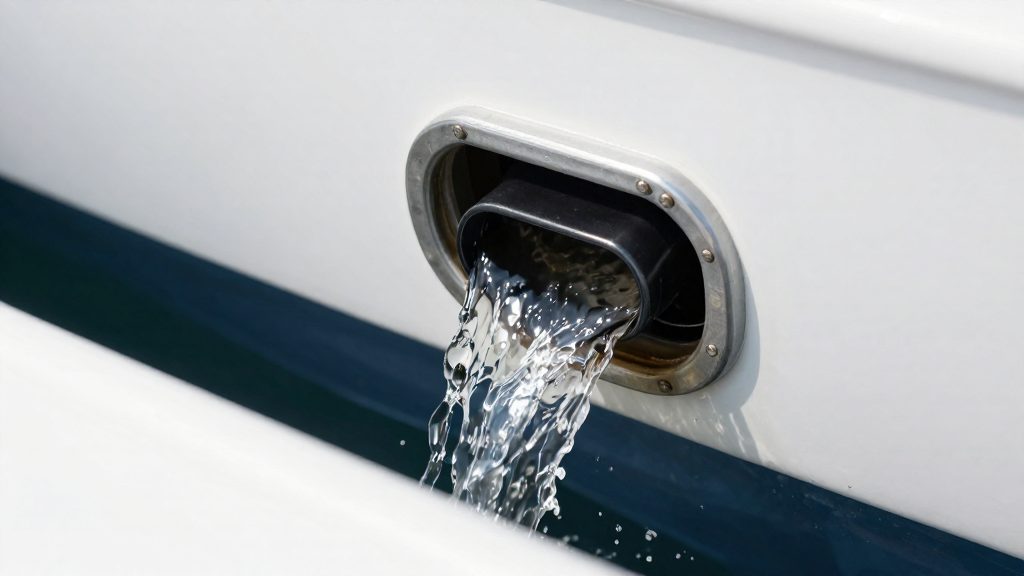
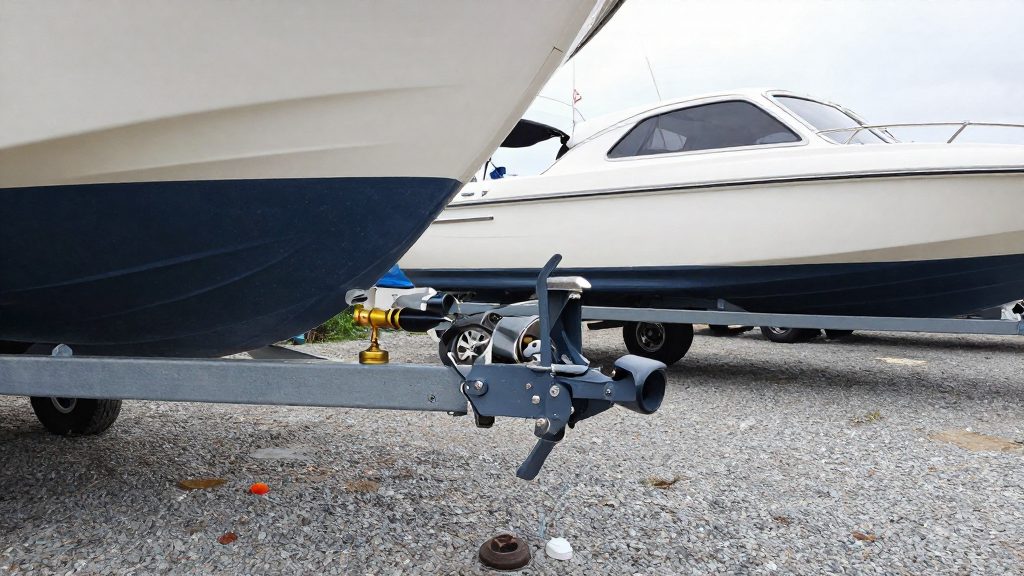
On most trailerable powerboats, the main drain plug sits in the transom, the flat stern wall where the motor or drive is mounted. It is set at the lowest point of the hull’s interior, so water that collects in the bilge flows toward it when the boat is out of the water. Owners often find it directly behind the drive or tucked under the stern. On some hulls it sits below a step, so you may need a flashlight and a look from below the stern.
The plug belongs to the boat, not the trailer. Trailer frames, rollers, and jacks have no drain plug, so do not search there.
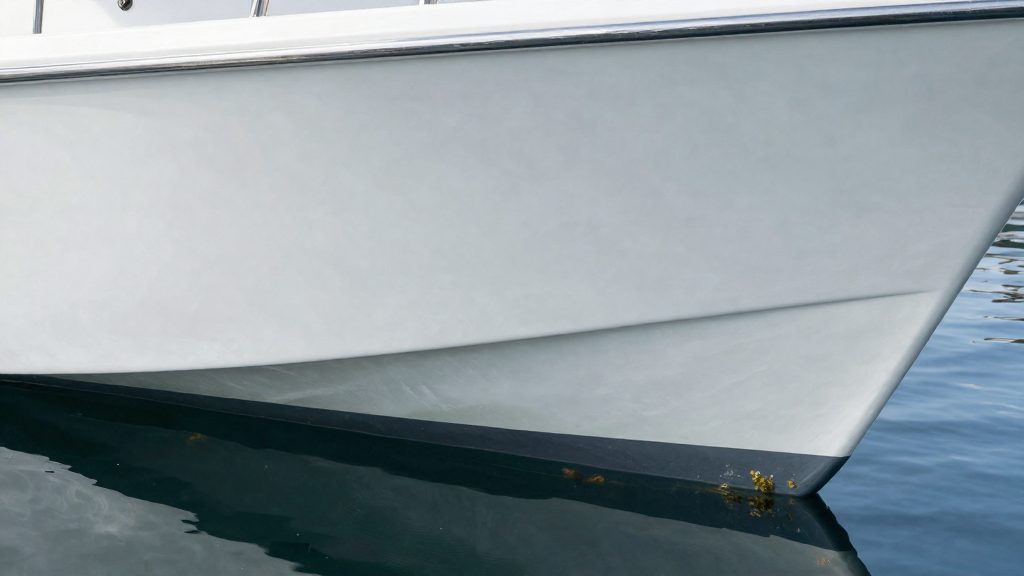
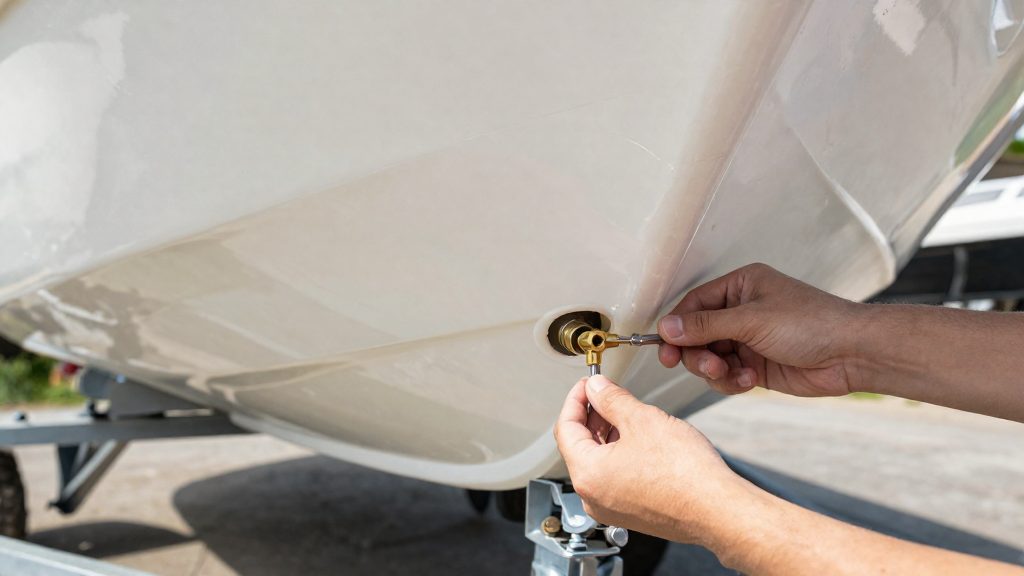
Some boats have more than one drain: a bilge drain, a livewell drain, or a separate fitting near the keel at the bottom of the hull. Some of these are valves rather than plugs. Before you build a routine around one plug, walk the hull with the owner’s manual and identify every drain fitting. Mark the ones you find so you never confuse a drain with a fill or pump fitting.
Why the plug must come out on the road
Trailer boats collect rain, spray, and wash water inside the hull. Keeping that water aboard adds weight, and it can carry plants and organisms from one body of water to another. That is why many states regulate draining before a boat leaves the water.
In the cases I checked, the requirement comes from state law rather than from a single federal boating rule. Minnesota’s statute 84D.10 is a clear example. When leaving waters of the state, a person must drain water-related equipment, including live wells and bilges, by removing the drain plug. While transporting that equipment over land, the plug or valve must be removed or left open. The statute excludes moving equipment within the immediate area needed to load it and prepare it for transport. That exception covers the ramp and the parking area, not the drive home.
Requirements vary from state to state, and they change. Check the current rules from your state’s wildlife or boating agency and the state statutes before you leave, especially if you plan to cross a state line with the boat. If you do not know where the plug must be, assume it must be out for the whole road trip and put it back only at the water.
Checking the plug before every launch
Install the drain plug while the boat is still on the trailer, before the trailer enters the water. Many pre-launch checklists list it as one of the first items, and forgetting it is one of the most common errors at the ramp. A simple routine helps:
- Attach a reminder to the ignition key or the tow vehicle keys.
- Keep the plug in one fixed place on the trailer or tow vehicle, on a clip or lanyard, so it cannot be dropped in sand or gravel.
- Check the plug’s seal and threads before you insert it, and make sure it is clean.
Seat the plug fully and confirm it is not cross-threaded. Hand-tighten it, then tighten it only as far as the manufacturer specifies. Overtightening can crack the fitting, and a cracked fitting is harder to fix than a missing plug.
Once the boat is afloat, look at the drain again before you start the engine. Do this every time, including when you have just finished a short trip, because a hull can fill from rain while parked at the dock.
Storage and freeze protection
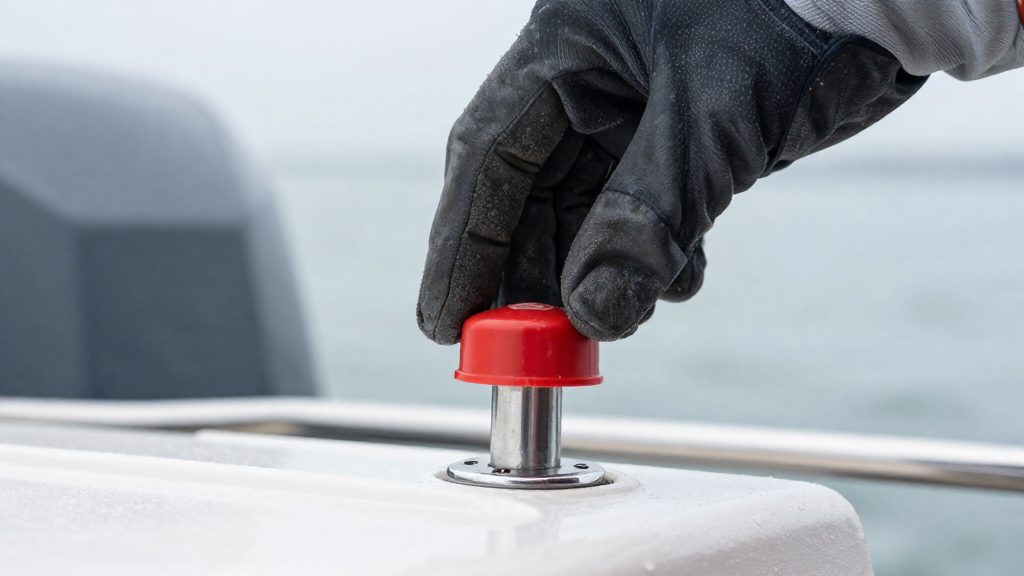
Whether the plug stays out during storage depends on the boat, the storage site, and the climate. Many owners pull the plug when a boat is stored ashore so that rain and snowmelt drain out instead of collecting in the hull. Check the plug periodically during storage, because a hull can fill slowly, and set the trailer on level ground with the bow raised slightly. That angle moves water toward the stern drain.
Water left in the hull, engine cooling passages, and plumbing can freeze and crack components. Follow the engine manufacturer’s winterization procedure, and ask your insurer whether freeze damage is covered, because policies differ. Do not assume that pulling the transom plug alone protects the engine or other systems.
Keep the drain clear. Mud, debris, and small stones can block the fitting, so clear it with a stiff wire before you expect water to flow. Put the plug back in before the first spring launch, and check it as described above.
Inspecting the plug and fitting safely
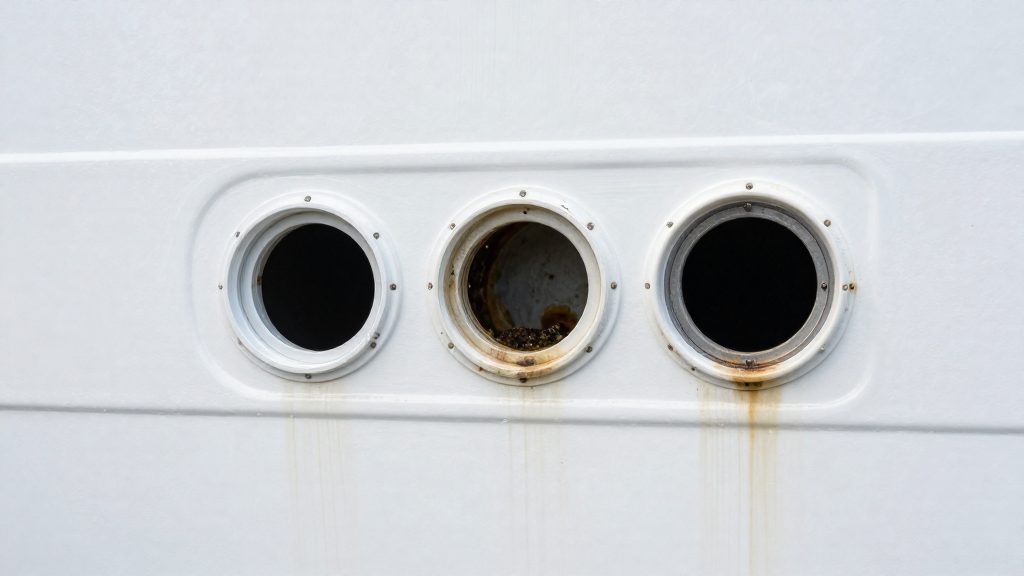
Inspect the plug, its gasket or seal, and the fitting around it at least once each season. Look for cracks, hardening, missing seals, corrosion, and a crust of salt or mineral deposits. A plug that leaks is a fault to repair, not a reason to add more sealant. Replace worn parts with the part specified in the owner’s manual or by the manufacturer’s dealer.
Work safely on the boat. Never get under a hull supported only by the trailer jack or the winch. Support the hull on stands or cradles rated for its weight, on firm and level ground, and keep hands and feet clear of the trailer when it moves. Chock the wheels before you work near the stern.
Stop using the boat and have a marine mechanic or a qualified surveyor inspect it if a drain fitting cracks, if it leaks when the plug is in, or if you see water staining or soft wood near the transom. A leak in this area can let water into the hull while you are underway, which is far harder to manage than a leak you find on the trailer.
Frequently asked questions
Can I use a cork, rag, or tape if I lose my drain plug?
No. A stopper not made for the drain fitting can leak or pop out under pressure. Use a plug designed for that fitting, and confirm the correct part in the owner’s manual or from the manufacturer’s dealer. Do not launch until the drain is properly closed.
What is a garboard drain?
It is a drain fitting near the keel, at the bottom of the hull, found on some boats in addition to or instead of a transom plug. If your boat has one, it has its own plug or valve and needs the same checks described above. Your owner’s manual shows whether it exists.
What should I do if I find water in the boat at the ramp?
Do not start the engine or drive away. Check first whether the plug is in place. If water is entering faster than you can remove it, call for help and stay out of deep water. Once the cause is found and fixed, recheck the boat before you return to open water.