Why drain the bilge before winter?
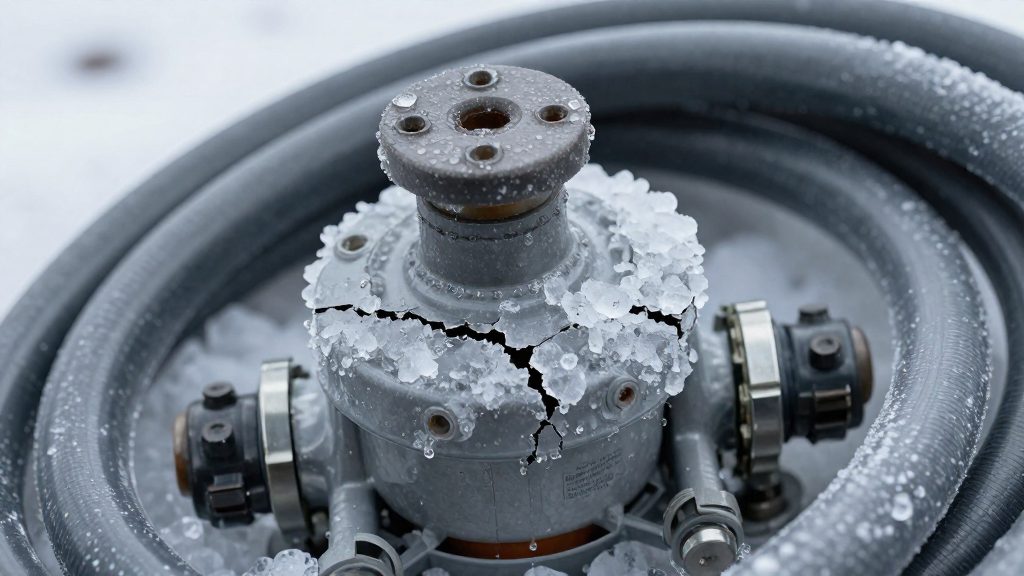
The bilge is the lowest part of the hull, the place where water collects, rain runs in, and leaks gather. A small amount of water there is easy to ignore in summer and expensive to ignore in winter. When water freezes it expands, and inside a hull that expansion can split bilge pump housings, crack hoses and plastic fittings, and push against the float switch until it jams.
Standing water also does damage that has nothing to do with temperature. Over several months it corrodes wiring terminals and metal fittings, produces odors, and mixes with oil and grime that drip from the engine. A bilge that stays wet all winter is harder to inspect in spring, and a slow leak can go unnoticed until the boat is in the water again.
The Massachusetts Office of Coastal Zone Management advises emptying the bilge for winter storage for two reasons: to lower the chance of a spill and to make sure ice does not damage the bilge pump. The goal is a dry, clean bilge before the first hard freeze.
Where does water in the bilge come from?
The water is usually a mix of sources, and knowing them tells you where to look for leaks:
- Rain and snow that enter through an open hatch, a cockpit drain, a cracked hatch seal, or a poorly sealed fitting.
- Hull and through-hull leaks, such as a loose stuffing box, a worn shaft seal, or a failing hose clamp.
- Engine and cooling water, including condensation and small drips from the engine, exhaust, and raw-water system.
- Freshwater system leaks from water tanks, pressure pumps, or plumbing that is not fully drained.
- Water from washing and bilge pump-out, which can leave residue in the lowest corners.
If the bilge refills quickly after you pump it dry, you have an active leak, not just residual water. Find and repair it before you store the boat, because freezing will turn a slow leak into a damaged fitting.
How do you drain the bilge step by step?
These steps assume the boat is out of the water or on a trailer, which is the most common winter storage set-up. Do not work alone, and wear gloves and eye protection.
- Disconnect power to the bilge pumps at the switch or the breaker before you touch any wiring or float switches.
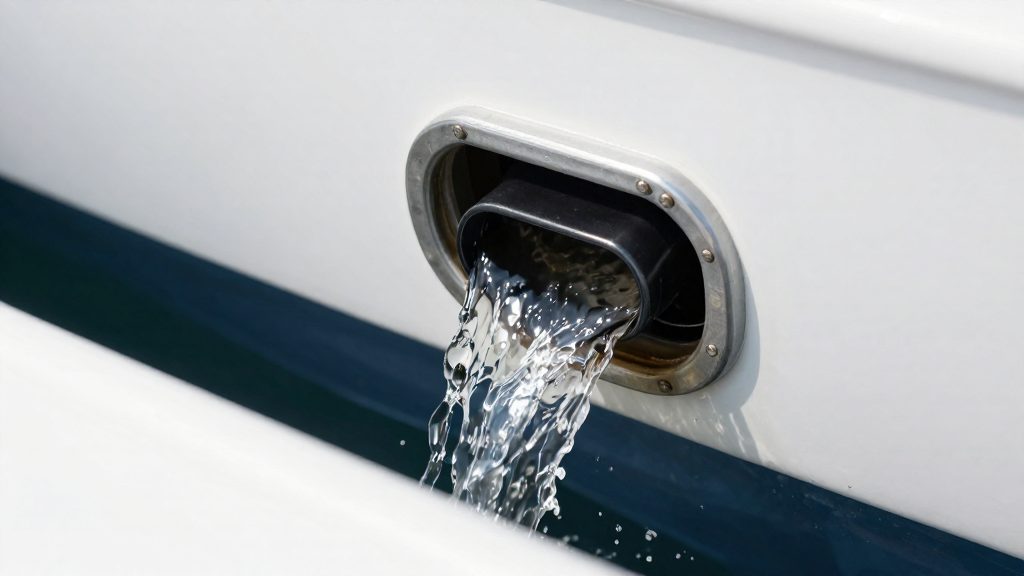
- Remove the bilge plug or open the drain at the lowest point of the hull, and allow the water to flow freely. Check that the opening is not blocked by debris.
- Pump out the remaining water with a manual or electric pump, or with a wet/dry vacuum if the water is shallow. Work from the lowest point toward the pump suction.
- Check for oil before you discharge anything. If you see an oil sheen or oily residue, do not pump it onto the ground or into a drain. Place an absorbent pad or sock to capture the oil, and use absorbents to clean all visible oil from the bilge.
- Dispose of the water according to local rules. Massachusetts guidance is to pump clean bilge water onto the ground away from storm drains and water bodies only when no oil is present, and to take oily water and used absorbents to a marina or licensed disposal site. Local and state rules may be stricter, so check with your marina or environmental agency before you discharge anything.
- Leave the drain open until you are sure no more water is coming out, then reinstall the plug or keep it out, following the advice in the section below.
If you are unsure how to handle oily bilge water, ask your marina. Many will pump it out for you for a fee, and that is the safest option when the bilge is contaminated.
Check the bilge pumps and float switches
Bilge pumps are the boat’s last defense against water, so test them before storage, not after the first cold snap. Most boats have an automatic pump controlled by a float switch and a manual pump that you operate by hand.
Start by checking the float switch. Lift it by hand and confirm the pump turns on and off without sticking. Remove debris, grime, or oily film that can stop the float from moving freely. Next, check the wiring and connections for corrosion, and confirm that the pump’s housing and outlet hose are clear.
If you need to run the pump to confirm it works, keep the test short and make sure there is water in the bilge to pump. Do not let an automatic pump run dry for long, because it can overheat. The owner’s manual for your pump and the boat’s manufacturer give the exact steps and maximum run times, and those documents govern. Some manufacturers also specify that no water should remain inside the pump or the bilge before lay-up, so drain the pump housing as directed.
Because ice can split a pump housing even when the pump is switched off, store the pump dry. If the boat stays outside in freezing weather, check the pump and bilge again after heavy rain or snow.
Clean and dry the bilge
A drained bilge can still hold residue that causes trouble in spring. Once the water is out, scrub the bilge surfaces with a marine-safe cleaner, rinse with fresh water if the cleaner requires it, and let everything dry completely. Pay attention to the corners and to the area around the float switch, where grit and grime settle.
After cleaning, leave the hatches or the bilge access open for airflow while the boat dries, and close them once the bilge is fully dry. Replace any oil absorbent pad that is saturated. Keep the cleaning water out of storm drains and waterways, and dispose of cleaning waste as you would any other oily material.
If you use a bilge sock or pad to capture small amounts of oil over the season, check it regularly. Replace it when it shows oil or an oily sheen, and dispose of used material according to the product instructions.
Boats that stay in the water
A boat left in the water is a different case. You cannot simply open the plug and let the bilge empty, because the hull can take on water from outside. In freezing climates, the goal is to keep the bilge as dry as possible and to protect the pump, the float switch, and the hull fittings from ice.
For a boat in the water, pump the bilge down as far as you can, check that the pump and float switch work, and make sure the pump outlet is clear. Ice in the bilge can damage fittings or the hull, so ask your marina or yard whether they use a bilge heater, a de-icer, or an antifreeze step appropriate for your boat. Do not pour any product into the bilge unless the pump or boat manufacturer approves it for that use.
Keep watching the boat during the cold months. Check after storms, heavy snow, and freeze-thaw cycles, because the boat can take on water fast when a hatch or hose has failed.
Should you leave the drain plug out?
The answer depends on how the boat is stored. For a boat stored out of the water or on a trailer, leaving the transom drain plug out lets rain and melting snow drain away. Ohio’s guidance for winterizing boats makes this point, and it is a common recommendation for land storage. Store the boat level or with the bow slightly raised so water runs to the stern and out.
For a boat in the water, the drain plug must be in place. Pulling it would let the boat take on water through the drain opening, so reinstall it before launch and check the bilge for any water that gets in.
Whichever way you store the boat, record where the plug is. A plug left out in storage must be reinstalled in spring before the boat goes in the water. Keeping the plug on your key ring or the steering wheel is a simple way to avoid forgetting it.
Winter lay-up checklist
Use this checklist as a final pass before you close the boat up for the season:
- Bilge is drained, dried, and free of oily residue.
- Float switches move freely and the pumps have been tested.
- Pump housings and outlet hoses are empty and clear.
- Leaks you found are repaired, or you have a plan to repair them in spring.
- Drain plugs are removed for land storage, or in place and checked for water if the boat stays in the water.
- Oil absorbent materials and cleaning waste are disposed of properly.
- The owner’s manuals for the engine and pumps are read for any specific winterization steps.
Check the bilge again in the middle of the storage season, and once more before launch, so that a leak or a stuck float switch does not go unnoticed for months.
Frequently asked questions
Can I put antifreeze in the bilge instead of draining it?
Only as a backup for small amounts of water that cannot be removed, such as in a low spot the pump cannot reach. Use a non-toxic antifreeze labeled for marine use, and check your pump manufacturer’s manual first.
Does my boat insurance cover freeze damage to the bilge?
Many policies exclude ice and freezing damage unless you buy specific coverage. Read your policy and ask your insurer before winter storage.
How often should I check the bilge during storage?
Check it periodically during the storage season, and after heavy rain, snow, or a thaw if the boat is outside. Look for water, oil, and any sign that the float switch or pump has failed.