What flying a boat means for winter storage
In boating slang, flying a boat means lifting it by crane, travel lift or hoist, suspended from slings, and setting it on stands or a cradle for the off-season. It is the most physically risky moment of winterization. A hull that weighs a lot more than it looks, hanging from straps over people’s heads, can cause serious injury or total loss of the boat in seconds if one component fails.
The lift is also where many avoidable hull problems start. Pinched hull flares, dented bottoms and cracked gelcoat often come from a rushed lift or from supports that were placed by guesswork. This article explains how to choose who does the job, what to prepare, how to set the boat on stands, and when to stop. It does not replace the manufacturer’s manual or the instructions of the yard that performs the lift.
Decide who will do the lift
For most owners the safest choice is a boatyard, marina or storage facility that flies boats routinely with equipment designed for the job. Experienced operators have set-up habits that a first-time owner cannot replicate: they check the load before lifting, they know which spots on the hull are reinforced, and they work with a crew that can communicate quickly.
Renting a crane and doing the lift yourself, or asking a helper with a truck-mounted hoist, is much riskier. If you still consider it, ask the following questions first:
- Who is in charge of the lift, and what is their experience with boats of this type?
- Is there a written or agreed lift plan that shows where the slings go and where the boat will sit?
- Which lift points will be used, and who confirmed them?
- Does the facility’s insurance cover damage during haul-out and storage, and does your own marine policy cover the lift? Read both policies, because many restrict coverage for work performed by third parties or for damage that occurs while the boat is off the water.
If the answers are vague, choose another provider. A reputable yard expects these questions and answers them without hesitation.
Prepare the boat before the lift
Preparation reduces weight, prevents damage and keeps loose objects from falling during the lift. Start by removing everything that is not fixed to the boat: canvas covers and their frames, cushions, fenders, mooring lines, loose electronics, and tools. Take down the bimini or other top structure if the lift plan requires it. Clear anything that could catch a sling or rub against the hull.
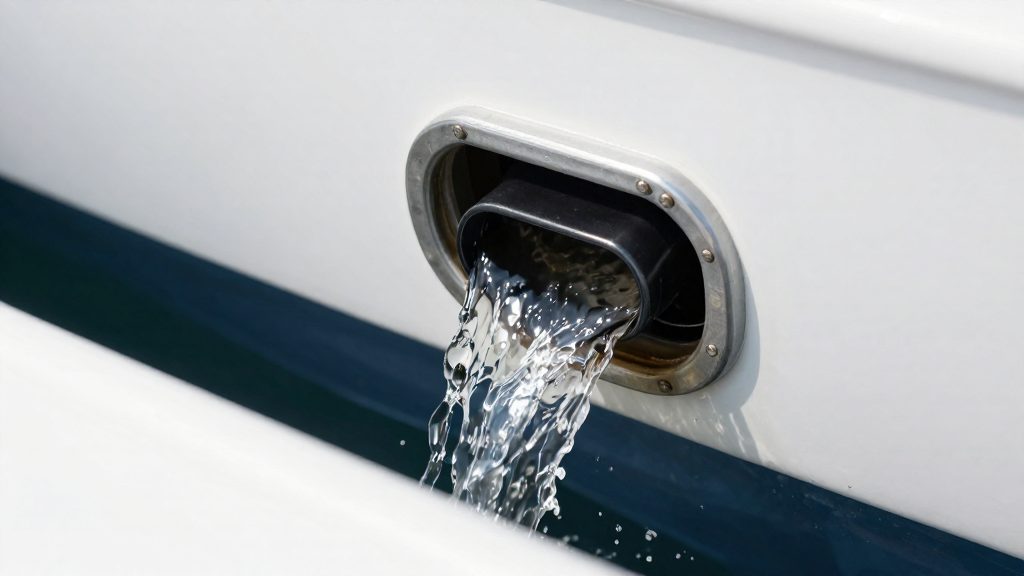
Drain water from the boat as far as your manufacturer’s instructions allow. Standing water in the bilge, live wells and fresh-water tanks adds weight that the lift equipment must carry, and water sloshing inside a hanging hull can shift the balance. Keep drain plugs and through-hull valves in the position recommended by the manufacturer, and reinstall them before launching.
Know the weight you are lifting. Start with the weight given in the manufacturer’s documentation for your model and configuration, then add the real weight of fuel, water, gear and any equipment you have added since the boat left the factory. Estimates from memory are not reliable. The lift equipment and the slings must be rated for a load above the actual weight, not for a guessed figure. If you cannot find a reliable weight, ask the manufacturer, a dealer or a surveyor before the lift is scheduled.
Finally, establish the lift points. Use the manufacturer’s diagram or the documented positions used by the yard on the last lift. If no documentation exists, do not improvise. Photograph the sling positions on the boat and on the stands so the same setup can be recreated next season.
Slings, spreader bars and lift points
The slings are the most important part of the rig. Two US federal rigging standards are useful references, even though they apply directly only to employers and workplaces. The OSHA rules for construction rigging, in 29 CFR 1926.251, require rigging to be inspected before use on each shift, defective equipment to be removed from service, and each piece to carry legible markings showing its recommended safe working load. Under the OSHA rules for general industry, in 29 CFR 1910.184, slings must be inspected each day before use, and slings must not be loaded beyond their rated capacity. A private owner is not bound by these rules, but they describe the standard of care a competent rigger follows, and you can apply the same checks yourself.
Before a sling goes on the boat, look at it closely. Wire rope with broken strands, kinks or heat damage is a reason to remove it from service. Synthetic web slings with cuts, tears, burns, melting or broken stitching must also come out of use. Chain slings with wear, deformation, cracked or defective welds, or an increase in length must be retired. Confirm that the label with the rated load is still readable. A sling that cannot show its capacity should not be used.
Spreader bars reduce the risk of pinching the hull. Slings that converge sharply on the boat can squeeze the hull flare, particularly near the bow, and can crack fittings or stress the topsides. A spreader bar holds the slings apart so the pull is more vertical. Foam or other padding where the sling contacts the hull adds protection. Lift points on the hoist, and the slings that connect to them, should be spaced so the load remains balanced.
Use a crossbeam or a hook arrangement that prevents the sling from slipping off its attachment point. Keep the lifting hook directly above the centre of the load, and check that the boat rises level. If one side tilts, lower the boat immediately and re-balance the slings. An unbalanced lift loads one sling much more than the others, and that is how slings fail.
Set the boat on stands
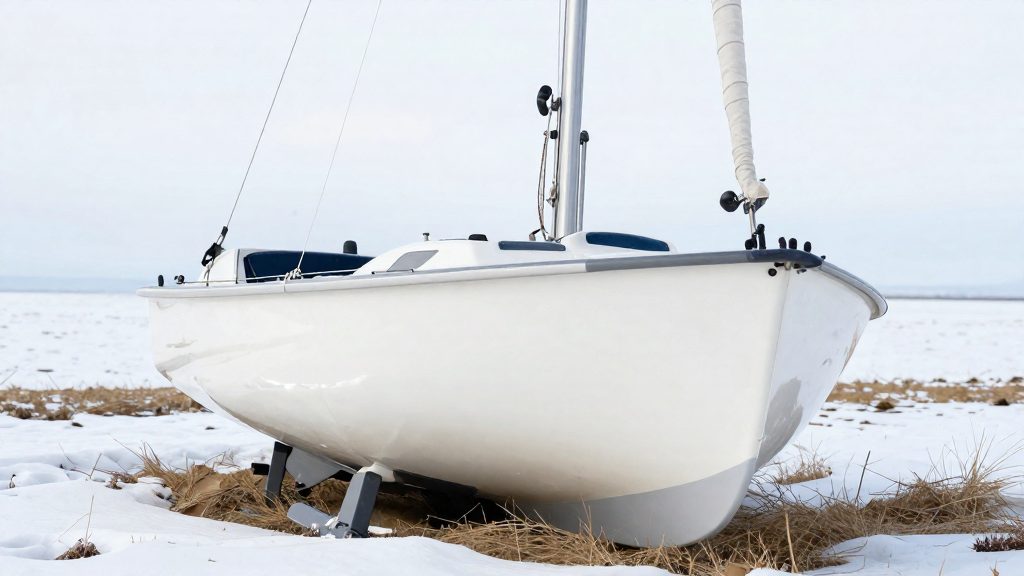
Stand placement determines whether the hull will stay undamaged through the winter. Most fibreglass hulls are designed to rest on specific support points, and a boat that rests on other points may develop stress cracks, deformed bottoms or leaks. The manufacturer’s manual should show where the supports go and how much support the hull needs. If you do not have that information, ask the yard to use the same points as on previous lifts.
A common method is to place the boat on the keel first and then lower it gently onto the remaining supports. This lets the keel and the centre of the hull carry the weight before the side supports take their share. Pressure on any single support should be even. Avoid placing stands under fittings, thin areas of the hull or areas that have been repaired. Stands should rest on firm, level ground, and any jack stands should be locked in their safe position.
Tie the boat to its stands so that a gust of wind or a shifted load cannot tip it. Check that the stands have not settled after the first few hours and again after a heavy rain. If the ground is soft, use a base plate or pad to spread the load.

Safety around the lift
The lift area needs a clear, controlled zone. Keep people, pets and vehicles out of the drop zone, which is the area that would be struck if a sling or the boat failed. Nobody should stand under a suspended load, and nobody should steady the boat with their hands while it is being lifted or lowered. If the boat swings, use tag lines and a designated spotter, not your body, to control it.
One person should be in charge of the lift and give all instructions. Agree on signals before the lift starts, and make sure the crane or hoist operator can see the person giving signals. Keep the lift in the middle of the operator’s range of control and avoid working near overhead power lines.
Weather matters more than most owners expect. Check the official National Weather Service forecast for the site before the lift, and watch for gusts during the operation. Wind can swing a suspended boat, rain changes the weight of the rig and the grip of slings, and ice makes stands and the ground unstable. Postpone the lift if conditions are marginal.
Inspect the boat and the setup after the lift
Once the boat is on stands, inspect the hull, the stands and the sling marks before you leave. Look for new cracks, scrapes or dents, especially near the bow, the keel and the support points. Check that the boat is level and that the stands are stable. Water may still drain from the bilge or from low points after the lift, so check for leaks and make sure nothing has been dislodged.
The winterization work continues after the boat is on stands. Dispose of engine coolant, used oil, paint and batteries at a hazardous waste facility or a marina that accepts them, never in the bilge, on the ground or down a storm drain. Keep the bilge clean and dry, and check any oil-absorbent pads often so they do not clog the bilge pump.
When to stop the job
Stop the lift and lower the boat to a safe position if any of the following occurs: the load tilts, a sling shows damage, the operator is unsure of a step, wind gusts increase, ice or rain makes the ground or the stands unstable, or someone enters the drop zone. Stopping costs little. Continuing with a failing setup can be fatal.
Do not try to catch or hold a falling load. If something fails, move clear, call for help and follow the emergency procedures of the yard or the provider.
Returning the boat to the water in spring
The spring lift follows the same logic in reverse. Remove the stands once the boat is supported safely, inspect the hull for any changes since the autumn lift, and check every sling before use. Use the same lift points and the same spreader arrangement. Reinstall drain plugs and through-hull fittings before launching, and check for leaks once the boat is in the water.
A careful autumn lift makes the spring lift easier, because the hull, the stands and the sling marks will show exactly what changed over the winter.
Frequently asked questions
Can I shrink-wrap the boat before it is flown onto stands?
Shrink-wrap is normally applied after the boat is on its stands, because the wrap can hide the sling points and interfere with the lift. Ask the wrapping service and the lifting yard to agree on the order of work.
What should I do if I notice a crack in the hull after the lift?
Do not launch the boat. Photograph the damage, note where it is and tell the lifting provider and your insurer. Have a marine surveyor or the manufacturer assess the crack before any further action.
Is it safer to leave the boat on its trailer for the winter?
A trailer can be a valid storage base if the trailer is rated for the boat, its tires and bearings are in good condition, and the boat is secured to it. Check the trailer and boat manufacturer documentation before choosing this option.
Who is responsible if a lift goes wrong at a storage facility?
Responsibility depends on the storage contract, the facility’s liability and insurance, and your own policy. Read the contract before the lift, confirm what it covers during haul-out, and ask for written proof of insurance.