What a Coast Guard boating safety course is
There is no single national boating license in the United States. The U.S. Coast Guard sets the national framework for recreational boating safety, but each state decides who must complete boater education and what proof they must carry. When people search for a Coast Guard boating safety course, they usually mean one of two things: a public course taught by the Coast Guard Auxiliary, the uniformed volunteer component of the service, or a course that meets the national education standards the Coast Guard supports. These are not always the same. The difference matters if you need a card for your state.
The national standards work is run with the National Association of State Boating Law Administrators, known as NASBLA. Its purpose is to give course developers a consistent set of knowledge and skills, so that an approved course in one state covers the same core material as one in another.

Check your state’s requirement first
Start with your state boating agency, not a course listing. NASBLA publishes a state-by-state table of mandatory boater education, but the version I could consult is marked as current as of January 1, 2016. Treat it as a starting point and confirm the current rule with the agency that governs the waters you will use.
The table shows that requirements are not uniform. Many states set their rules by age, usually tied to a birth date, and many define the rule by a motor horsepower limit. Some states apply their requirement to all ages, while others limit it to specific situations, such as operating a rental boat. Before you enroll, answer these questions:
- Will you operate a motorized boat, and if so, what is its horsepower?
- What is your date of birth relative to your state’s cutoff?
- Will you rent a boat, or only use one you own?
- Are you a visitor whose home-state card may or may not be recognized where you will boat?
If the answer to any of these is unclear, do not operate the boat until you have confirmed the rule. A missing card can lead to a citation even when your seamanship is sound.
What NASBLA approval means
NASBLA reviews boating courses to determine whether they meet a National Boating Education Standard. According to NASBLA, all NASBLA-approved courses must meet the ANSI/NASBLA Basic Boating Knowledge Standards. The standards listed on its course approval page are ANSI/NASBLA 100-2022, the Core standard, and ANSI/NASBLA 103-2022, which carries the label Plus Power. NASBLA describes these as part of a broader national system of standards for recreational boat operation.
Approval is not the same as automatic acceptance in every state. NASBLA’s process requires that a course already approved by NASBLA be submitted to a state’s boating agency for review and approval before it launches in that state. Approval by NASBLA therefore signals that a course meets the national standard, but the state where you boat still has the final say on whether its card counts.
Choosing a course
Once you know your state’s rule, compare the options on practical points:
- Approval: Confirm the course is NASBLA-approved and accepted by your state. The state agency’s website is the most reliable check.
- Certificate: Confirm the provider issues a card or certificate that your state recognizes, and find out how long it takes to receive it.
- Format and length: Compare the schedule, the time you must commit, and whether the course is taught in person or through a self-paced program.
- Support: Check whether the provider explains how to request a replacement and whether instructors or staff are available to answer questions.
The Coast Guard Auxiliary publishes its public education courses and offers a course finder by ZIP code on its own website. Auxiliary classes are often taught by volunteer instructors in community settings, which can be a practical option if you prefer a local class.
Whatever course you choose, make sure it covers the basics every operator needs: life jacket use, navigation rules, required safety equipment, and how to respond to common emergencies such as capsizing, fire, and man overboard. A card proves you passed a course. It does not replace practice in calm water with an experienced operator.

Why the course matters: what the statistics show
The Coast Guard’s 2024 Recreational Boating Statistics report, the most recent edition I could confirm, recorded 556 boating deaths. Coast Guard communications describe this as the fewest in more than 50 years of record keeping. The report’s summary also states that among deaths where the operator’s instruction was known, most occurred on boats operated by people who had not received formal boating safety instruction, roughly 70 percent.
The same report points to a few patterns that every boater can act on. Drowning accounted for most deaths where the cause was known. Where life jacket use was known, a large majority of drowning victims were not wearing one, at about 87 percent. Alcohol was the leading known contributing factor, linked to 92 deaths. These figures do not prove that a course prevents deaths on its own, but they underline the behaviors a course teaches: wearing a life jacket and never operating impaired.
Using your card safely
Carry your card or the proof your state accepts whenever you operate a boat that requires it. Check your state’s rule on whether a digital copy counts, because this varies. If you lose your card, contact your course provider or your state boating safety office for a replacement. Do not assume that a replacement will be issued at the dock.
Keep the card in a dry, accessible place, such as a waterproof pouch in the console. A card that is wet, faded, or unreadable may not be accepted, so consider keeping a backup copy with the registration papers in your vehicle.
Before you go out
A course gives you knowledge, but safe boating depends on what you do on each trip:
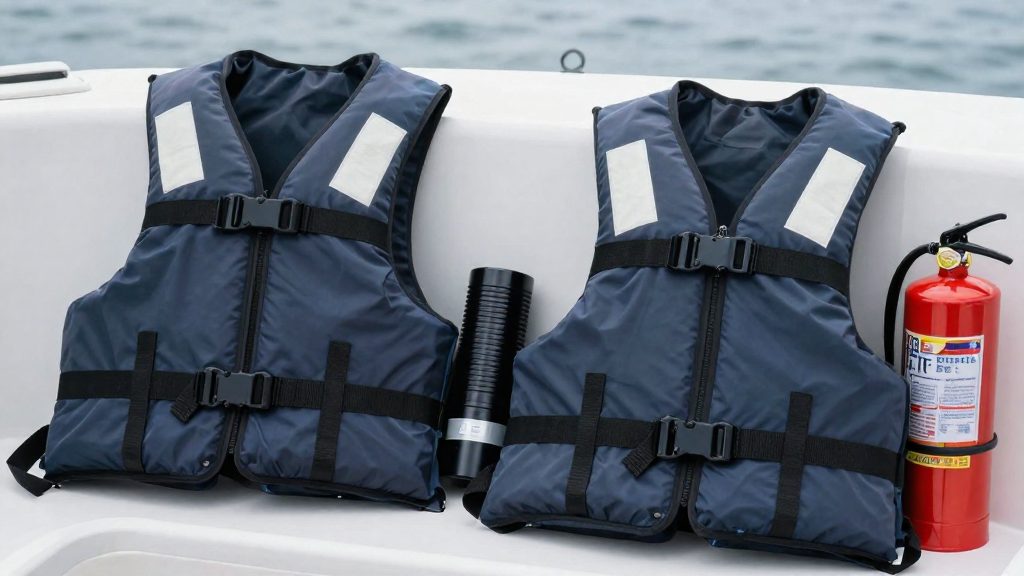
- Wear your life jacket. Choose one that fits your body and your activity, and wear it rather than stowing it. Most drowning victims in the statistics were not wearing one.
- Check the marine forecast. Look at the National Weather Service marine forecast for your area before departure, and turn back early if winds or waves build.
- File a float plan. Tell someone on shore your departure point, route, passengers, and expected return time.
- Do not operate impaired. Alcohol and other drugs slow reaction time and increase the risk of falls overboard and collisions.
- Plan for cold water. Even on a warm day, cold water can cause shock and rapid fatigue. Know how to get back aboard and stay with the boat if it is capsized.
If you are unsure whether you are covered by your state’s rule, or whether your card will be accepted in the waters you plan to use, contact your state boating agency before you launch. Confirming the rule takes a few minutes; discovering it at a boat ramp can cost you the trip.
Frequently asked questions
Does a Coast Guard boating safety course cost a fixed amount?
No single fee applies. Costs vary by provider and location, so ask the course provider or local Coast Guard Auxiliary flotilla for the current fee before you enroll.
Do I need a boating card to paddle a kayak or canoe?
It depends on your state. Many rules focus on motorized boats, so unpowered craft may not require a card in some states, but you should confirm with your state boating agency.
Will a card from another state be accepted where I boat?
Often, but not always. Check whether the state where you will boat recognizes NASBLA-approved cards or the card issued by your home state, because acceptance rules differ.