Why does a boat battery lose charge over winter?
A battery left alone keeps losing charge even with every switch off. This self-discharge speeds up in warm conditions and slows in cold ones, but it does not stop. Any load still connected adds to the drain: a bilge pump wired directly to the battery, a stereo’s memory, a battery monitor, or a leaking switch. A partly discharged battery is the real winter risk. Its electrolyte is weaker, so it can freeze at temperatures a fully charged battery tolerates, and freezing can crack the case and damage the plates. Long periods at low charge also encourage sulfation, the hard lead sulfate buildup on the plates that reduces capacity.
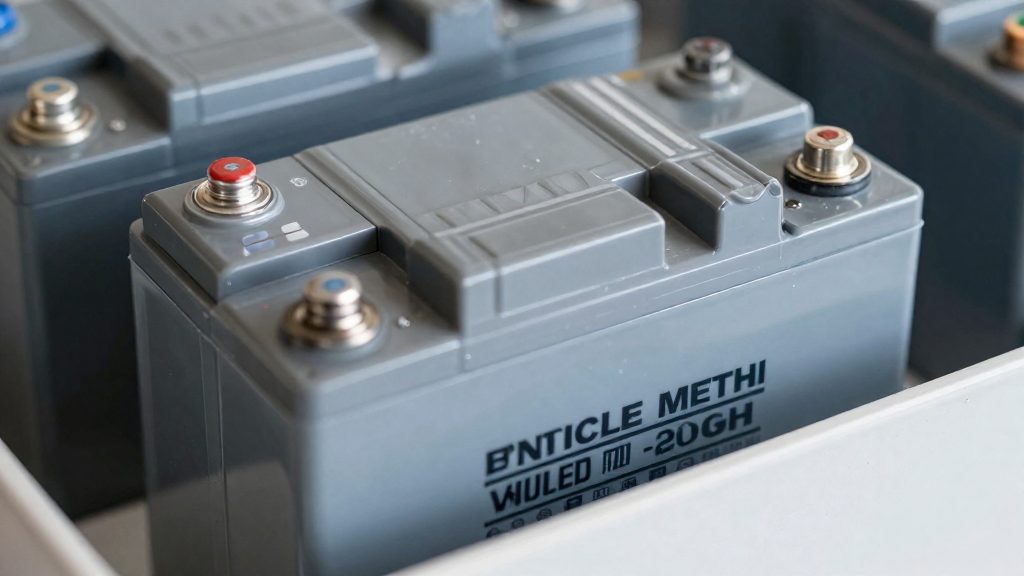
Should you remove the battery or leave it aboard?
Removing the battery is the safer choice for most owners, especially if the boat sits outdoors or in an unheated shed. You can charge it at home, keep it out of the bilge where water and cold collect, and check it easily. Leaving it aboard can work if you disconnect the cables at the terminals, keep the compartment dry and make the battery easy to reach. Either way, the battery must stay secured so it cannot shift, and it should never sit in standing water or against a fuel line.
How do you prepare the battery before storage?
Start with an inspection. Look at the case for cracks, bulges or leaks, and check the terminals for corrosion. If the case is damaged, do not store the battery; set it aside for safe disposal, as explained below.
Next, charge the battery fully with a charger matched to its type. Flooded, AGM and gel batteries need different charging profiles, so check your manufacturer’s documentation for voltages and charge stages. Do not assume a battery is full because an old charger has been running for a while. Confirm that it reaches full charge and stays there.
Then clean the posts and cable clamps. Use a stiff wire brush and a solution of baking soda and water, keep liquid out of the vent caps, rinse lightly with clean water and dry the parts thoroughly. Once the terminals are clean and dry, apply a thin coat of dielectric grease or the terminal protector your manufacturer recommends. Corrosion grows fastest where moisture sits, so this step is worth the few minutes it takes.
Where should you store it?
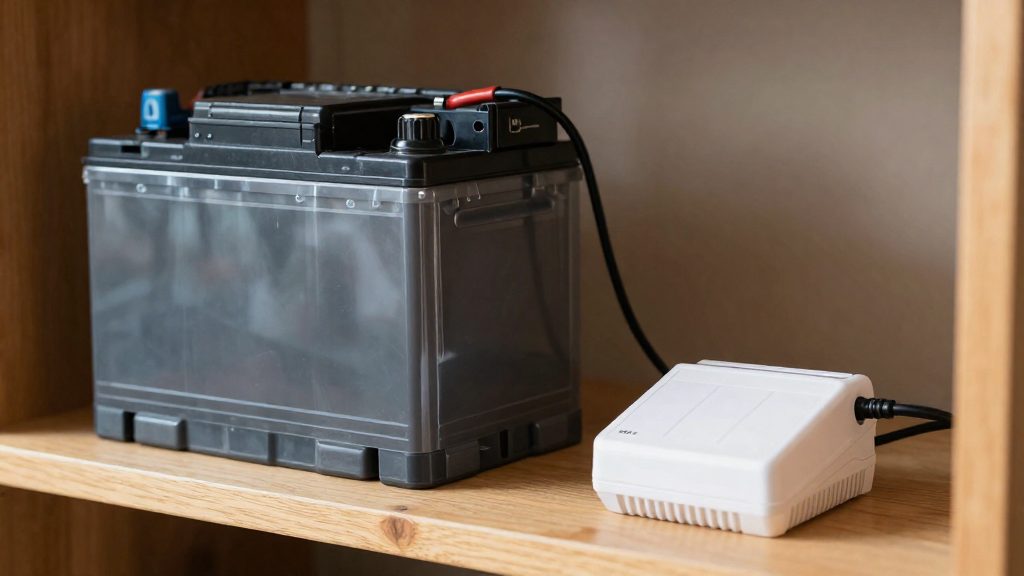
Store the battery upright on a dry, non-conductive surface such as a wooden board or plastic tray. Keep it away from metal tools, loose hardware and anything that could bridge the terminals. Avoid direct sun and keep the battery clear of heaters, stoves and fuel. Heat speeds self-discharge, and a discharged battery in cold weather is at risk of freezing, so aim for a space that stays above freezing and does not swing widely in temperature.
Choose a ventilated location, because charging releases hydrogen gas. Never store a battery in a sealed locker with fuel containers or fuel vapor. A well-ventilated garage or shed is a reasonable choice when the battery is charged and the space is free of ignition sources.
How do you keep it charged all winter?
Use a smart charger or battery maintainer that switches to a float or maintenance mode once the battery is full, and set it for your battery type. Avoid simple trickle chargers that run continuously without regulation. Overcharging drives off water from flooded batteries and produces more hydrogen, so a charger that stops at full charge is the safer option.
Charge only in a ventilated area, away from open flames, sparks and smoking. Hydrogen is lighter than air and collects near the top of an enclosed space, so keep the space ventilated while the charger runs and do not open the battery near an ignition source.
Check the battery at the intervals your manufacturer recommends. Measure its resting voltage with a multimeter and compare the reading with the manufacturer’s chart. If the reading is well below the full-charge value shown in the manual, recharge the battery before the next storage period. Keep a short log of dates and readings so you can spot a steady decline.
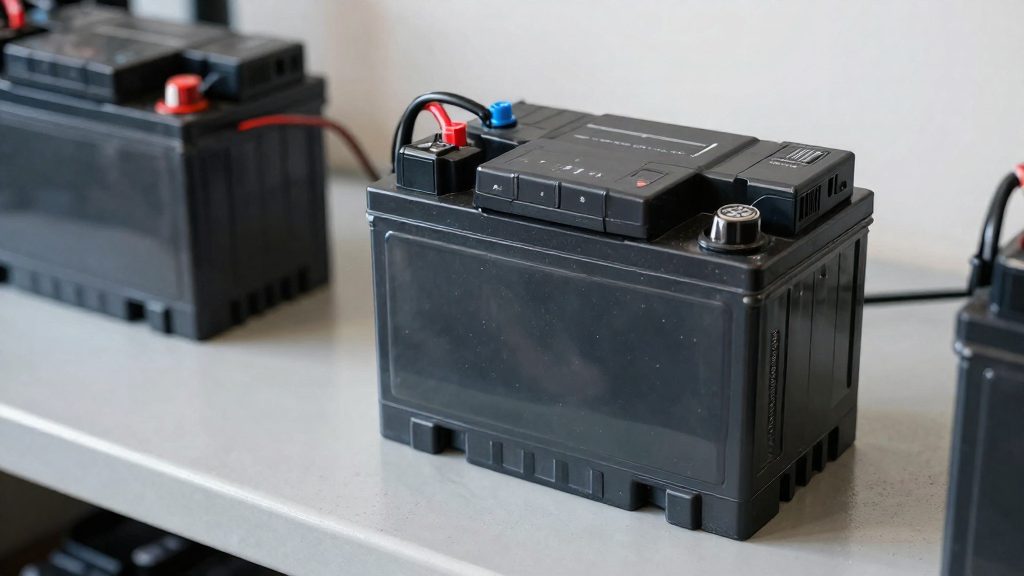
How do you disconnect and reinstall it safely?
Switch off all equipment before you disconnect anything. Remove the negative cable first, then the positive, so that a wrench touching the boat’s metal structure cannot short the battery. In spring, clean and inspect the battery again and charge it fully before installation.
When you reconnect, attach the positive cable first and the negative cable last. Tighten the clamps firmly, then check that the battery is secured in its tray or box.
The U.S. Coast Guard’s boat construction standards in 33 CFR 183.420 apply to manufacturers, but they give a useful checklist for any refit. The battery must be installed so that metallic objects cannot contact ungrounded terminals. It must not sit directly above or below a fuel tank, fuel filter or fuel line fitting. The boat must have a vent or other means to discharge hydrogen gas released by the battery. Confirm all three before you start the engine. Then test the charging system as your engine manufacturer directs, and watch the battery for heat or swelling during the first charge.
What about old or damaged batteries?
Lead-acid batteries contain lead and corrosive acid, so they should never go in household trash. The U.S. Environmental Protection Agency explains that the lead-acid collection network relies on retailers and dealers, which manage collection and recycling, along with municipal household hazardous waste sites that accept these batteries. When you return a used battery, the core charge paid at purchase is refunded, so bring the old battery back to the place you bought the new one or to a local drop-off site.
If a battery is cracked, bulging or leaking, the federal rules for businesses handling universal waste batteries require a closed, structurally sound container compatible with the battery’s contents, with no leakage under reasonably foreseeable conditions (40 CFR 273.13(a)(1)). Those business rules do not bind a private owner, but the same approach is sensible at home. Keep the battery upright in a leak-proof container, cover the terminals with tape, store it away from heat and metal, and call the drop-off site before you travel with it.
What mistakes cause problems in spring?
The most costly mistake is charging a battery that has frozen. A frozen battery may be internally damaged, and charging it can be hazardous. Have it inspected by a battery specialist before you charge it.
Another error is assuming that a full charge in autumn means the battery is still good in spring. Test the battery before reinstalling it, because self-discharge and sulfation can leave it weaker than it looked when you stored it.
Finally, skipping the terminal cleaning or the grease step lets corrosion build up under the cable clamps, where it causes poor connections and hard starts. A few minutes of care in autumn saves a frustrating morning on the water in spring.
Frequently asked questions
Can a solar panel keep a stored boat battery charged?
A solar panel can offset some self-discharge, but it does not replace a full charge before storage. Use a charge controller rated for your battery type, follow the manufacturer’s documentation for the panel and controller, and check the battery’s voltage periodically, since low winter sun may not keep up.
Should I add water to a flooded battery before storage?
Check the electrolyte level after charging, not on a discharged battery. Top up only with distilled water to the level marked by the manufacturer, and never overfill. Sealed AGM and gel batteries have no filler caps and should not be opened.
Does shrink-wrapping the boat protect the battery?
No. Shrink-wrap does not stop self-discharge or protect the battery from cold, so it needs the same preparation whether or not the boat is wrapped. Keep the battery dry and check it on the schedule you use for the rest of the winter.