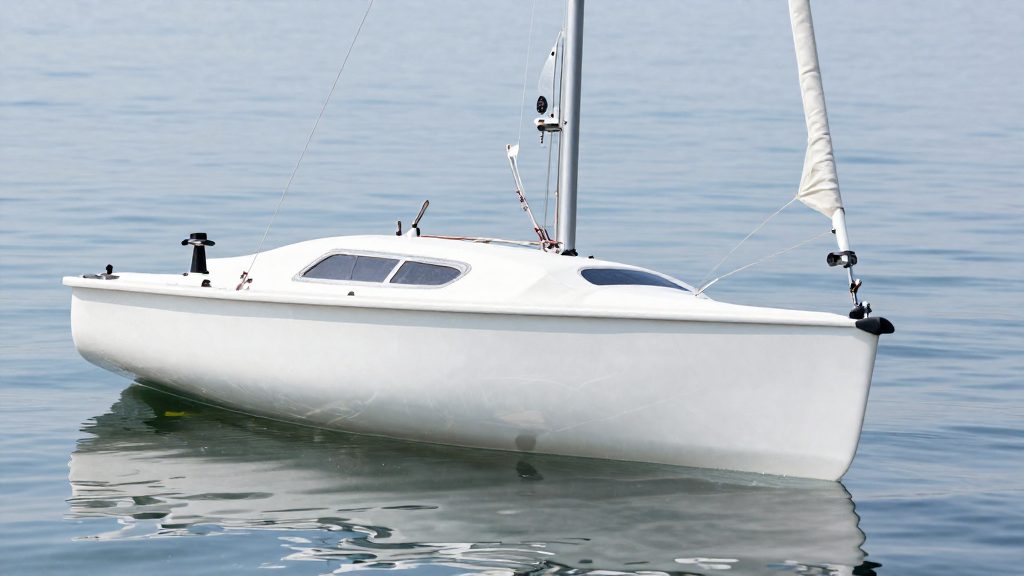
Should you stay with a capsized boat?
In most cases, yes. An overturned hull that stays afloat is a larger target for searchers than a person in the water, and holding on to it saves energy. This applies only while the boat is stable. Move clear of it if it is sinking, on fire, or drifting you toward danger such as rocks, a breakwater or a busy shipping lane.
Immediate steps after a capsize
Start with a quick head count. Anyone who is hurt, unconscious or missing needs attention first, and you should report that when you call for help.
Next, put on life jackets if you are not already wearing them. Get clear of tangled lines and loose sails, and check for anything that could trap you, such as the mast or rigging lying in the water. Do not swim under the hull or the sails.
Then call for help, even if the situation looks manageable. The details that matter most are your position, the number of people aboard and the nature of the emergency. A capsized hull can drift, so give your position as accurately as you can. Use the distress function of your marine VHF radio, a personal locator beacon if you carry one, or a mobile phone if you have coverage. Check the manual for your radio, because the exact steps differ by model.
How do you signal for help?
The call itself is your first signal. Begin with the standard distress word, Mayday, then give the name of the boat, your position, the number of people aboard and the nature of the distress. Repeat the message and listen for a reply between transmissions.
Visual signals matter once a searcher is nearby. A whistle carries farther than a shout, and a light or bright clothing with an arm raised makes you easier to find. Keep your head up and stay close to the hull, because the hull is usually the first thing a searcher sees.
Surviving cold water while waiting
Water removes heat much faster than air does. The U.S. Army Corps of Engineers, with the Coast Guard, notes that water takes heat about 25 times as fast as air. The first priority in cold water is therefore to get out of the water and onto the hull, where you lose heat more slowly.
Keep your clothes on, including your shoes and a hat. Trapped layers of clothing hold warmth and help you resist hypothermia. Wear your life jacket, which helps keep heat in your core and lets you take the HELP position, short for Heat Escape Lessening Posture. In that position you draw your arms and legs in toward your body to slow heat loss. If several people are in the water, huddle together to share body heat.
The first moments after immersion are the most dangerous for your breathing. Cold water can trigger a sudden gasp reflex, so try to keep your face out of the water and breathe slowly. Panic makes this worse.
Unless a hull or a shore is within reach and you judge the swim to be safe, conserve your energy instead of swimming. The time it takes for hypothermia to set in depends on water temperature, body size, clothing and fitness. No single safe duration applies to every situation, so do not plan around a fixed time limit.
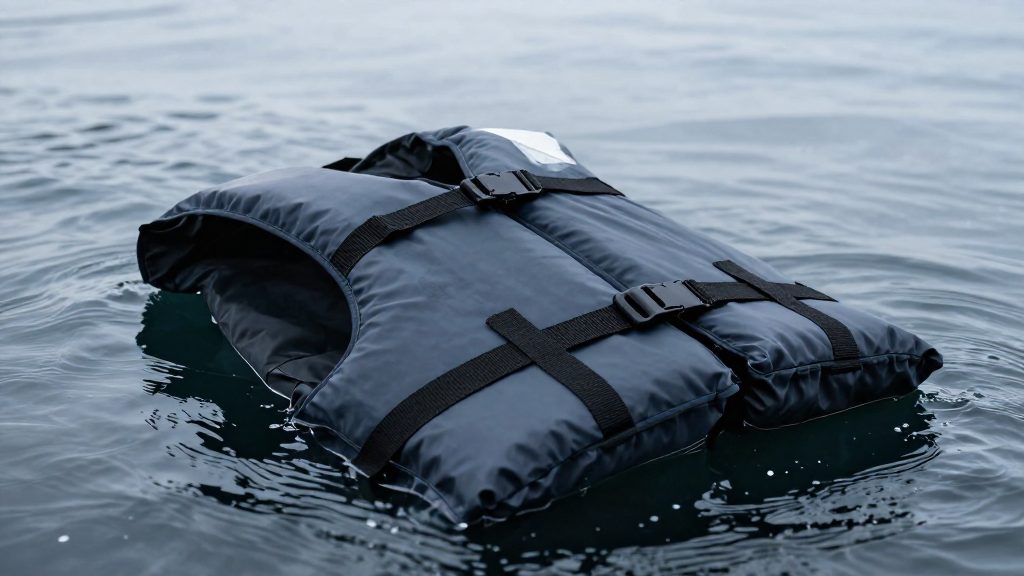
How is a small sailboat righted?
U.S. Sailing describes the scoop method for a small centerboard sailboat with two crew. One sailor is the scooper and the other is the scoopee.
The scooper moves around the boat to the centerboard and climbs onto it with feet near its base. Leaning back, braced with a sheet or halyard, the scooper brings the boat upright.
The scoopee treads water near the stern until the scooper controls the centerboard. Then the scoopee moves to the centerboard trunk, frees the mainsheet, the jib sheets and the boom vang, and holds onto the cockpit structure as the boat comes upright. Once the boat is balanced and under control, the scoopee helps the scooper aboard over the stern.
If you are alone, release the mainsheet and boom vang, climb onto the centerboard, hold the gunwale and lean back. If the mainsail lies to windward, turn the boat so the sail lies to leeward before you right it. Standing a boat up with the sail to windward will likely capsize it again.
Two warnings apply in every case. Avoid putting pressure on the tip of the centerboard, because it can break. Keep clear of the space under the boat and its sails. Attempt righting only when the wind and sea allow the crew to hold position. If conditions are too strong or someone is tangled in lines, wait for help instead.
Powerboats have different hull shapes and no centerboard, so the method above does not transfer. Follow the manufacturer’s documentation for any recovery or self-righting procedure.
Reboarding and checking the boat
Once the boat is upright, climb back aboard over the stern, as U.S. Sailing describes for small sailboats. Before anything else, check everyone for injuries and recheck the head count.
Then inspect the boat. Look at the hull for damage, check the bilge for water, check the rig for damage, and make a list of any gear that was lost. Bail or pump out the water before you do anything else on board.
If water is entering faster than you can remove it, or if the hull or rig is damaged, do not continue sailing. Call for assistance and keep weight low and centered while you wait. Resume sailing only after the boat has been checked and you are confident it will stay upright and afloat.
Prevention and gear to carry
Most capsize emergencies are easier to survive when the crew is prepared. Wear your life jacket on the water rather than stowing it, and check that it fits before you leave the dock.
Practice releasing the mainsheet and boom vang quickly, and keep sheets and lines clear so they can be freed without fumbling. Practice righting in calm, shallow conditions with a crew member watching, so the procedure is familiar before you need it.
Carry a whistle, a waterproof handheld VHF radio and, for offshore sailing, a personal locator beacon. Follow the manufacturer’s instructions for each device, including how to test it and how long its battery lasts. Dress for the water temperature, not the air temperature, since the water is what will take your heat.
Frequently asked questions
Does the scoop method work on a powerboat?
The scoop method described by U.S. Sailing applies to small centerboard sailboats. Powerboats have different hull shapes and no centerboard, so check the manufacturer’s documentation before attempting any righting method.
What should I do before heading out on the water?
Tell someone ashore your route, the number of people aboard and when you expect to return. If you are overdue, that person can alert the authorities and give them a starting point for a search.
Do I need a survival suit for cold-weather boating?
Whether a survival suit is worthwhile depends on the water temperature, how far you go from shore and how quickly help could reach you. Check the manufacturer’s rating and instructions for any suit you consider, and check the rules and guidance of your state boating agency.