Raise the alarm and keep the person in sight
As soon as you know someone is in the water, shout “Man overboard!” and say which side. Everyone aboard needs to hear it. Name one crew member as spotter, whose only job is to keep eyes on the person. Watch the person, not the controls. A head in waves is easy to lose, and a spotter who looks away is no longer a spotter.
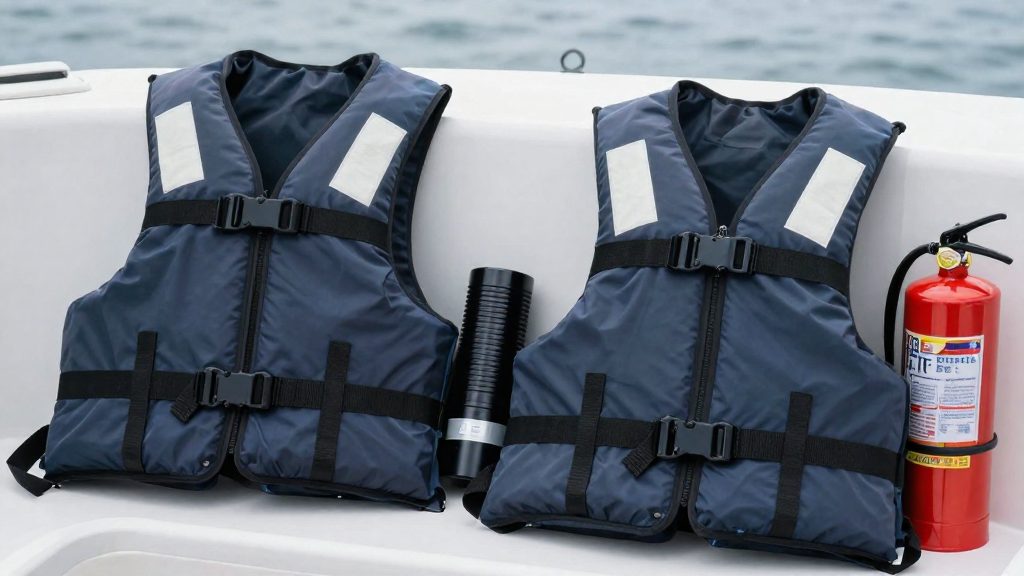
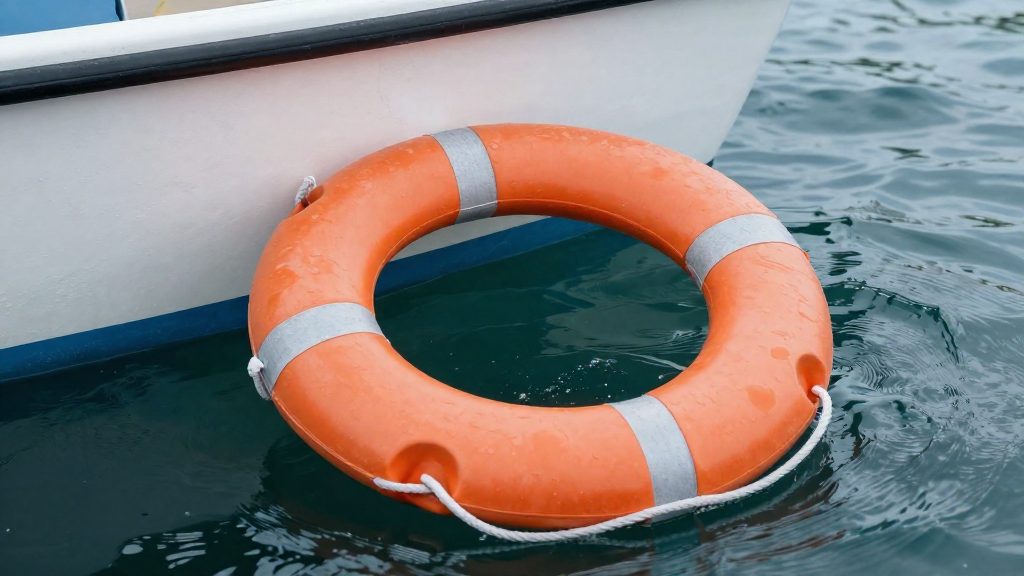
Throw a life jacket or other throwable flotation toward the person, as close as you can get safely. Flotation gives them something to hold and gives you a visible marker. If your chartplotter has a man-overboard waypoint function, mark the position now, before you turn the boat. A position you lose is harder to recover.
Why the first minutes matter most
Cold water is the main threat in most falls, and it is easy to underestimate on a warm day. The National Weather Service states that gasping for breath or rapid breathing from sudden immersion can be triggered by water as warm as 77°F (25°C). Water at 50 to 60°F (10 to 15°C) can cause cold shock that is just as severe. Cold shock can cause sudden changes in breathing, heart rate and blood pressure, and its effects can be felt within seconds of entering the water.
Two consequences follow. First, the gasp reflex can pull water into the lungs, so the person’s face needs to stay clear of the water whenever possible, and they need flotation immediately. Second, the person may lose the use of their arms and legs within a short time, so you cannot count on a swimmer to reach the boat. Hypothermia develops more slowly. The National Weather Service places its onset at a core body temperature of 95°F (35°C), which is why a cold, wet person needs careful warming long after the rescue.
Water temperature matters more than air temperature. A bright, warm afternoon can coexist with water that will overwhelm an unprepared swimmer. Plan for the water.
Stop the boat under control
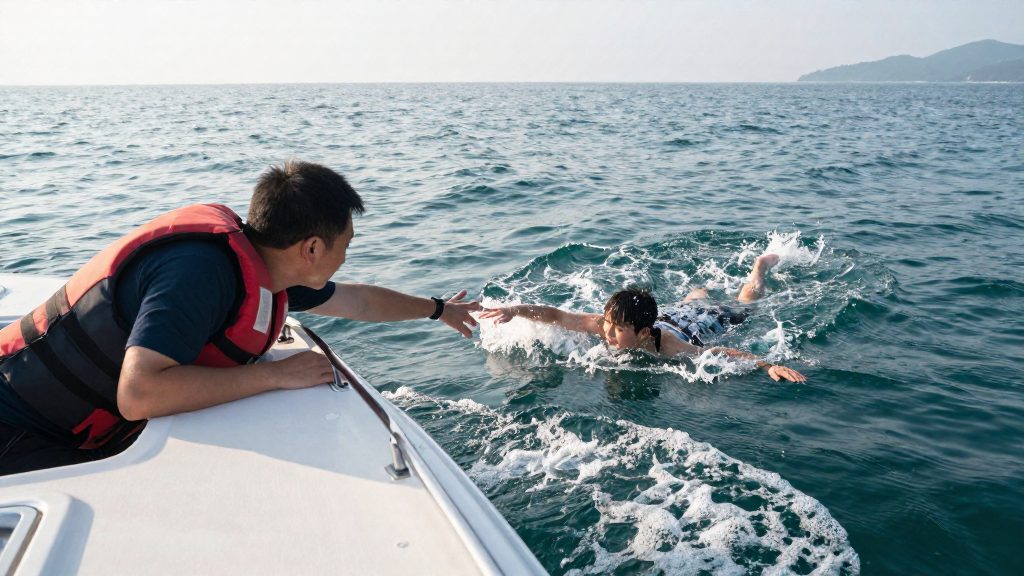
Turn the boat back toward the person without losing sight of them. Slow down enough that you can stop and maneuver with a margin, and approach so that you can keep the person clear of the propeller at all times. Keep the person in view throughout the approach.
As you come alongside, put the engine in neutral or shut it off, especially near the swim platform. Anyone in the water close to a running drive is at serious risk. Do not run the boat straight at the person, and do not let the hull or the transom drift onto them.
Give the helm to the most experienced and calmest person aboard, and let the spotter call the position and the distance. If the person cannot help themselves back aboard, do not try to haul them over the side alone and at risk to yourself. Use the boat’s reboarding aids or whatever assistance you can get without endangering anyone.
Do not jump in unless it is the last resort
The National Park Service advises that jumping in to get someone is the last option. Never enter the water without your own life jacket on. A rescuer in the water doubles the emergency: now two people need help, and you have lost the crew member who was steering the recovery. Stay with the boat, handle it carefully, and keep the person in sight.
Call for help as soon as the alarm is raised
Call 9-1-1 for help, as the National Park Service guidance advises. If you cannot reach the person right away, be ready to tell the operator your location. You can also send a distress call on marine VHF Channel 16, which is often more reliable offshore, where a phone may have no signal. Do not wait until the recovery attempt has failed.
When you call, give your position, the number of people in the water, whether the person is conscious, whether they are wearing a life jacket, and whether anyone is hurt. If you are unsure of your exact position, give the best estimate and keep the line open.
If you are the one in the water
Stay calm and keep your clothes and shoes on. Trapped air in clothing helps you float. If you cannot get out quickly, use the Heat Escape Lessening Position, known as H.E.L.P.: draw your knees toward your chest, cross your arms, and hug your life jacket. If others are in the water with you, form a huddle, shoulder to shoulder, to share body heat.
Get out of the water as soon as you can do so safely. If you cannot swim to safety, conserve your energy and body heat and wait for rescue. Swimming for distance in cold water uses energy quickly and gives you little in return.
Bringing the person back aboard
Once the person is out of the water, get them into a warm, dry place. Remove wet clothing and wrap them in dry blankets. Do not give hot drinks to someone who has been in cold water for a long time, because the National Park Service advises against it. Do not rush them into a hot bath or shower; rewarm them gradually.
If the person is unconscious, get them out of the water, call 9-1-1, and start CPR. Even if the person seems fine afterward, have them checked by a medical professional. Cold shock and water taken into the lungs can cause problems that appear later, and a person who has been in cold water should not be left to recover on their own.
Prevent the fall and prepare the crew
Wear a life jacket in and around the water. The National Weather Service states this plainly. Choose a design suited to your activity, and dress for the water temperature rather than the air temperature. A wetsuit or drysuit adds insulation, but it does not replace a life jacket.
Keep handholds, the boarding ladder and the swim platform in good condition, and keep the deck clear of loose gear that can trip someone at the rail. If your boat has an engine cut-off lanyard, wear it as the manufacturer directs, because the cut-off only works if it stays attached to you.
Before each season, run a short drill. Assign a spotter, a helm, a caller and someone to throw flotation. Practice stopping the engine and approaching a fender or a cushion in the water, and practice the calls you will make on the radio. If your boat carries a man-overboard device, read the maker’s instructions and its stated limits before you rely on it, and use it only as the maker describes.
Check the marine forecast before you leave the dock. Wind and waves change how difficult a recovery will be, and a crew that plans for the sea state is better placed to respond quickly.
After the incident
Report the incident to the appropriate authorities, even if the person was recovered and seems well. Record the time, the position, the water and air temperatures if you know them, the sea state, and what each crew member did. Those details help responders and help you review what went right and what needs changing before the next time you head out.
Frequently asked questions
What if I am alone on the boat when someone falls overboard?
Throw flotation, keep the person in sight, and call for help before you attempt anything else. Only try to bring someone back aboard alone if you can do it without putting yourself at risk. Otherwise, stay with the boat and wait for responders.
Is a wetsuit enough protection in cold water?
No. A wetsuit adds insulation, but it does not replace a life jacket. Check the manufacturer’s documentation to see how the suit performs in the water temperatures you expect to meet.
Should I report a man-overboard incident if the person was recovered?
Yes. Report it even if the person seems well, because they may need a medical check and the details help responders and other boaters learn from the event.