What should you do in the first seconds after someone goes overboard?
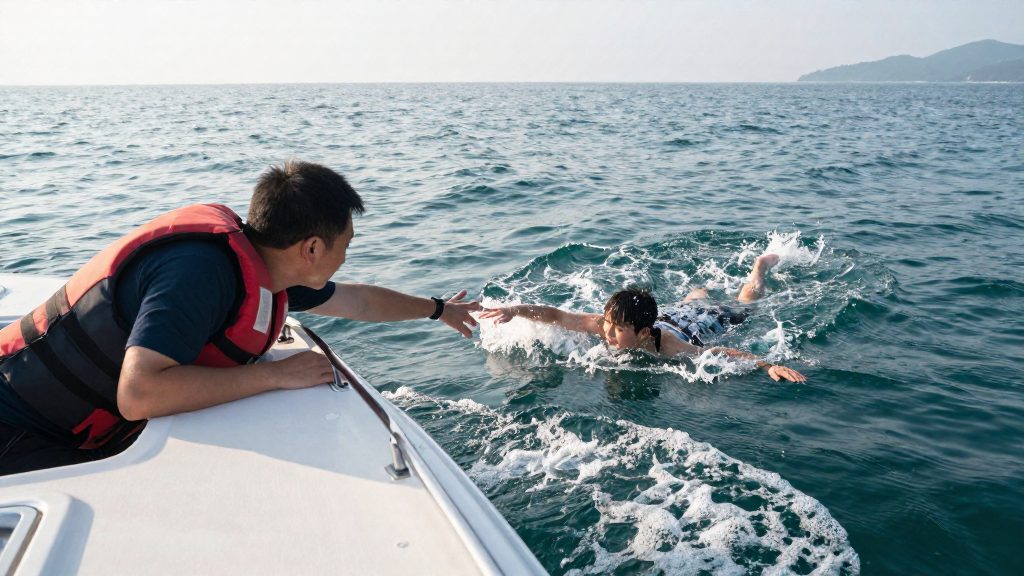
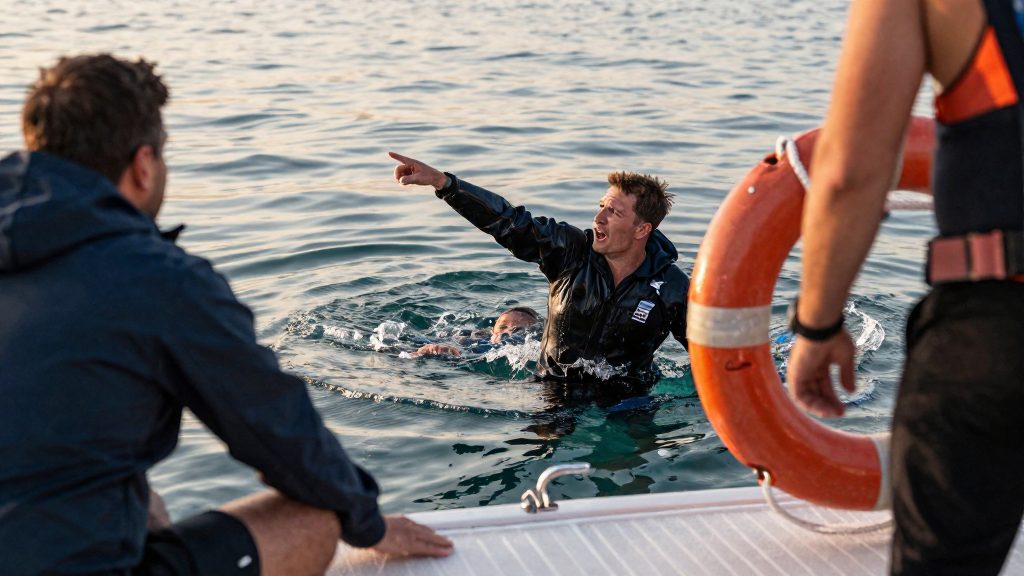
A man overboard emergency is decided in the first few seconds, so the first actions must be automatic. Shout “Man overboard!” and name the side the person went over, so everyone knows where to look. Then assign one crew member as spotter. This person has a single job: keep the person in sight and point at them without interruption. Losing visual contact is the most common reason a recovery fails, so do not give the spotter any other task.
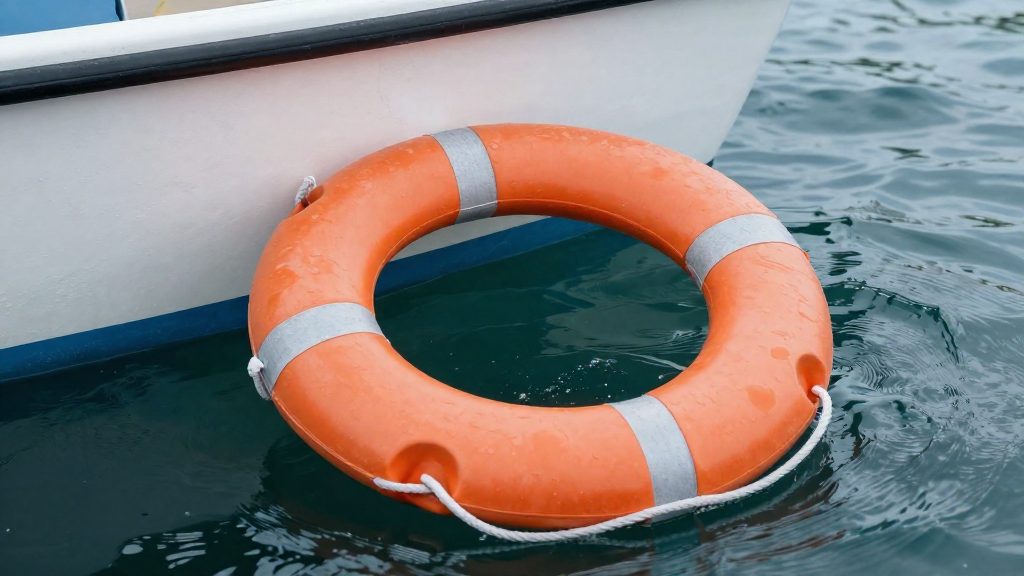
Throw a buoyant flotation device toward the person at once. A ring life buoy or a buoyant cushion works well; both are Type IV throwable devices. Keep the device attached to a line where you can, so you can pull it back toward the boat. Then press the man overboard function on your GPS or chartplotter to store the position. If the person drifts out of view, that stored point gives you a reference for returning.
Next, alert the rest of the crew and, if someone else is aboard, ask them to make a distress call on the VHF radio or by phone where coverage allows, while you keep the boat under control. Reduce speed, but keep enough way on to steer. Stopping in the wrong place costs time when you need to position the boat for a turn.
Cold water changes the picture. In the first moments of immersion, a person often gasps involuntarily, and panic or hyperventilation can lead to water being inhaled. Flotation and a calm, steady breathing pattern matter most at this stage. Wearing a properly fitted lifejacket keeps the airway above the water, which is why the wearable PFD is the first line of defense. Hypothermia develops more slowly than cold shock, so your priority is a fast, well-practised recovery rather than a long search.
Which maneuver brings you back to the person?
Two standard maneuvers are taught for returning to a person in the water: the Anderson turn and the Williamson turn. The choice depends on visibility, and both should be practised before you need them.
The Anderson turn is the one to use when the person is in sight. Put the helm hard over toward the side the person went over and hold a continuous turn that brings the boat back onto the person’s position. Watch the person throughout, and reduce throttle as the boat comes around so you can stop with the person close and ahead of the bow. It works well in clear daylight because the spotter can keep the person in view the entire time.
The Williamson turn is used when the person is out of sight, at night, or in poor visibility. You first turn toward the side the person went over, then reverse the helm to turn the other way, until the boat is heading back along its original track. Because the boat returns along its own wake, the wake leads you back toward the area where the person went in. This is why the stored GPS position and a steady heading matter so much.
Exact helm angles and handling vary with hull type, speed and sea state, so do not rely on memory of a number in a real emergency. Learn the sequence and the angles from a certified course, then practise in calm water with a fender or buoy standing in for the person. Repeat the drill with each crew member so that anyone can take the helm if the skipper is the one who is hurt or has to keep watch.
How do you approach the person in the water safely?
The approach is where many avoidable injuries happen. Once you are a safe distance away, shift into neutral or stop the boat. Never reverse toward the person. The propeller and the stern are the greatest hazards, and a swimmer who is close to a turning propeller can be seriously injured. Steer away from the person while slowing, and keep the propeller clear of the swimmer for the whole approach.
Plan the approach so that wind and current carry the boat away from the person rather than onto them. Approach from downwind or against the current, slowly, so you can stop short if the person drifts. Shut off the engine, or cut its ignition, before the swimmer is near the drive or the hull. Recreational boating guidance also recommends bringing the boat alongside the person at the usual boarding point rather than running down on them.
If the person is conscious, tell them to hold the flotation device and to stay still while the boat comes to them. Give simple, clear instructions. A person who knows what you are doing is less likely to panic and more likely to help with their own recovery. If you have a second crew member on deck, let them manage the flotation device and any line while the helmsman holds the position.
What equipment does US federal law require?
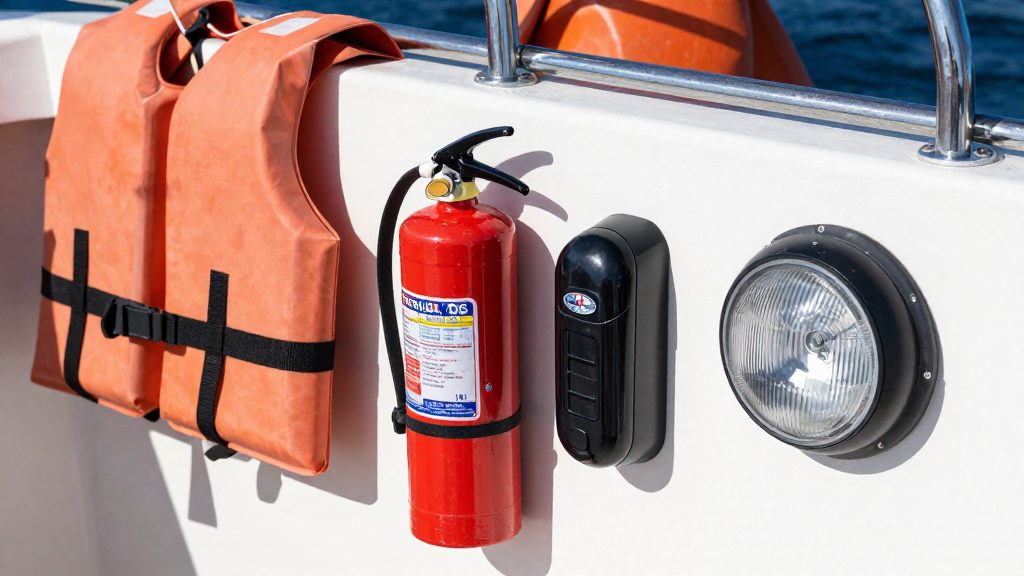
The federal equipment rules for recreational boats are set out in 33 CFR 175.15. Every person aboard must have at least one wearable personal flotation device (PFD), used according to the requirements on its approval label and, where the label refers to it, the owner’s manual. Any vessel 16 feet or more in length must also carry one throwable PFD in addition to the wearable devices. Keep the throwable where you can reach it quickly from the helm, not buried in a locker.
Engine cut-off rules are separate and apply to a narrower group of boats. Under Section 8316 of the Elijah E. Cummings Coast Guard Authorization Act of 2020, operators of recreational vessels under 26 feet, with an engine producing at least 115 pounds of static thrust, must use the engine cut-off switch link when operating on plane or above displacement speed. The link is not required when the main helm is inside an enclosed cabin, or during docking, trailering, trolling or operation in no-wake zones. Under Section 503 of the Coast Guard Authorization Act of 2018, manufacturers must install these switches on new boats of that size.
The link only works if it is attached to you. Clip it to your clothing or lifejacket so that a fall from the helm pulls it free and stops the engine. A switch that is stowed on the console cannot stop a boat that has already left its operator behind. Some states add their own requirements, so check with your state boating agency before you head out.
How do you bring an incapacitated person back aboard?
Re-boarding is often the hardest part of the whole recovery. If the person is conscious and able to help, use the swim ladder, boarding platform, grab handles or transom door, which are the usual entry points on recreational boats. Position the boat so that the entry point is downwind or in the lee of the hull, and make sure the person can reach it without swimming against the wind.
If the person cannot help, do not attempt to lift them by hand alone. Use a line, a halyard or a rescue sling rigged to a tackle or winch, so that mechanical advantage does the work. Lift as gently and as smoothly as the situation allows, and keep the casualty as horizontal as the boat permits. A cold, exhausted or injured person can faint or collapse when lifted suddenly upright, so a horizontal recovery reduces that risk. Support the head and check breathing as soon as the person is aboard.
Do not enter the water to assist unless you are trained for it and attached to a line. A second person in the water doubles the number of people to rescue, and it removes the only person currently at the helm. If the person is unconscious or seriously injured, call for emergency assistance as soon as you can and keep them warm, dry and as still as possible until help arrives.
How can you prevent a man overboard in the first place?
Most recoveries are avoided through prevention. Wear your PFD at all times on deck in rough conditions, not just when you are at the helm. Clip a harness tether to a strong point when you move forward, work near the edge or go out on the bow, and stay low with a firm grip on the rails. Do not sit on the gunwales or the transom while underway, because a single wave or sudden swerve can throw a person off balance.
Set up the engine cut-off link before you leave the dock and check it on every trip. Make sure every crew member knows where the throwable device is stowed, how the GPS man overboard function works and who will act as spotter. Run a short drill with the crew before you go out. A plan that everyone has rehearsed is far faster than one improvised in an emergency, and it turns a scramble into a sequence of simple, known steps.
Frequently asked questions
Should I jump into the water to help the person?
Not normally. Entering the water puts a second person at risk and leaves the boat without anyone at the helm. Enter only if you are trained, wearing a PFD, attached to a line, and the boat cannot reach the person.
How long can someone survive in cold water?
No reliable single figure exists. Survival depends on water temperature, clothing, flotation, fitness and whether the person can keep their head above water, so the aim is a fast, well-practised recovery.
What should I do once the person is back aboard?
Check breathing, dry them and cover them, and keep them as still as possible. Seek a medical evaluation even if they seem fine, because the effects of cold immersion can appear later.