Does a commercial trip need a Coast Guard credential?
If you carry people on the water in exchange for payment, a state boating safety certificate is not enough. In the United States, federal law governs passenger operations on uninspected vessels, and the U.S. Coast Guard issues the credentials that apply. Under 46 CFR 15.605, a self-propelled uninspected passenger vessel must be under the direction and control of an individual holding a license or Merchant Mariner Credential (MMC) endorsed as Operator of Uninspected Passenger Vessels (OUPV). For uninspected passenger vessels of 100 gross tons or more, the rule requires a credentialed Master.
The federal test depends on the vessel and on the people aboard. Size, propulsion, and the number of passengers carried for hire all determine which credential applies. For that reason, read the rules for your exact operation rather than relying on general advice about boating licenses.
OUPV and Master: what each credential covers
The OUPV, often called the six-pack license, is the entry-level commercial credential for smaller passenger vessels. Under the inland endorsement in 46 CFR 11.467, the credential applies to vessels of less than 100 gross tons (GRT) that carry six or fewer passengers. The inland endorsement includes all inland waters except the Great Lakes. The regulation also allows restricted endorsements for specific bodies of water approved by the cognizant Officer in Charge, Marine Inspection (OCMI).
Waters matter as much as passenger count. An inland endorsement does not authorize operation on coastal or ocean waters. Near coastal and ocean endorsements require additional sea service and waters-specific experience. The current figures are set in the National Maritime Center’s OUPV guidance, which you should consult before you plan any route beyond inland waters.
The Master credential is the next level. Under 46 CFR 15.605, larger uninspected passenger vessels of 100 GRT or more must be under the command of a credentialed Master. Passenger capacity on such a vessel is defined by its own inspection documents and its operating limits, not by the operator’s personal credential. Never carry more people than the vessel’s documents allow, even if your credential would otherwise permit the activity.
How sea service is counted
For the inland OUPV, the regulation requires 12 months of experience in the operation of vessels (46 CFR 11.467, paragraph e). The National Maritime Center expresses sea service in days, and third-party guides quote different day totals and recency windows, some based on older rules. Use the current NMC checklist as the reference for the day count and for any recency requirement. Do not plan around a rule of thumb from a training website.
Counting rules matter as much as the total. Under 46 CFR 10.107, a day of sea service on vessels under 100 GRT counts only if it meets a minimum number of hours on the water. Check the current text for the exact threshold, because a day that falls short does not count toward the requirement.
Sea service is documented on the NMC’s small-vessel sea service form, CG-719S, which records service on one vessel. Keep a dated logbook for every outing. Record the vessel name, hours on the water, your role aboard (operator, mate, or other), and the name of the owner or employer who can confirm the service. Claim only days you can document. An inaccurate claim can delay an application and create serious problems later.
Medical, drug, and security screening
The application includes a medical evaluation on Form CG-719K. The examining provider completes it against the vision and color perception standards the NMC sets. The form is accepted only within the time window the NMC specifies, so schedule the exam close to your submission date. If the window closes before the package is reviewed, ask the NMC how to proceed rather than submitting an outdated form.
Drug testing is also part of the package. Documentation is provided on Form CG-719P, or through the NMC’s accepted random-testing program documentation. Follow the NMC packet instructions on which documents go together and which should be sent separately, because mixing them can cause the package to be returned.
Applicants generally need a Transportation Worker Identification Credential (TWIC) issued by the Transportation Security Administration (TSA), or proof that a TWIC application is pending. Confirm with the NMC how a pending or renewing TWIC is handled before you submit.
A credential depends on its supporting documents staying current. Track the expiration dates on your medical form, drug-testing documentation, and TWIC, and renew early. Do not take paying passengers aboard while any of these items has lapsed.
Vessel documentation and required safety equipment
A vessel used in commercial service generally must be documented with the National Vessel Documentation Center (NVDC), with the commercial endorsement that matches its trade. Whether documentation is required depends on the vessel’s size, ownership, and the kind of service it provides. Confirm your vessel’s status with the NVDC before the first paid trip.
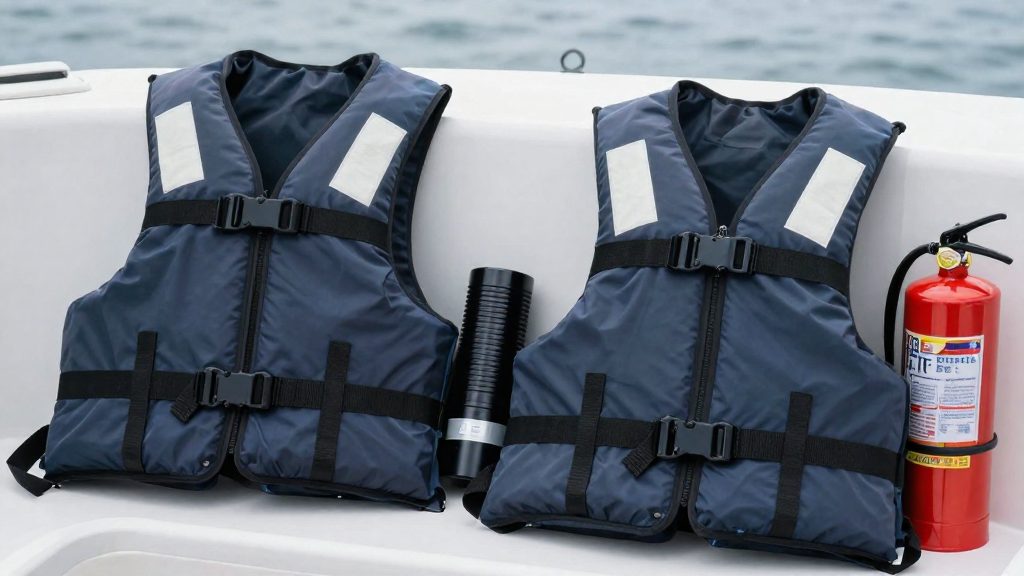
Federal rules for uninspected passenger vessels require life jackets for everyone aboard, visual distress signals, and fire extinguishers. The type, number, and placement of each item depend on vessel length and class. The governing requirements appear in Title 46 of the Code of Federal Regulations and in Coast Guard guidance for uninspected passenger vessels. Confirm the exact requirements for your vessel there, and do not rely on a general boating checklist.
Use the manufacturer’s documentation for each device. It states the approval markings, the rated use, the expiration or service dates, and the inspection intervals. Test devices before each trip, check that each life jacket fits the passenger it is meant for, and replace any expired or damaged unit. If a required device is missing, damaged, or expired, do not get underway with passengers.
Operating safely once you hold the credential
A credential authorizes the activity; it does not replace seamanship. Before each trip, check the marine forecast from the National Weather Service and set a go/no-go threshold in advance. Wind, sea state, visibility, and forecast changes all matter, and a planned trip should be cancelled rather than pushed through a deteriorating forecast.
Brief every passenger before departure. Show where the life jackets and fire extinguishers are, explain how to put on a life jacket, and tell passengers what to do if someone goes overboard. Keep the passenger count within your credential and your vessel’s documents at all times, and keep a passenger list ashore if your operation requires one.
Report marine casualties to the Coast Guard as the regulations require, and keep records of any incident, injury, or equipment failure. Those records support your next inspection and your future credential renewals.
Applying in the right order
Follow the sequence below to avoid wasted fees and delays. First, confirm whether your activity counts as carrying passengers for hire. Second, identify your vessel category: propulsion, gross tonnage, and passenger count. Third, choose the waters you need, whether inland, near coastal, or ocean. Fourth, build complete sea-service records. Fifth, schedule your medical evaluation and drug-testing documentation, and secure your TWIC. Finally, submit the complete package through the NMC and wait for the decision.
Do not carry paying passengers until the credential is issued and its endorsements match your waters, your vessel, and the number of people aboard. If any of those factors changes, check the endorsement before you sail.
Frequently asked questions
Can a foreign captain’s license be used on US waters for paid trips?
Generally not on its own. Carrying passengers for hire under US federal rules requires a Coast Guard credential, so check with the National Maritime Center before operating.
Do I need a credential if friends only share the fuel cost of a day trip?
Whether cost sharing counts as carrying passengers for hire is a legal question. Ask the National Maritime Center or a maritime attorney before you do it.
Does an inland endorsement let me run a route across a bay or along the coast?
No. Waters are part of the endorsement. Coastal and ocean operation requires the matching endorsement and documented experience on those waters.
What should I do if my medical form expires during the application?
Ask the National Maritime Center how it handles expired forms, and do not submit an outdated form without confirming the procedure.