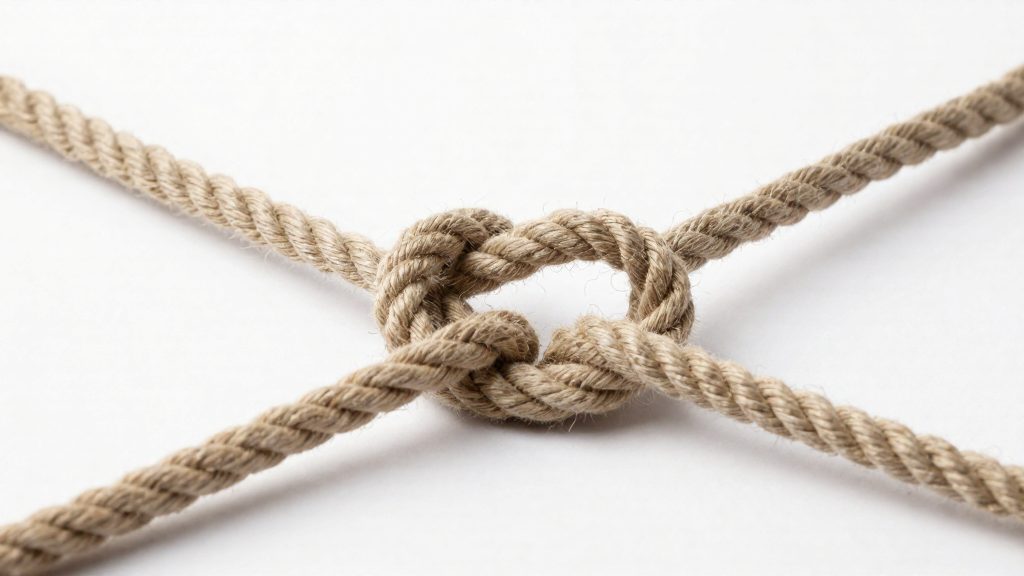
What is a figure eight knot?
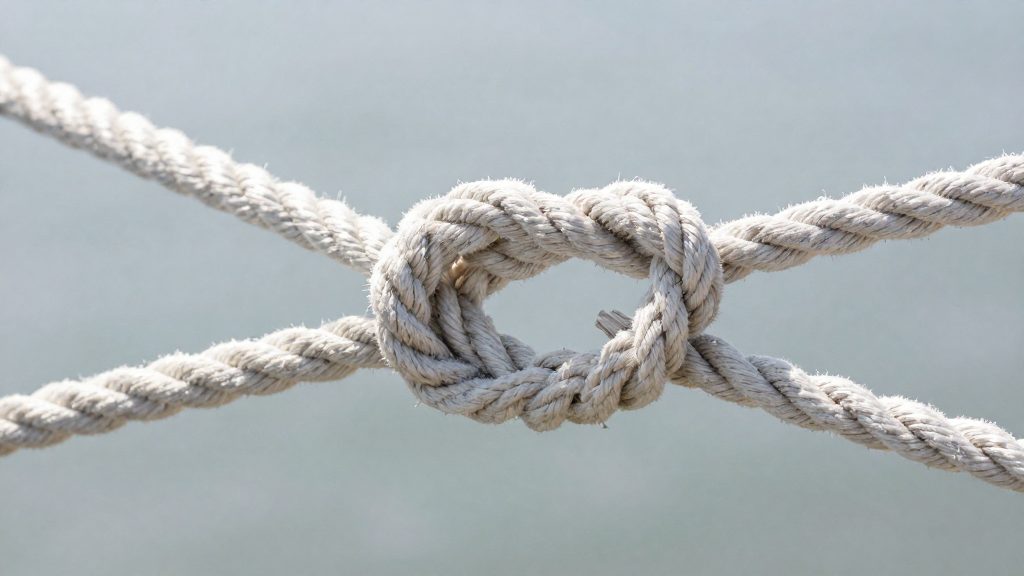
The figure eight is a stopper knot. Tied in the end of a line, it is bulkier than the line itself, so the line cannot run out through a block, fairlead, eye or cleat. Its shape is easy to recognize, which makes it simple to check by eye. Most boaters learn it early because it is quick to tie and relatively easy to untie after light loads.
The knot is a stopper, not a securing or load-bearing knot in the sense used for mooring, towing or rescue. Keep that distinction in mind as you read the sections below.
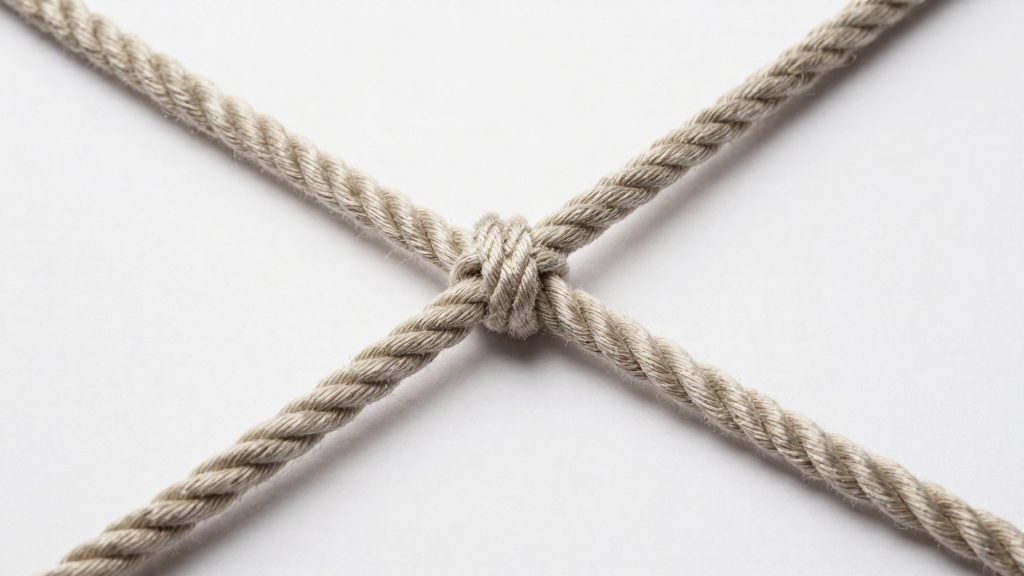
When do boaters use a figure eight?
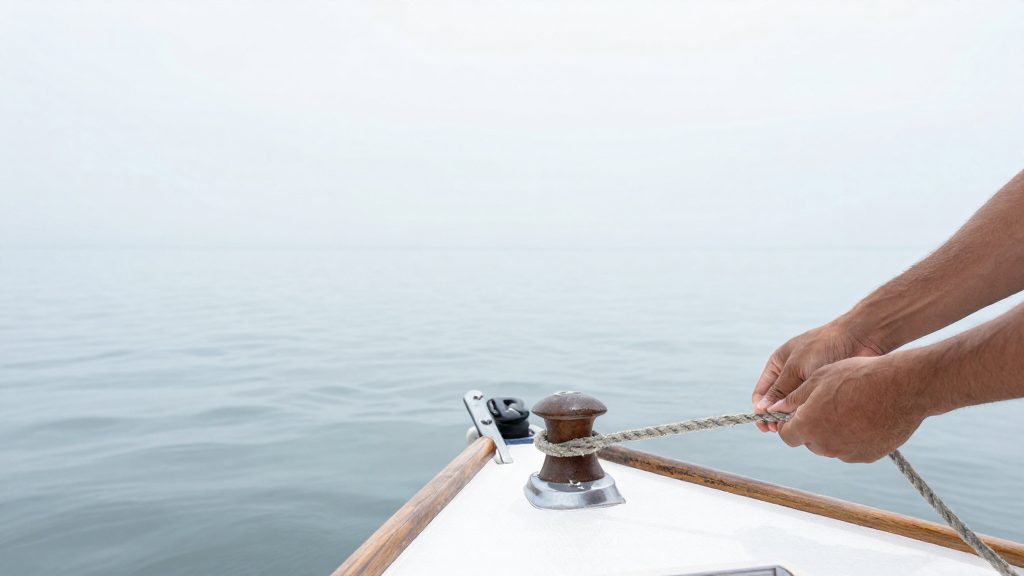
The most common use is on the free end of a sheet or halyard, so the line cannot be pulled out of its hardware when sail is trimmed or lowered. It is also useful on any line that passes through an eye or fairlead, where an unfinished end could otherwise slip through and be lost.
Before you rely on a figure eight, confirm that the knot is larger than the opening it must stop. A knot that fits through the hole protects nothing.
How do you tie a basic figure eight stopper?
A reference guide describes the basic stopper as a single figure eight tied about two feet from the free end, leaving the rest of the line beyond the knot as the tail. Work with a length of line you can handle comfortably, and follow these steps:
- Form an underhand loop in the line at the chosen point.
- Bring the working end over the standing part of the line, around behind it, and back down through the loop.
- Pull the knot snug, keeping the strands in order rather than letting them twist.
- Dress the knot by straightening its coils so that each strand lies alongside the one beside it. Dressing is what gives the knot its full strength.
- Tighten all parts, remove slack, and inspect the result before loading the line.
Do not carry the end back up through the bottom loop. That would turn the stopper into a different knot with a different purpose.
How do you tie a figure eight follow-through?
A follow-through is used when the knot must end up attached to an object, such as an eye, ring or harness tie-in point. It starts as a loose stopper with a generous tail. Reference guides recommend leaving a tail of at least 6 to 8 inches (about 15 to 20 cm) after the knot is complete, so there is material to work with and to inspect.
- Tie a loose figure eight several inches from the end, leaving the tail at the length given above.
- Thread the tail through the attachment point, passing it through the eye, ring or tie-in as required.
- Retrace the original path of the knot in reverse, keeping the returning strand parallel to each original strand.
- Dress the knot: straighten all strands so that none cross inside it, remove slack, and pull firmly on all four exiting strands.
- Check the finished knot visually. A correctly dressed follow-through is easy to inspect, and most failures trace back to crossed strands or incomplete dressing.
If the knot does not look like the tied figure eight pattern when you finish, undo it and tie it again. Do not load a knot you cannot verify.
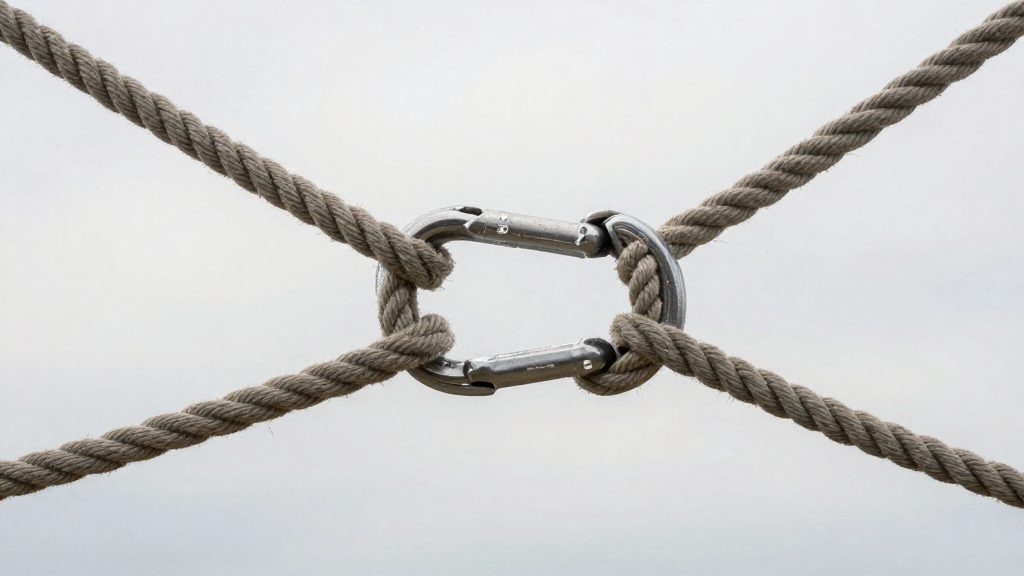
How do you tie a figure eight on a bight?
A figure eight on a bight is used when the end of the line is not accessible, for example when you need to secure the middle of a line around an object or a fixed point. The principle is the same as the stopper: a doubled section of line is formed into the figure eight pattern, then dressed and tightened.
Because the tie is made in a doubled section, check both legs of the bight. Each leg must lie correctly and neither should be twisted or crossed. Confirm that the object you have secured to is solid and that the knot will not slide along the line under load.
What are the common mistakes?
The most frequent problems are predictable, and most are easy to avoid:
- Crossed strands: strands that cross inside the knot weaken it. Dress the knot until each strand runs parallel to the others.
- Skipped dressing: a knot pulled tight without straightening its coils can look correct and still perform poorly.
- Short tails: a tail that is too short leaves no margin for inspection or adjustment, and it can pull through under load.
- Worn or wet rope: damaged, chafed or wet line makes the knot less predictable. Replace line that shows abrasion or cuts.
- Wrong size of opening: if the knot can pass through the hole it is meant to stop, it will not do its job.
Before every use, run the line through your hand and look at the knot. Look for crossed strands, slack, chafe and any sign of melting or glazing on synthetic rope.
Where does a figure eight fall short?
A figure eight can still jam after heavy or repeated loading, especially with small-diameter line or wet rope. Once jammed, it may be difficult to untie without tools, so plan for that possibility when you choose a knot. Do not treat it as a dependable tie for loads that matter to life or safety.
Climbing, rescue, towing and any situation where a failed knot could cause injury or death require specific training and equipment. Reference material from knot educators is clear that rope activities can be dangerous and that knot security depends on the rope material, the condition of the rope, and how accurately the knot is tied. Seek qualified instruction before using any knot where a failure would have serious consequences.
For gear that has a rated load, such as harnesses, tethers and lifting equipment, follow the manufacturer’s documentation for approved attachments and rated loads. The manufacturer’s instructions take precedence over any general knot guide.
Finally, make it a habit to re-inspect any knot you tie for a fixed purpose. A few seconds of checking can prevent a line from pulling free at the moment you need it most.
Frequently asked questions
Can a figure eight be untied after it has been loaded?
It can be difficult, especially after heavy or repeated loads or when the line is wet. Ease the load off completely before attempting to loosen it, and use a pick or marlinspike to open the strands. If it will not release without force, cut the line only as a last resort and only when it is safe to do so.
Does tying a figure eight weaken a line?
Any knot reduces the strength of a line because the rope bends sharply at the tie. The actual loss depends on the rope material, its diameter and how well the knot is dressed. For a rated line, check the manufacturer’s documentation for guidance on knots and minimum strength.
Why does my figure eight keep slipping through a fairlead?
The most likely reason is that the knot is too small for the opening, or that it was not dressed and tightened. Confirm that the knot is larger than the fairlead or eye, then tie it again, dress every strand, and check it before use. If it still slips, use a different stopper suited to the hardware.