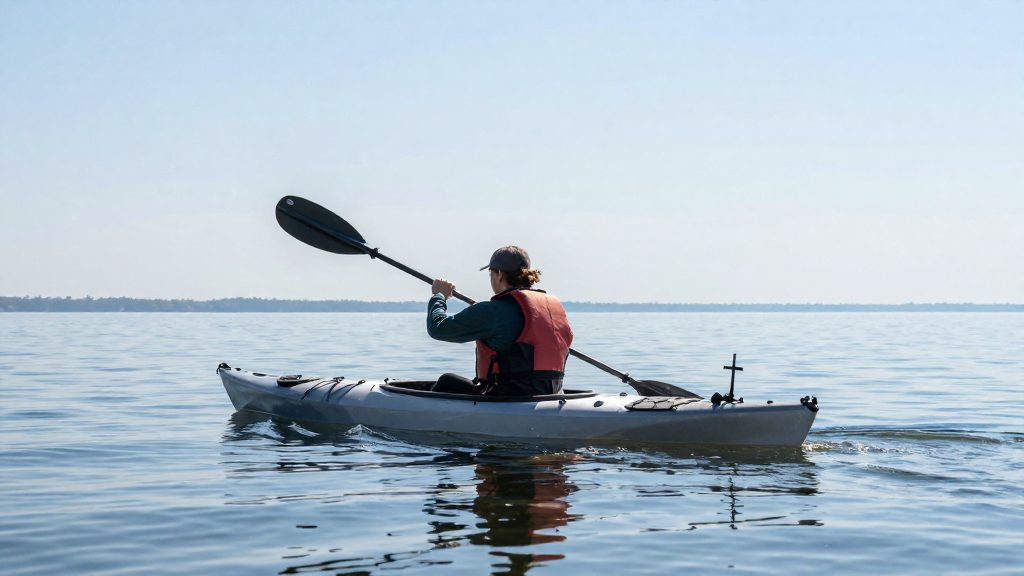
What safety gear do canoes and kayaks need?
Federal boating rules apply to canoes and kayaks as recreational vessels, and many states add their own requirements on top. The core federal items are a wearable life jacket for each person, a way to make a sound signal, a white light when you are on the water in low visibility or in the dark, and, for night paddling on U.S. coastal waters, visual distress signals. These federal rules are published in Title 33 of the Code of Federal Regulations (CFR). Treat them as a minimum. Your state may require more, and conditions such as cold water, wind, boat traffic or a long crossing call for extra gear.
Which life jacket counts as compliant?
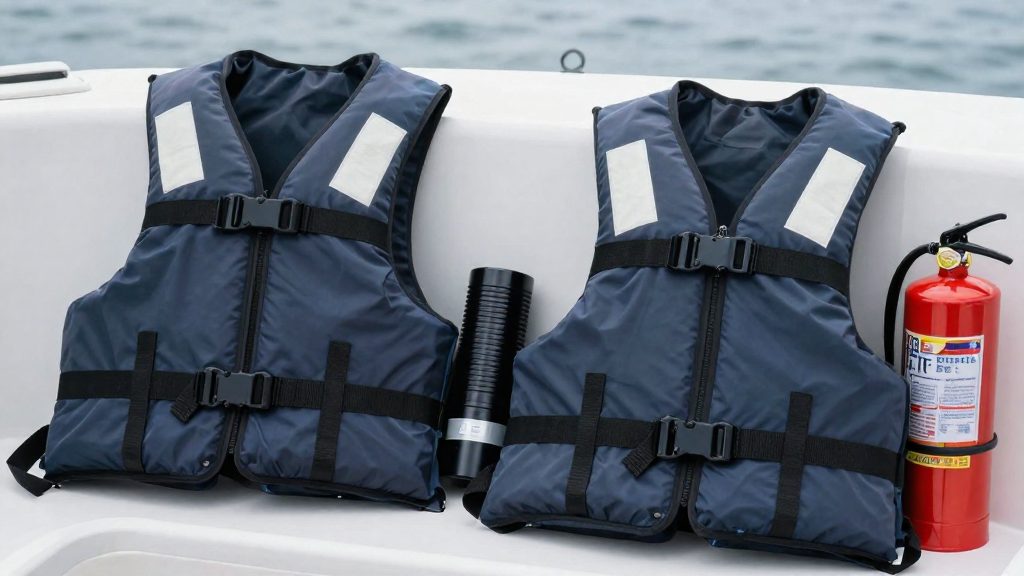
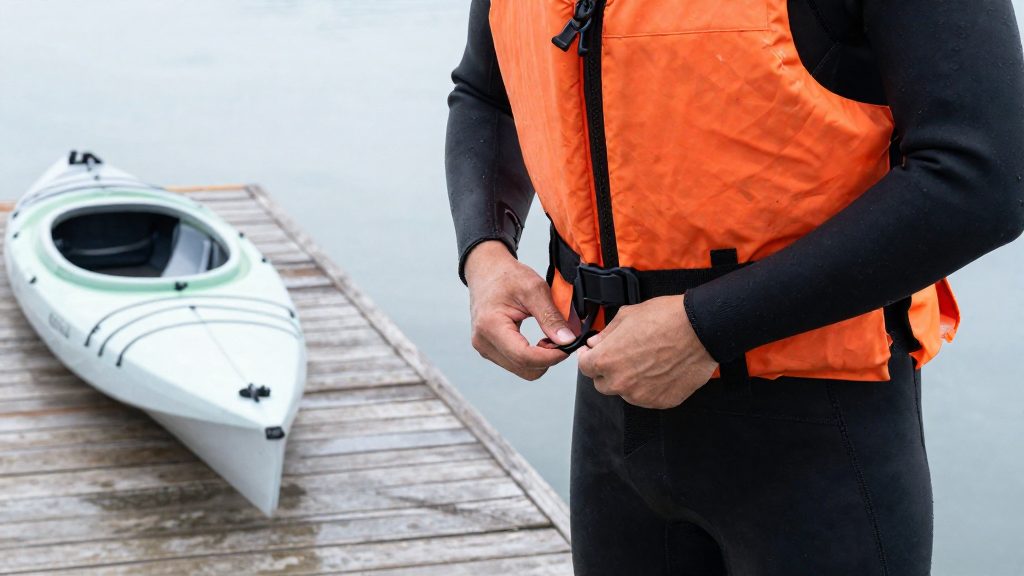
Federal law says no one may use a recreational boat unless it carries at least one wearable personal flotation device (PFD) for each person on board (33 CFR 175.15(a)). That PFD must also be readily accessible (33 CFR 175.19(a)). In practical terms, a vest stored under deck lines, lashed under gear or packed in a hatch does not meet that standard in an emergency. Keep it on your body or within immediate reach while you paddle.
Each PFD must be of an appropriate size and fit for the intended wearer, as marked on its approval label, and it must be legibly marked with its approval number under 46 CFR part 160 (33 CFR 175.21). Washington State Parks describes the same standard in plain terms: Coast Guard-approved life jackets of the right size and type for everyone on board.
A PFD must also be in serviceable condition. Under 33 CFR 175.23, a PFD may not show deterioration that could reduce its performance, its straps and securing hardware must be intact, and an inflatable PFD needs a properly armed inflation mechanism with a full cartridge. Before each trip, check for tears, mildew, broken buckles and corroded hardware. On inflatable designs, inspect the cartridge and firing mechanism as well. Follow the manufacturer’s manual for inspection, servicing and cartridge replacement, because the required steps differ between models.
Do paddlers need a whistle or horn?
Federal navigation rules for vessels under 12 meters (about 39.4 feet) do not require a whistle or horn specifically. They require some other means of making an efficient sound signal (33 CFR 83.33(b)). For a canoe or kayak, that means a device you can actually use in an emergency, and state guidance is more specific. Washington lists a sounding device such as a horn, whistle or bell. New York lists a horn or whistle for paddlecraft.
A whistle is the practical choice for most paddlers. It has no batteries to fail and it is small enough to attach to your PFD. Keep the signal on your body rather than stowed in the boat. If you capsize, a whistle in a hatch is useless, and a whistle clipped to the PFD remains within reach.
When must a canoe or kayak show a white light?
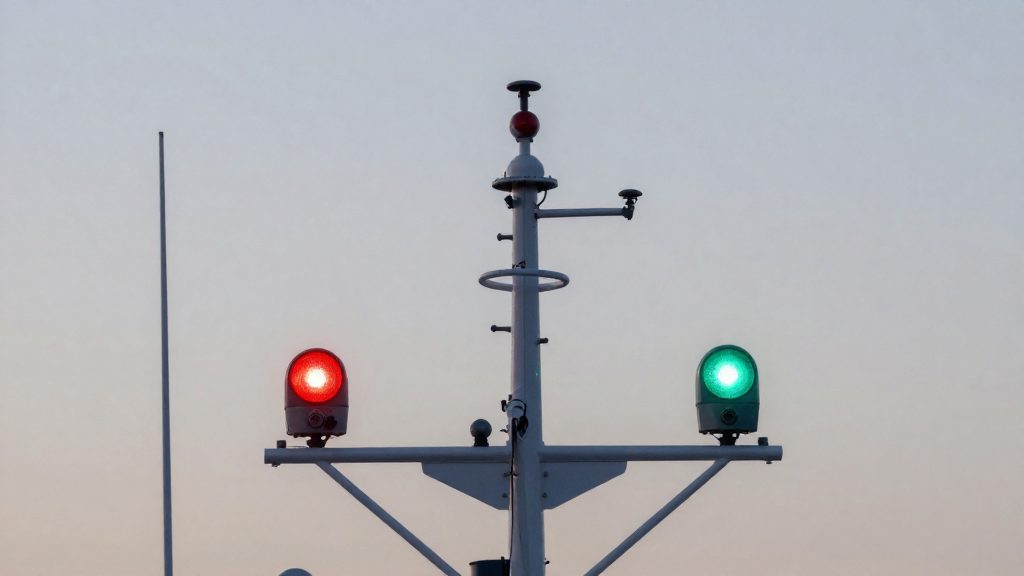
For U.S. inland waters, where the Inland Rules in 33 CFR Part 83 apply, a vessel under oars or paddles should show an all-round white light, or have ready at hand an electric torch or lighted lantern showing a white light. The light must be shown in sufficient time to prevent a collision (33 CFR 83.25(d)(ii)). A waterproof flashlight kept within reach meets the “ready at hand” option. New York’s paddlecraft list gives this example, a white light such as a waterproof flashlight.
Washington’s guidance calls for a white navigation light during low visibility, such as fog, heavy rain, dawn or dusk. The practical rule is simple: if you may be on the water when light is poor, carry a working white light and show it early enough for other boaters to see you. Test the light before you leave, carry a spare battery if it uses one, and avoid relying on a phone screen, which is too dim and too easily lost overboard.
Are flares required on a kayak or canoe?
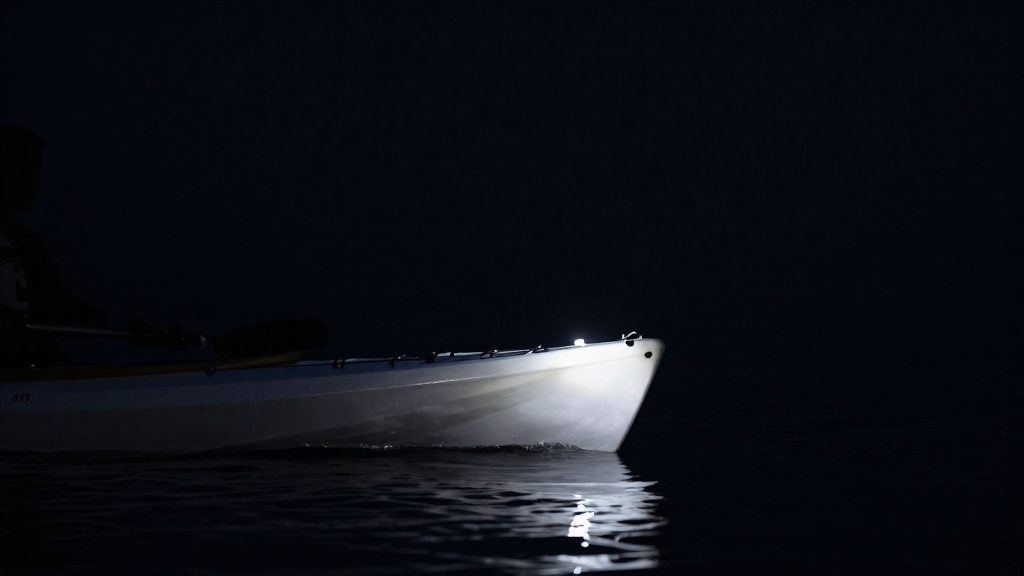
Not in every case. Federal rules for boats 16 feet or longer require visual distress signals that cover day and night use (33 CFR 175.110). But 33 CFR 175.115 exempts a person using a manually propelled boat from that requirement, and such a person must still carry visual distress signals suitable for night use between sunset and sunrise, in the number required. The types are chosen from the lists in 33 CFR 175.130 and 175.135. These federal signaling rules apply on U.S. coastal waters.
Washington’s guidance lists a nighttime visual distress signal such as flares, and notes that flares are required on federal waterways only. Pyrotechnic signals are hazardous to store and use. Check the expiration date on each device, keep it dry in a sealed container, and use it only in a real emergency. Flares can burn skin, start fires and drop burning debris, so point them away from people and from the boat.
Do state rules differ from federal rules?
Yes. State rules are often what you will be checked against on local water, so compare them with the federal baseline. Washington State Parks lists, for canoes and kayaks, Coast Guard-approved life jackets of the right size and type for everyone aboard, a sounding device, a white navigation light during low visibility, and a nighttime visual distress signal. New York State Parks lists, for paddlecraft, a properly fitting Coast Guard-approved life jacket for each person, a horn or whistle, and a white light. Its paddlecraft list does not include a distress signal, which shows that a state can set narrower requirements than the federal rules.
Federal law also leaves room for states on children. Where a state statute requires children of a certain age to wear a Coast Guard-approved PFD, that age requirement applies in that state’s waters instead of the federal age rule (33 CFR 175.25). Check the child rule in every state where you paddle.
Before your first trip, contact the boating agency of the state where you will launch and of any state whose waters you will cross into. Their current equipment lists take precedence over general guidance, including this article.
What extra gear is worth carrying?
The legal minimum covers the basics, but a few extra items make a trip safer. A bailer or hand pump helps you empty a canoe or kayak that takes on water. A spare paddle or paddle float gives you a way back to shore if you lose a paddle. A dry bag keeps a phone, map and dry clothing protected from splashes and capsizes, and a short tow line lets another paddler help you if you tire.
Dress for the water temperature, not the air temperature. Cold water can cause gasping and loss of control within the first minutes of immersion, so a wetsuit or dry suit is a sensible choice in cool water, and a PFD should always be worn over it. Check the marine forecast before launching, and set a turnaround point if the wind rises or the weather changes. Tell someone your route and expected return time, and avoid paddling alone on unfamiliar water.
Frequently asked questions
Does a kayak need a throwable flotation device?
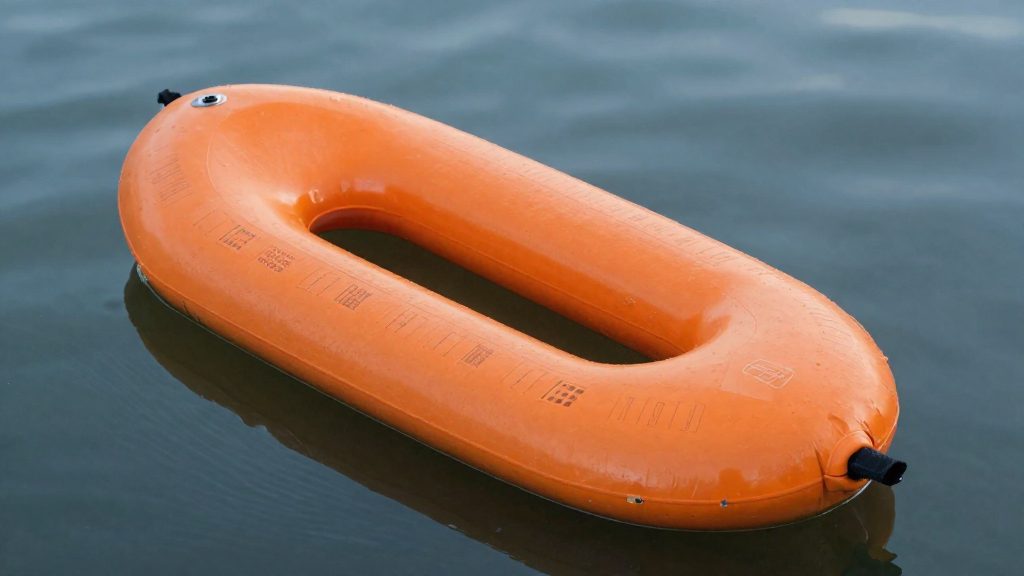
Federal rules require a throwable PFD only on recreational vessels 16 feet or longer (33 CFR 175.15(b)). Most kayaks and canoes are shorter, but check your state’s rules before you paddle.
Can a canoe with a motor count as manually propelled?
No. The federal exemption in 33 CFR 175.115 applies to people using a manually propelled boat. A boat driven by a motor does not qualify, so the rules for powered boats apply.
Do I need a license or registration to paddle?
This article does not cover licenses or registration. Those rules vary by state, so ask the boating agency or wildlife agency of the state where you plan to paddle.