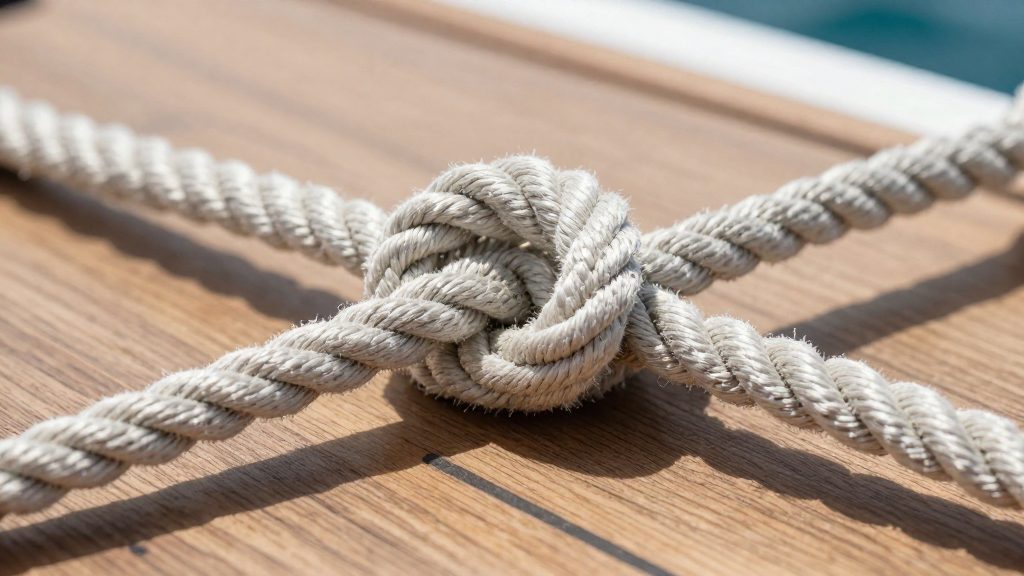
Is there a standard stabilizer knot?
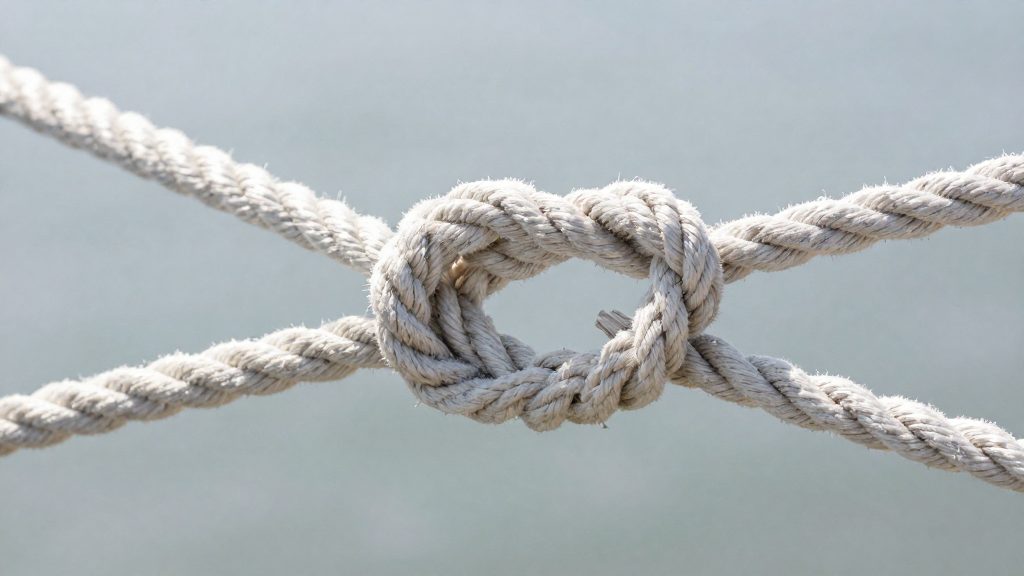
No. Stabilizer knot is not a named knot in the standard ropework references, and no boating authority we checked specifies one. The phrase describes a job: keeping a line from slipping, creeping or running through a fitting while it carries load. Three knot families do most of that work. A friction hitch grips a line or spar under tension. A stopper knot stops a line end from passing through a block, fairlead or clutch. A fixed knot, such as a bowline, holds a loop that does not slip. Choosing well means matching the family to the job, the line and the load, rather than looking for one universal tie.
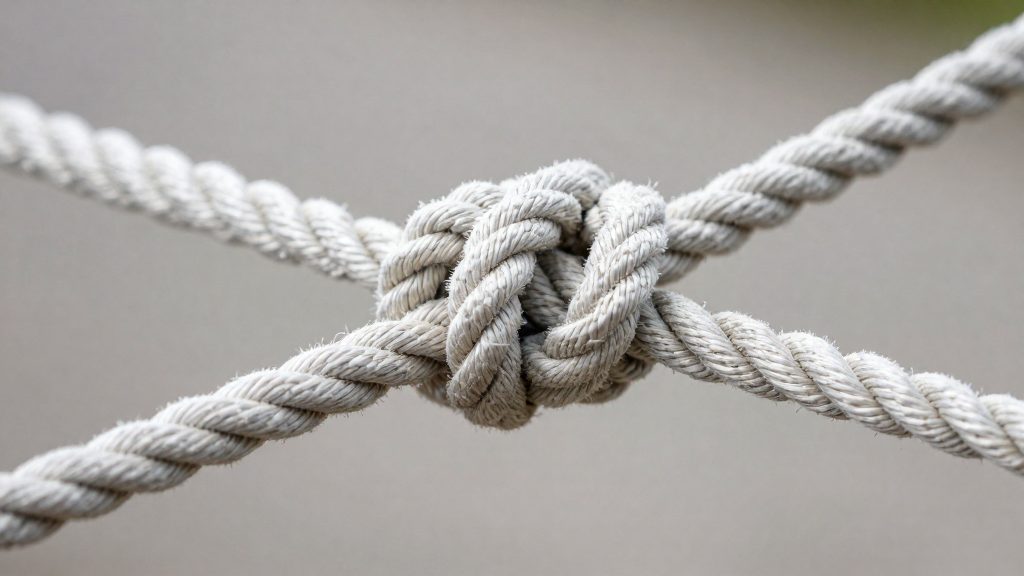
How to choose the right knot
Start with four questions. Does the load come on and off, or stay constant? Is the line smooth synthetic, small in diameter or wet? Do you need to adjust or release the knot quickly? And what happens if it fails? A hitch that holds a fender line may be unacceptable on a towline or on anything supporting a person. When the consequence of failure is serious, use a knot whose strength you have confirmed against the manufacturer’s documentation, and inspect it more often.
The rolling hitch: friction under tension
The rolling hitch is the friction hitch most often taught for attaching a line to another line or to a spar under tension. Take a turn around the loaded line with the working end. Make a second turn, placed closer to the loaded part. Pass the end over the loaded line and back under itself, then snug everything down. The initial turns should go in the direction the load will pull, so the hitch grips as the load arrives.
Its weakness is grip, and grip depends on the surfaces. The hitch is most reliable on natural fiber and on larger-diameter line. Modern smooth synthetic rope, small line and wet or greasy surfaces can let it slip. A common precaution is to tie a second rolling hitch with the tail as a backup, and to watch the first loading closely. On chain or another easily gripped surface, a rolling hitch is a reasonable choice for light loads. Do not rely on it alone where slipping could endanger people or equipment.
Adjustable hitches for guy lines and tethers
For a tent or awning guy, a dinghy tether or any line you need to tension, an adjustable hitch is more practical than a fixed knot. The taut-line hitch and the midshipman’s hitch slide along the standing part to tighten or loosen, then grip under load. Set them with a little tension, leave a tail long enough to see, and recheck after wind or temperature changes, because synthetic lines stretch and creep. Their holding power also depends on friction, so the same slip caveat applies.
Stopper knots keep line ends in place
A stopper knot at a line end prevents a sheet, halyard or control line from passing through a block, fairlead or clutch. The figure-eight is the usual choice. It is bulky enough to stop, easy to untie after loading and dependable on most ropes. On very slick high-modulus lines, standard stopper knots can slide, so check the manufacturer’s guidance or use a knot designed for low-friction rope. Inspect the knot each time you handle the line, since chafe at the knot can shorten its life.
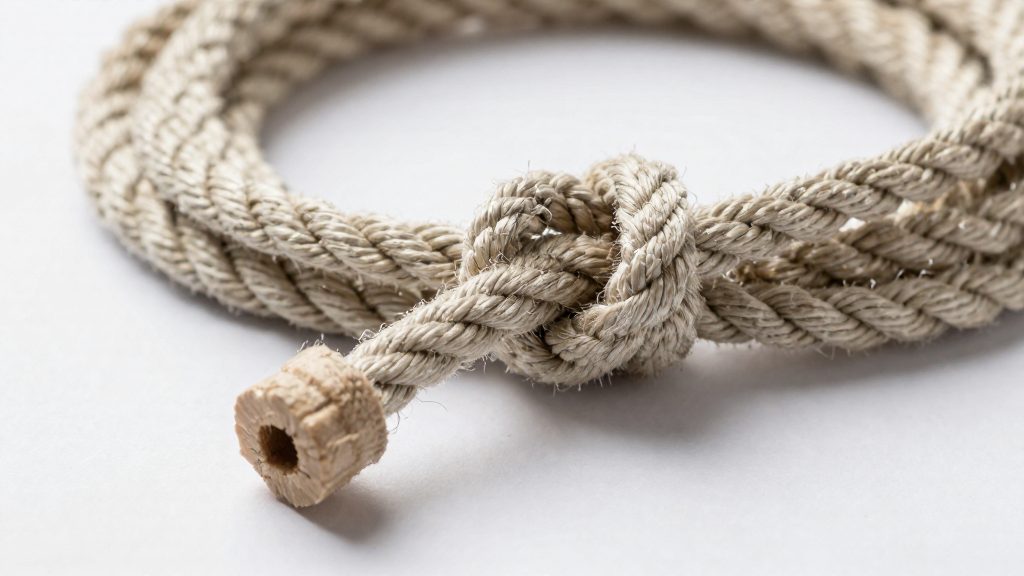
The bowline and the cost of a knot
The bowline makes a fixed loop that does not jam under load and can be untied after loading. It also carries the most important warning in this subject. In a 2014 safety alert on parasailing, the National Transportation Safety Board reported that the bowline, the knot most commonly used by parasail operators on towlines, can reduce towline strength by as much as 70 percent in laboratory tests, even on new rope. The alert also warns that a rope rated at 10,000 pounds can lose half its strength or more once a knot is tied, before age and use are considered.
These figures come from a parasailing-specific test. The loss depends on the knot, the rope and the load, so the number does not transfer exactly to a dock line. The lesson does transfer: a knot is never free. Treat any knotted loop as the weakest point of the line, and do not assume a rope’s catalog rating applies to a knotted section. For towing, lifting or anything supporting a person, use gear rated for the load and follow the manufacturer’s documentation.
Dock lines, fenders and surge
For dock and fender lines that face surging loads against pilings or rails, the round turn and two half hitches is the common choice. The full round turn takes the friction load, and the half hitches hold the working tail in place. Surge moves the line, so check the hitch periodically, especially after a change in tide or weather. Set fender height so the line does not work against a cleat or a sharp edge. Never stand in the bight of a line under load, since a loaded line can release suddenly.
Anchor snubbers
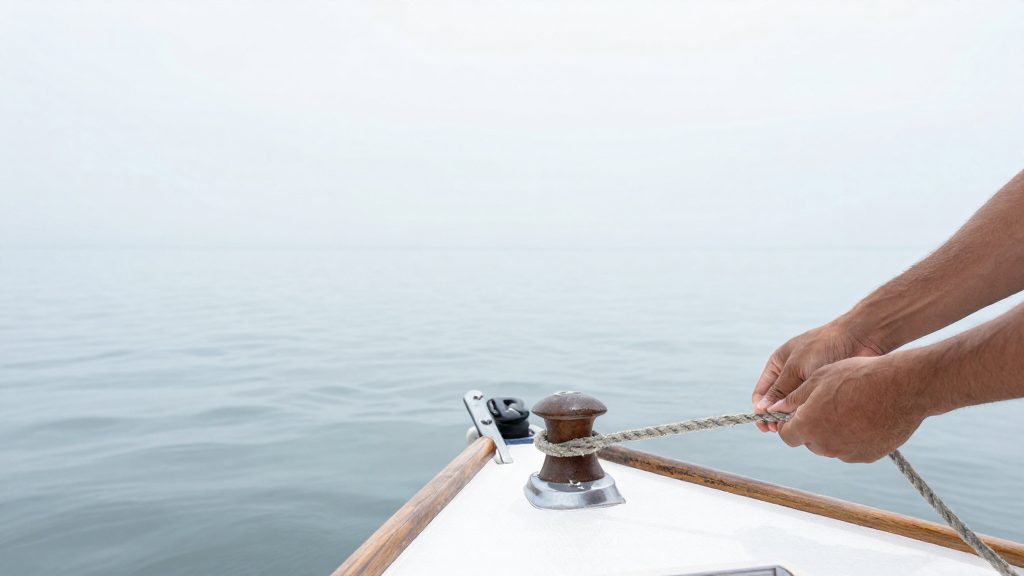
A snubber on the rode absorbs the shock of waves so that the windlass and the bow fittings are not loaded by sudden jerks. A friction hitch on chain is a common way to attach a snubber line, but it must hold. Confirm the snubber line is rated for the expected load and check that the hitch does not ride up or slip. Keep the rode secured to a bow cleat or a dedicated fitting independently, so that a failed snubber does not leave the anchor unattended. Test the setup in light wind before relying on it in rough weather, and refer to the documentation for your windlass and line for specifics.
Inspection and safe use
Before loading any hitch, check the line for chafe and abrasion, confirm the knot is dressed correctly, and confirm that the turns run in the direction of the load. Replace line that shows cuts, glazing, flattening or core damage, and retire any line whose history you do not know. Keep a record of when lines were installed and inspected. Tying these knots is a practical skill rather than a licence requirement, but the boating rules that apply to you, including any education requirements, vary by state, so check your state boating agency.
Frequently asked questions
How do I release a rolling hitch that has been loaded?
Take the load onto a second line, a cleat or a winch first so the hitch goes slack. Then loosen it gently. A hitch that has been pulled hard can jam, so do not force it, and cut it away only if that is safe and the line can be replaced.
Is the cleat hitch a stopper knot?
No. A cleat hitch makes a line fast to a cleat so it can be adjusted or released quickly. It does not replace a stopper knot at a line end or a friction hitch on a spar.
Do I need a certification to tie these knots?
Tying these knots is a practical skill, not a licence requirement. Boating education requirements vary by state, so check your state boating agency for the rules that apply to you.