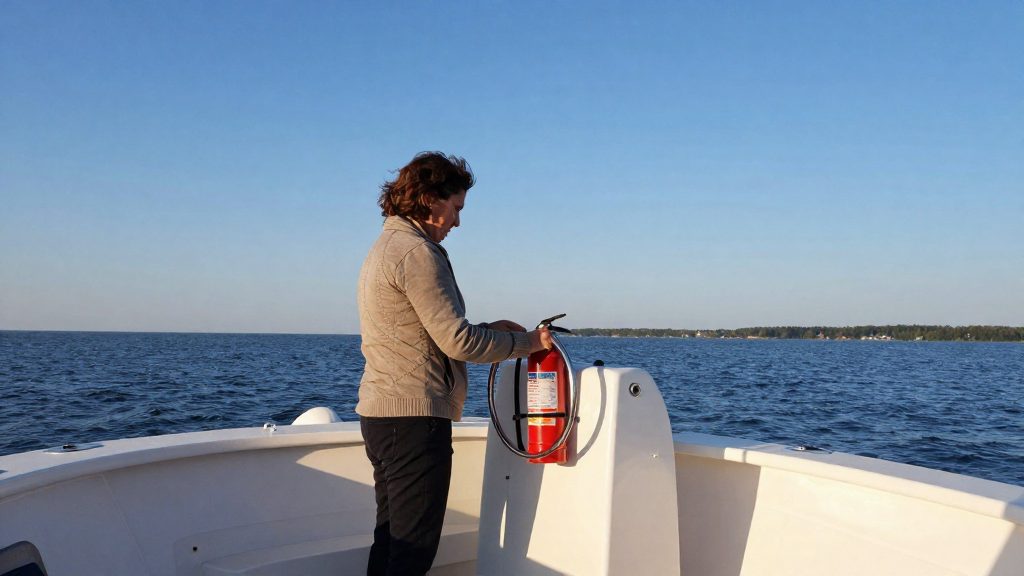
On a motorized pleasure craft of 6 metres (19 feet 8 inches) or less, Transport Canada’s mandatory equipment list calls for a Class 5BC portable fire extinguisher when the boat has an inboard engine, a fixed fuel tank, or a fuel-burning cooking, heating or refrigeration unit. The Small Vessel Regulations then set the technical criteria: certification, a maximum weight of 23 kg, a Class K option for galleys, and upkeep rules. The obligation also applies to rented and borrowed boats, where the lessor and the lessee share it equally.
Which boats must carry a Class 5BC extinguisher?
Transport Canada places the 5BC requirement in its list for motorized craft of 6 metres or less. The obligation is triggered by any one of three features, since the page links them with ‘and/or’:
- an inboard motor;
- a fixed fuel tank;
- a fuel-burning cooking, heating or refrigeration unit.
A boat that has none of these features does not fall under this specific line. The official sources consulted do not set out the full list for every configuration in the extracts reviewed, so compare your boat against the complete mandatory equipment list on the Transport Canada page before deciding that nothing is required.
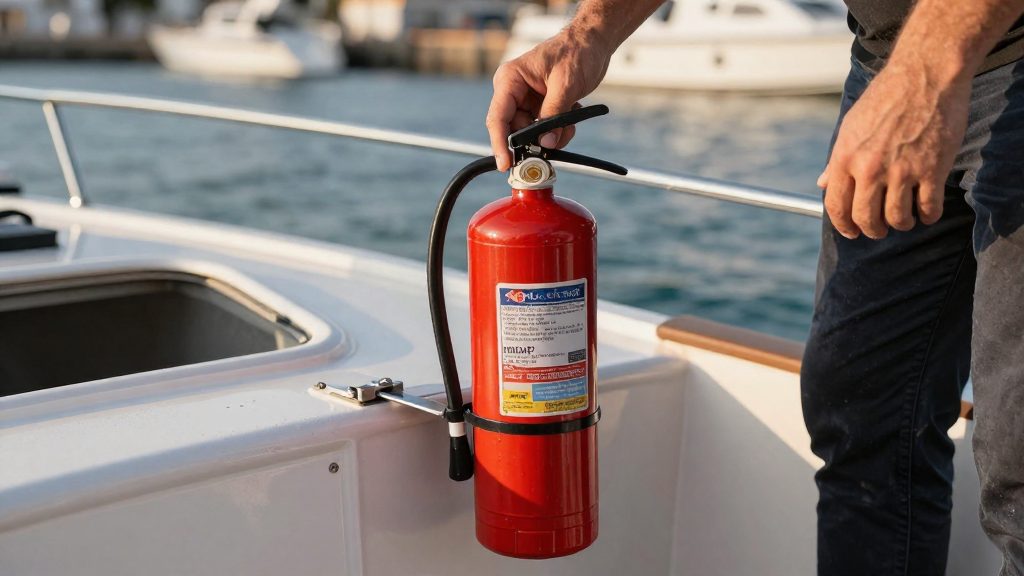
What do the letters and numbers in 5BC mean?
The letters identify the fire classes a unit is rated for. Class A covers ordinary combustibles such as wood, paper and cloth. Class B covers flammable liquids such as fuel and oil. Class C covers energized electrical equipment. In the usual rating system, the number placed before the B indicates the size of Class B fire the unit is rated to extinguish, so a higher number means greater capacity on that class of fire.
The official sources consulted do not explain the full rating scale, so read the label and the manufacturer’s documentation for the exact rating of the unit you buy. A rating higher than 5BC in the same classes is a practical choice, but the class named in the Transport Canada list is 5BC.
Why does a galley change the acceptable rating?
Section 16(2) of the Small Vessel Regulations allows an extinguisher to be rated for Class K fires instead of Class B fires. This applies where the unit is intended for an area with cooking appliances that use combustible cooking media, such as cooking oils and fats, and only if the Class A and Class C ratings are maintained. The Class K option therefore helps a boat with a galley, but it does not remove the A and C requirements.
When you buy for a boat with a stove or fryer, look for a single unit whose label shows the A, K and C ratings together, and confirm that it still meets the 5BC line for the Class B part of the requirement. If a label is unclear, ask the seller to show the rating printed by the manufacturer.
How do I confirm that an extinguisher meets the regulation?
Section 12(1) requires that a portable extinguisher carried on a pleasure craft either bears a mark indicating that it is certified by a product certification body, or is of a type approved by the United States Coast Guard. Look for the certification mark on the label or the nameplate before you accept the unit as compliant.
Section 16(1) adds two conditions. The unit must contain an extinguishing agent capable of extinguishing any potential fire in the compartment where it is kept, and it must not weigh more than 23 kg. The weight limit is a ceiling, not a target: a unit you cannot lift, aim and hold steadily in a rolling boat is not useful in an emergency, so choose one whose weight you can handle with confidence.
How should the extinguisher be placed and kept ready?
Section 5(1) of the Small Vessel Regulations requires safety equipment to be in good working order, readily accessible and available for immediate use, and maintained and replaced in accordance with the manufacturer’s instructions or recommendations. Section 5(2) requires portable extinguishers and fixed systems to be kept fully charged.
Transport Canada adds that equipment must be easily accessible and usable by everyone on board. This matters because the person who has to act may not be the skipper. The official sources consulted do not prescribe a mounting location, so choose one that a crew member can reach without climbing over gear. Keep the unit away from direct engine heat and secure it so it cannot fall when the boat moves. Check the pressure indicator and the physical condition at the start of each outing, as Transport Canada recommends examining equipment on every trip.
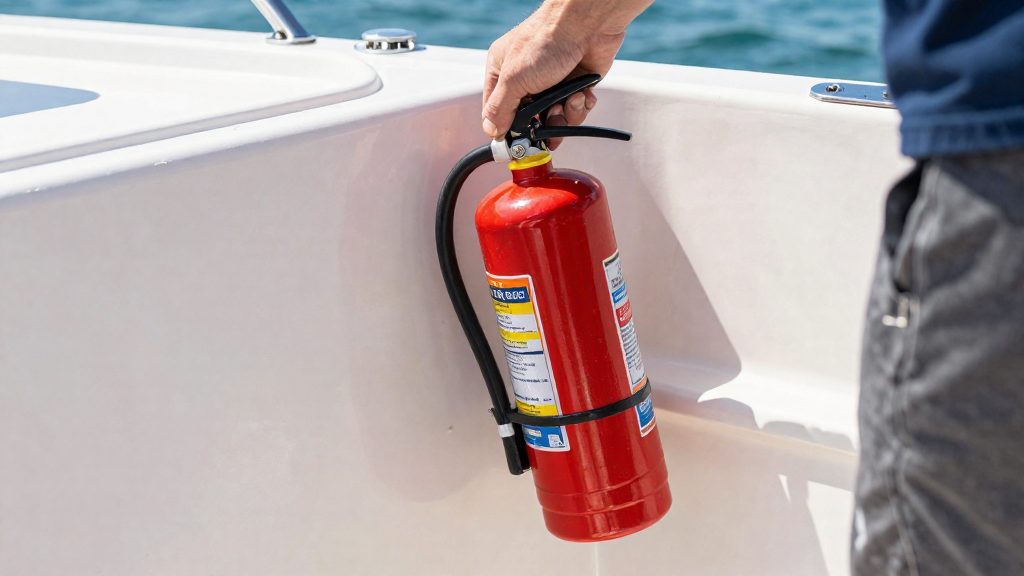
Why do rented and borrowed boats still require an extinguisher?
Transport Canada states that the requirements apply even when you are only renting or borrowing a craft, and that responsibility for having the required equipment is shared equally by the lessor and the lessee. A renter should therefore not assume the operator has handled it. Before leaving the dock, confirm that the unit is present, mounted, labelled, charged and within reach of the helm. If it is missing or the gauge shows it is discharged, ask for a replacement before you cast off.
What if my boat is longer than 6 metres?
The 5BC line in the Transport Canada list covers motorized craft of 6 metres or less. The official sources consulted for this article do not set out the extinguisher requirements for longer craft in a form that can be summarized reliably here, so do not apply the 6-metre rules to a larger boat. Read the mandatory equipment list for your length in the Transport Canada guidance and the Small Vessel Regulations on Justice Laws Canada. Where a dealer or rental operator’s advice differs from the official text, follow the official text.
How do I use an extinguisher safely, and what happens afterwards?
Use the unit only on a small, contained fire that you can see clearly, with a clear exit behind you, and raise the alarm first. Pull the pin, aim at the base of the fire, and sweep from side to side. Do not fight a fire that is spreading, that is close to fuel, or that is in an enclosed space you cannot see into safely. In those cases, leave the compartment, close the hatch if you can do so safely, move everyone to the exit and send a distress call on marine VHF channel 16.
After any use, even a short one, have the unit inspected, recharged or replaced according to the manufacturer’s instructions. A partly discharged extinguisher may not be ready when you need it next, and section 5(2) expects portable units to be kept fully charged.
Frequently asked questions
Can a fixed fire extinguishing system replace a portable extinguisher?
Section 5(2) refers to both portable extinguishers and fixed systems, and both must be kept fully charged. The official sources consulted do not state whether a fixed system satisfies the 5BC line, so check the Small Vessel Regulations and the manufacturer’s documentation before relying on one.
How often should an extinguisher be replaced?
The official sources consulted do not give a replacement interval. Follow the manufacturer’s instructions for inspection, recharging and expiry, which are printed on the unit or in its documentation.
What should I do if I cannot tell whether my extinguisher is certified?
Do not assume it is compliant. Look for a certification mark or a USCG-approved designation on the label. If neither is visible, replace the unit with one that carries the mark before you rely on it.