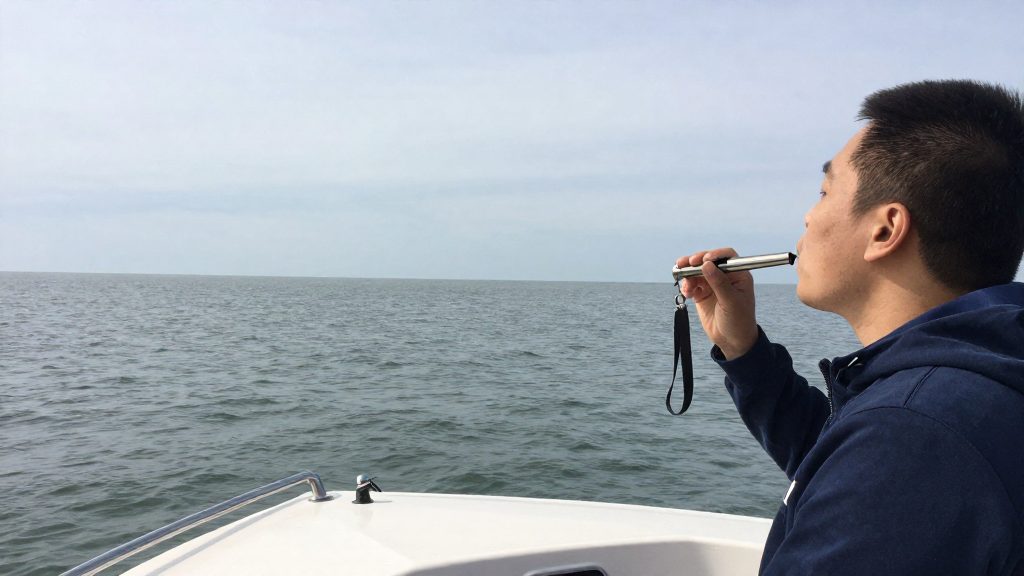
In Canada, every boat must be able to make an efficient sound signal, but the equipment it needs depends on its length. Under the Small Vessel Regulations, a boat of 12 m or less may use any efficient sound-signalling device, such as a pealess whistle or a compressed gas or electric horn. A boat more than 12 m long must carry a sound-signalling appliance that meets the requirements of the Collision Regulations. Exactly 12 m is the length where the official texts do not line up, and that point is explained below.
What sound-signalling equipment does a boat need in Canada?
Transport Canada’s guidance on avoiding collisions sets out the requirement by length. A vessel less than 12 m long can use any efficient sound-signalling device that can make a sound for 4 to 6 seconds and be heard within a range of 0.5 nautical miles. A vessel 12 m long or more must carry a sound-signalling appliance, such as a horn or whistle, that has an audible range of at least 0.5 nautical miles and can give a prolonged blast 4 to 6 seconds long. For a vessel more than 20 m long, the guidance sets the audible range at 1 nautical mile.
The mandatory safety equipment list published by Transport Canada adds a specific case. For a motorized craft no greater than 6 m (19 feet 8 inches) in length, a sound-signalling device is one of the required items. A small outboard boat therefore cannot treat this item as optional, whatever its fittings.
Which official texts apply to your boat?
Two texts govern the question. The Small Vessel Regulations, SOR/2010-91, set the equipment rules for recreational vessels. Section 207 of those regulations sorts boats into length bands and states, for each band, which kind of sound-signalling item must be carried. The Collision Regulations set the technical standard for an appliance and describe the signals a vessel must sound.
The two terms are used in a specific way. A device is any efficient sound-making item of the kinds the regulation allows for the smaller bands. An appliance is an item that meets the Collision Regulations. Reading these terms correctly matters, because a device is accepted only where the regulation names it. The official pages consulted do not reproduce the full technical criteria of the Collision Regulations, so read those criteria on the Justice Laws website before buying an appliance.
Why is a boat of exactly 12 metres a grey area?
Transport Canada’s guidance says a vessel 12 metres long or more must carry an appliance. The Small Vessel Regulations, current to 2026-09-30, place boats more than 9 m but not more than 12 m in the same band as smaller boats, where a device is accepted. They require an appliance only for boats more than 12 m long. For a boat of exactly 12 m, the two wordings point in opposite directions.
The regulation is the binding text, so under it a boat of exactly 12 m falls in the band where a device is accepted. The guidance wording suggests an appliance. The official sources consulted do not resolve which reading Transport Canada applies in every case. The safe choice is an appliance that meets the Collision Regulations, because it satisfies either reading. If you intend to rely on a device at exactly 12 m, ask Transport Canada for written confirmation before you leave.
How far must a signal be heard?
The guidance sets the audible range at 0.5 nautical miles for a device on a boat under 12 m and for an appliance on a boat 12 m or longer. For an appliance on a boat more than 20 m long, the range is 1 nautical mile. One nautical mile is 1,852 metres, so half a nautical mile is 926 metres.
The range is a rating that the equipment is expected to meet. It is not a guarantee in the field. Wind, sea state, engine noise and a closed cabin all reduce what other vessels hear. Check the audible range stated in the manufacturer’s documentation for your model. If that documentation does not state a range, do not assume the device meets 0.5 nautical miles; ask the manufacturer for the figure before you rely on it.
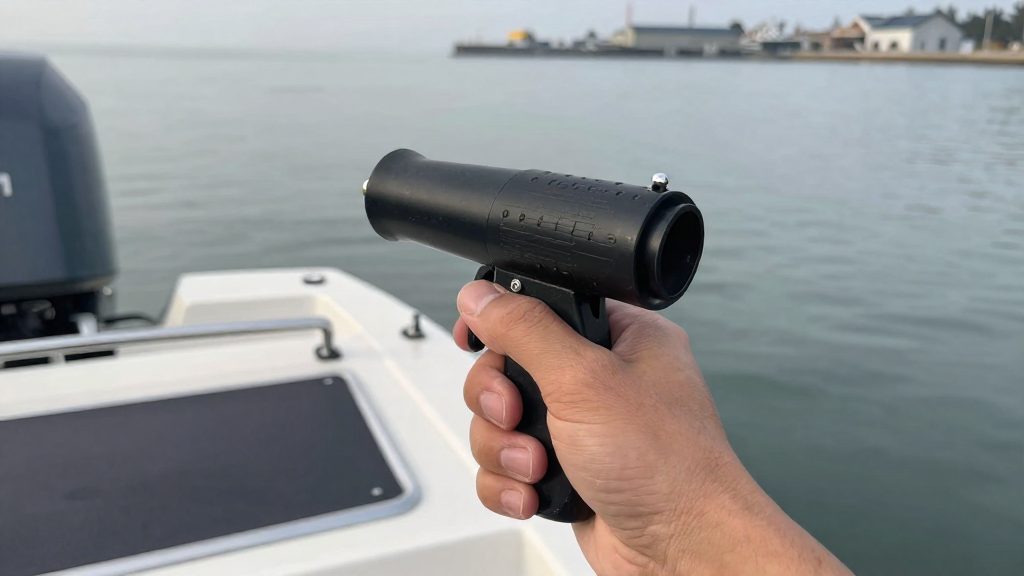
What is a prolonged blast?
Transport Canada uses the term prolonged blast for a sound lasting 4 to 6 seconds. The device or appliance must be able to produce that duration. A signal that stops after a split second does not match the description, even if it is loud.
You can check this at the mooring, keeping the test short and away from people and neighbouring boats. The sound should hold steadily for the full 4 to 6 seconds. If it weakens, cuts out or drops in volume before the end, the device should be serviced or replaced according to the manufacturer’s instructions.
When must you sound signals in fog?
All vessels must sound the appropriate signal during periods of fog, heavy rain or other conditions of reduced visibility. The signals themselves are described in the Collision Regulations, so learn the pattern for your type of vessel before your first foggy passage. Knowing the signal in advance means you will not hesitate when visibility drops suddenly.
The obligation to sound applies regardless of how close other vessels appear to be. Reduced visibility is also the moment to check that your device works and that its power source or gas supply is adequate, because you may need it at short notice.
How do you choose and keep a device ready?
Choose a device that can produce a prolonged blast of 4 to 6 seconds and whose documentation states an audible range. Read the manufacturer’s documentation for the power source, the maintenance interval, the replacement point and the storage temperature limits, and follow those figures rather than any general rule. A compressed gas horn needs its cylinder and seals checked, while an electric horn depends on a reliable battery connection.
Store the device where you can reach it from the helm without leaving the controls. Do not lock it in a locker or bury it under other gear. On a boat where one device is the only way to sound a signal, a second, independent device is a sensible backup, such as a hand-held whistle kept with the lifejackets.
Before each season and before each trip, test the device at the mooring. Replace it when its documentation says so, or as soon as it no longer produces a full, steady blast.
Frequently asked questions
Can I use a car horn as my sound-signalling device?
The official pages consulted name pealess whistles and compressed gas or electric horns as examples of efficient devices, and do not mention car horns. Choose an item that can make a 4 to 6 second sound and whose documentation states a range of at least 0.5 nautical miles. If the documentation does not give this, use a device made for marine use.
Does a sound signal replace a lookout in fog?
No. A sound signal warns other vessels that you are there, but it does not show where they are or how fast they are approaching. Keep a proper lookout, reduce speed to a level you can stop within the visible distance, and use the signals described in the Collision Regulations.
What should I do if my device stops working during a trip?
The official sources consulted do not specify a procedure for this case. As a seamanship precaution, reduce speed, stay in a safe area and avoid continuing at speed in reduced visibility until the signal is restored or a backup is in use.