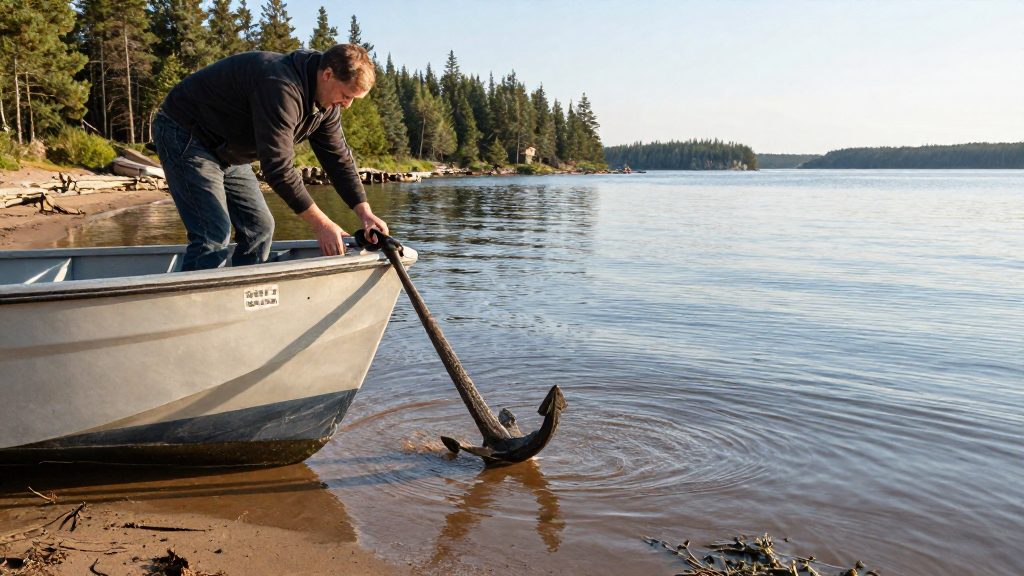
To set an anchor in sand or mud, approach slowly into the wind or current, stop the boat over the chosen spot, lower the anchor to the bottom while reversing gently, and let the line run out under control. Once the anchor has bitten, pay out enough rode for the wind, the waves and the depth, using the scope ratio explained below. Then confirm that the anchor is holding before you leave the helm.
Why do sand and mud hold differently?
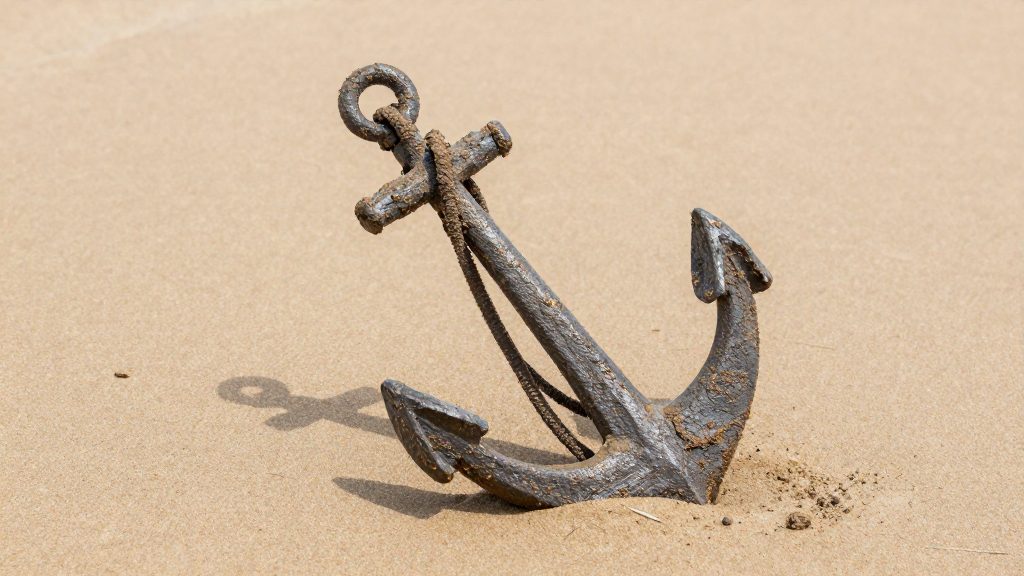
Sand and mud are among the most common bottoms for anchoring, but they do not behave the same way. Firm sand lets a fluke-type or plow-type anchor penetrate and bury its flukes, which is what creates resistance. Soft mud can offer a strong grip because the anchor sinks into it, yet the same softness means the anchor may need more time and more load to bed in, and it may settle deeper than you expect. Loose, coarse sand can shift when the wind rises or a surge runs through an anchorage, so the hold may be less secure than it looks on the depth sounder.
Clay, gravel and rock behave differently again. Firm clay can hold well, while rock and dense weed can stop an anchor from setting at all. For that reason, the first step is always to read the bottom: use a chart, a depth sounder that shows bottom type, or simply what comes up on the anchor when you retrieve it.
The anchor type matters as much as the bottom. Manufacturers publish holding recommendations and bottom suitability for their designs, and those documents are the reference to consult before you buy or rely on a particular anchor. The official sources consulted for this article do not give holding-power figures for specific bottoms, so no such figures are offered here.
How do you set the anchor step by step?
Start by choosing the spot. Look for enough depth for the rode you intend to pay out, enough room to swing as the wind or current changes direction, and shelter from the forecast wind. Check the marine forecast before you anchor, and do not anchor in a marked channel or where you may block other boats.
Then follow this sequence:
- Approach the spot slowly, heading into the wind or current, so the boat moves toward the anchor point with the bow pointing into the pull.
- Stop the boat over the spot. Lower the anchor gently to the bottom instead of dropping it from height, which can tangle the rode.
- Reverse slowly while the line pays out. The anchor should lie on the bottom and not be dragged into a heap.
- Let out the scope you have chosen, then bring the line up to the cleat. Avoid a sudden jerk, which can pull the anchor out of a partly buried position.
- Reverse gently at a low, steady power setting to dig the anchor in. Increase power gradually, and watch the line and your position as you do.
Safety matters at every stage. Keep hands, feet and body clear of the line while it runs out and while it is under strain, because a loaded rode can injure anyone caught in a bight. Wear gloves, never wrap the line around a hand or leg, and make sure the cleat and deck fittings are sound before you rely on them. Never leave the helm while the anchor is being set, and do not hand the line to an inexperienced passenger in rough conditions.
How much scope should you pay out?
Scope is the length of rode you let out compared with the depth of water at the anchorage. The Safe Boating Guide published by Transport Canada gives a rule of thumb of three times the water depth in calm conditions, five times in moderate to rough seas, and seven times in extreme conditions. A longer rode lowers the angle of pull on the anchor, so it tends to stay flat and dig in rather than lift out. That is why you add scope as the wind, waves or current increase.
More scope has a cost. A boat on a long rode swings through a wider circle as the wind or tide changes, so check the room around you before you let out more line. A boat that swings into a neighbour can cause damage even when its anchor is holding well. The same guide notes that the anchor and line should suit the size of the boat, the water depth and the location, and that strong wind and water can make an anchor drag, letting the boat drift or run aground.
Canadian rules also tie the anchor and line a boat must carry to its length. Check the equipment requirements in the Transport Canada guide for your size of boat, because the minimum you carry and the scope you need for a given night are two different questions.
When can you tell the anchor is holding?
Do not assume the anchor is holding just because the boat has stopped moving. Confirm it in three ways. First, line up your position against two fixed objects on shore that are abeam of the boat, so you can see whether the boat moves relative to them. Second, back slowly against the anchor under engine power, watching the same references. Third, once the engine is off, keep watching your position, because an anchor can take time to reset as the wind or tide shifts.
If your position changes, or you are unsure, haul the anchor and reset it. Do not try to drag the anchor across the bottom to a new spot, which can leave it fouled or poorly buried. Pick up, reposition and lower again. If the anchor drags at night or in a rising wind, act early: start the engine, decide whether to re-anchor or move, and do not wait until the boat is close to the shore or to another vessel.
What must a boat show at anchor in Canada?
Under Rule 30 of the Collision Regulations, a vessel at anchor shows an all-round white light in the fore part, or one ball by day. A vessel under 50 metres may show a single all-round white light in place of the two lights set out for longer vessels. The Justice Laws Website lists the Collision Regulations as current to 30 September 2026, so check the text there before you rely on it.
The Small Vessel Regulations also set sound-signalling equipment by boat length. For boats up to 9 metres, the rules require a sound-signalling appliance or device, and navigation lights are needed when a boat is operated after sunset, before sunrise or in restricted visibility. Carry the signalling equipment that applies to your length, and test the anchor light before you need it rather than after a long day on the water.
How do you weigh anchor safely?
Before you start, motor slowly forward over the anchor to take the strain off the rode, so the line runs nearly vertical. Haul in while watching the bow, and keep the line clear of the propeller and rudder. Once the anchor breaks free, bring it up and stow it. Rinse off mud and sand over the side where possible, so that it does not foul the stowage or the locker.
If the anchor is fouled, do not pull harder with the windlass or by hand. Use the engine to ease the boat slowly in the opposite direction to relieve the load, then work the line free. If it cannot be freed, the last resort is to cut the rode and lose the anchor, which you should do only when the risk to people is greater than the cost of the gear.
Frequently asked questions
Is a chain rode better than a rope rode in mud?
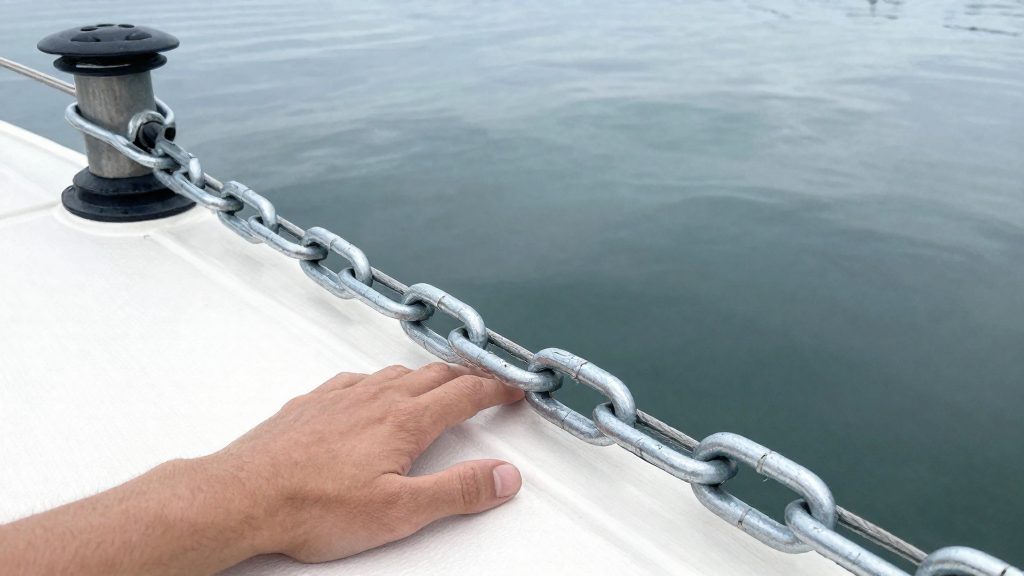
Chain adds weight, keeps the pull closer to the bottom and resists wear on the seabed better than rope, so many boats combine the two. The right rode depends on the anchor and the boat, so follow the anchor maker’s documentation for the combination it recommends.
What should I do if another boat drags toward mine?
Hail the other crew by VHF radio or call out to them, start your engine, and keep clear. If there is an immediate danger of collision or grounding, call for help without delay.
How often should I check my position on a long anchorage?
The official sources consulted do not set a fixed interval. Check your position regularly, and again after any change in wind, waves or tide, and whenever you hear the wind rising.
Does a heavier anchor always hold better?
Not necessarily. Holding depends on the bottom, the anchor design, the rode and the scope as well as the weight. Use the size and type recommended in the anchor maker’s documentation for your boat.