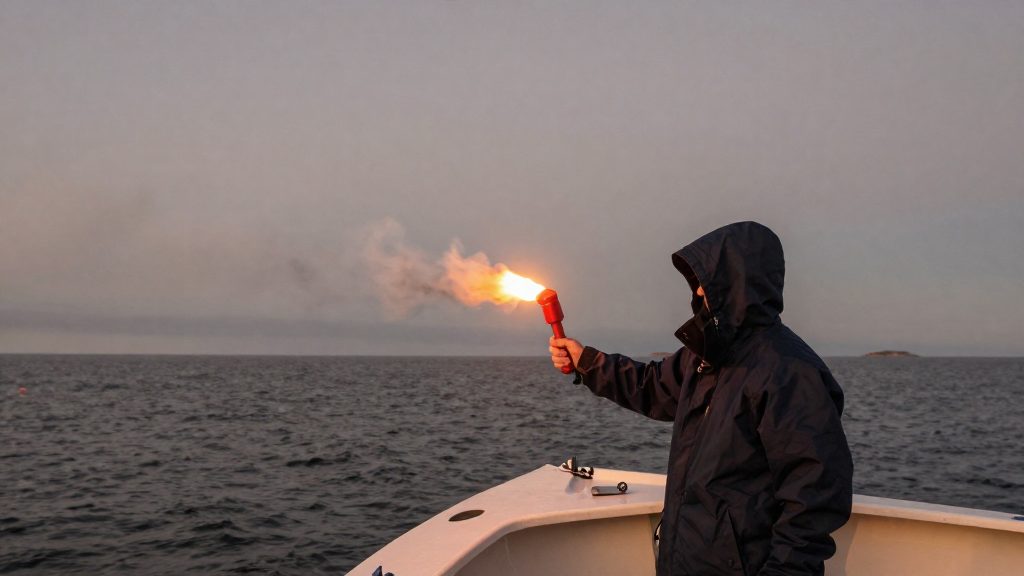
On Canadian waters, a recreational boat that must carry visual distress signals can use pyrotechnic flares or, under a Transport Canada policy in force since 9 November 2021, an electronic visual distress signal device (eVDSD) that meets RTCM Standard 13200.0 and is carried with a Transport Canada approved smoke signal. The number of flares depends mainly on boat length: a boat of 6 m or less needs three flares or a watertight flashlight, while a boat over 9 m needs a watertight flashlight and twelve pyrotechnic signals. This guide explains those counts, when a flare may legitimately be fired, how to handle one safely, what to do with expired devices, and how flares fit with a radio call.
How many visual distress signals does a Canadian boat need?
Section 205 of the Small Vessel Regulations sets the minimum visual signals for pleasure craft by length (Justice Canada, Small Vessel Regulations, s. 205). A boat of 6 m or less must carry either a watertight flashlight or three pyrotechnic distress signals, no more than one of which may be a smoke signal. A boat over 6 m up to 9 m must carry a watertight flashlight and six pyrotechnic distress signals, no more than two of them smoke signals. A boat over 9 m must carry a watertight flashlight and twelve pyrotechnic distress signals, no more than six of them smoke signals.
Human-powered pleasure craft over 6 m follow a separate rule in section 210: a watertight flashlight and six pyrotechnic signals, no more than two of them smoke signals. Section 213(3) allows the number of pyrotechnic signals on a craft over 6 m to be reduced by up to 50 per cent if the boat carries a two-way radio or a 406 MHz beacon. That reduction is a concession in the count, not a substitute for a call for help. Because the regulations are amended from time to time, check the consolidated text on the Justice Canada website before you buy equipment.
Which boats are exempt from carrying flares?
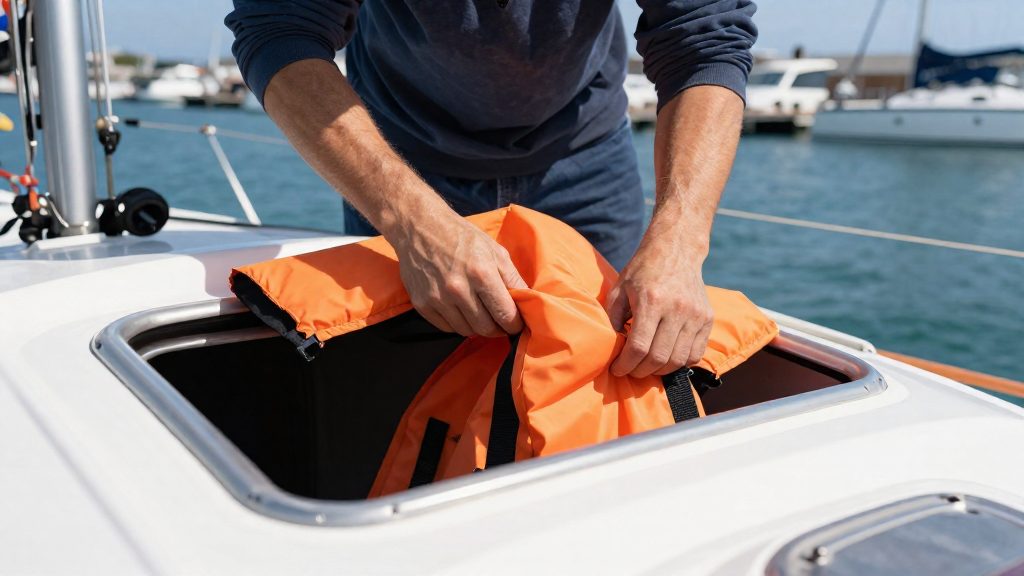
Two exemptions matter most for everyday boating. First, a pleasure craft of 6 m or less that has no engine need not carry visual signals (s. 213(1)). Second, pyrotechnic signals are not required on a river, canal or lake where the craft can at no time be more than one nautical mile from shore (s. 213(2)(a)). A third exemption covers a craft with no sleeping arrangements that is in an official competition or in its final preparation for one (s. 213(2)(b)). A powered boat of 6 m or less is not exempt merely because it is small.
An exemption removes a legal duty, not the practical need to attract help. Choose your equipment by how far you can be from shore and from rescue services, not only by what the regulation requires. A boat that spends a day on a large lake, or crosses open water beyond sight of land, is in a different situation from a boat that never leaves a sheltered bay.
Why does the electronic option come with conditions?
Transport Canada accepts an eVDSD in place of pyrotechnic signals only under strict conditions set out in its Tier I policy. The device must meet RTCM Standard 13200.0 and be supported by documentation from an accredited product certification body. A device that does not meet that standard is not acceptable. It must carry the label ‘Complies with RTCM Standard 13200.0 for an eVDSD’, and its written instructions and warnings must be in both English and French. The policy also requires that the device be carried with a Transport Canada approved smoke signal for daytime alerting.
The policy does not replace pyrotechnic flares, which remain an accepted option under the regulations. Before you buy, read the label, confirm that the bilingual instructions come with the device, and make sure the smoke signal is on board. The policy was set for review five years after it came into force, so verify the current version on the Transport Canada website before relying on it.
When should you fire a flare?
Fire a flare only in a real emergency, meaning a situation in which you need help now. Examples include a boat taking on water that you cannot control, a person in the water whom you cannot reach, a fire you cannot put out, or a serious medical emergency with no other way to reach help. Flares are seen only by people who are nearby and able to see them, so fire them when a vessel, an aircraft or the shore is within sight or earshot.
Firing a flare for a test, to celebrate or as a joke is not a safe or lawful use. Transport Canada’s Safe Boating Guide states that firing expired flares in non-emergency situations is a criminal offence, and the same caution applies to flares that are still in date.
How do you fire a flare safely?
Read the manufacturer’s instructions printed on the device before you need them, because designs differ. In general, follow these precautions:
- Check the expiry date, the approval marking and the physical condition of each device before you leave the dock. Do not use a damaged, wet or expired flare.
- Keep flares in a dry, accessible place on deck or in a clearly marked container, not locked away where you cannot reach them quickly.
- Hold the device only by the grip or handle the manufacturer designates, and keep your hands and face away from the burning end.
- Point the device away from people, the fuel system, open fuel tanks and other boats. Make sure the wind carries smoke and debris away from the crew.
- Never fire a flare in an enclosed space or in the presence of fuel vapour.
- If a device misfires, keep it pointed away from people and wait, then follow the manufacturer’s instructions before handling it again.
These are general precautions. The manufacturer’s documentation always prevails over this list.
What should you do after you fire a flare?
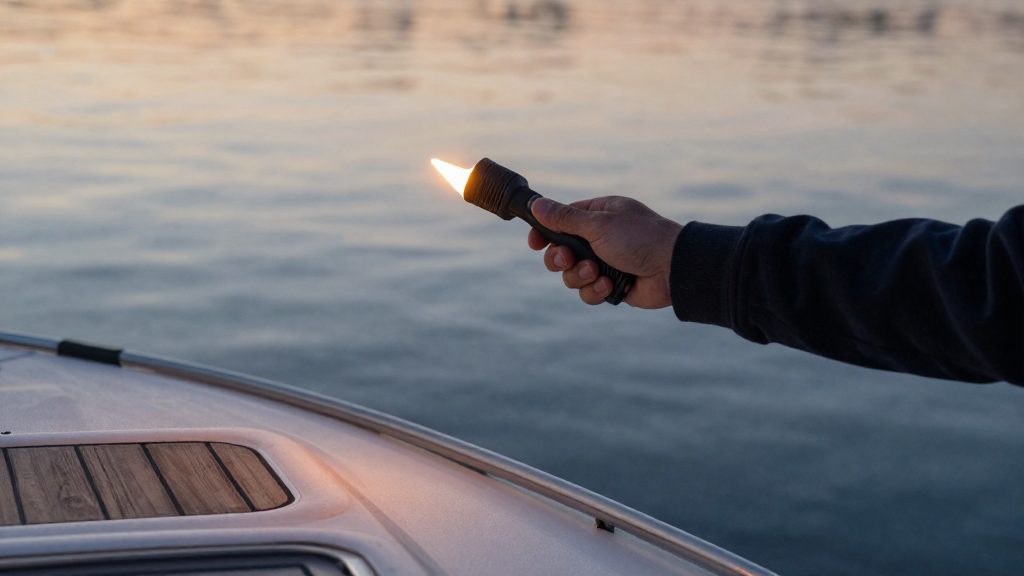
Once a flare is lit, keep the crew together, keep life jackets on, and stay with the boat unless staying aboard would be more dangerous. Keep the marine radio on channel 16 so that you can answer a rescuer, and be ready to give the vessel’s name, your position, the number of people on board and the nature of the problem. Watch for the approach of a vessel or aircraft and follow its instructions. Do not fire additional flares unless you can see that a rescuer is still trying to reach you, because each flare is a limited resource and a signal that has already been seen is no longer needed.
Note the time and your approximate position. This information helps rescue services understand the situation and is valuable if the emergency continues after the first flare has been seen.
How should you store and dispose of flares?
Transport Canada’s Safe Boating Guide (2026) states that pyrotechnic flares are good for four years from the manufacture date stamped on each flare, and that a flare should carry a Transport Canada approved stamp or label. Store them in a cool, dry, accessible place, in a watertight container. Replace any flare that has expired or is damaged before the season begins, and do not assume that an expired flare will still work.
Disposal is a separate question. The same guide recommends contacting the distributor for safe disposal, and many distributors accept expired flares from other manufacturers, sometimes for a fee. Do not put expired flares in household garbage, do not throw them overboard, and do not fire them to get rid of them. Collection events are held in some regions, but they are not guaranteed, so ask your distributor or your local authority first.
How do flares work with a radio call for help?
A flare attracts attention, while a radio call tells rescuers who you are, where you are and what help you need. The Canadian Coast Guard directs boaters to report emergencies on marine VHF channel 16 (156.8 MHz) to the nearest Marine Communications and Traffic Services centre. Where available, medium-frequency 2182 kHz or 4125 kHz can also be used. Some cellular carriers offer the *16 service to reach the Coast Guard, but that service may not be available everywhere.
Use the radio first whenever you can, and fire flares when rescuers are close enough to see them. A cell phone is a backup only and does not replace a marine radio for a distress call. Practise reading your devices and knowing where they are stowed before you need them, because a calm, well-rehearsed crew is far more effective than one that is searching for equipment during an emergency.
Frequently asked questions
Do personal watercraft need flares in Canada?
Under section 218 of the Small Vessel Regulations, a personal watercraft needs either a watertight flashlight or three pyrotechnic distress signals, with no more than one smoke signal, when everyone aboard wears a properly sized lifejacket or PFD.
Do paddleboards and sealed sit-on-top kayaks need flares?
Section 220 does not list pyrotechnic signals for these craft. It requires a watertight flashlight when the craft is operated after sunset, before sunrise or in restricted visibility, provided everyone aboard wears a properly sized PFD.
Is a cell phone enough to call for help on the water?
No. Coast Guard guidance names marine VHF channel 16 as the route for reporting an emergency, and the *16 cellular service may not be available everywhere, so a phone should be treated as a backup.