If your boat takes on water, act in a fixed order: announce the problem, start every pump or assign someone to bail, find where the water is coming from, and try to slow the inflow. If the flooding cannot be brought under control, call for help on VHF channel 16 or on the Canadian Coast Guard toll-free line, and prepare to ground the boat or abandon it if its stability is at risk. Transport Canada’s procedure for small vessels lists these steps, and the sections below explain how to carry them out safely.
Why does a boat take on water?
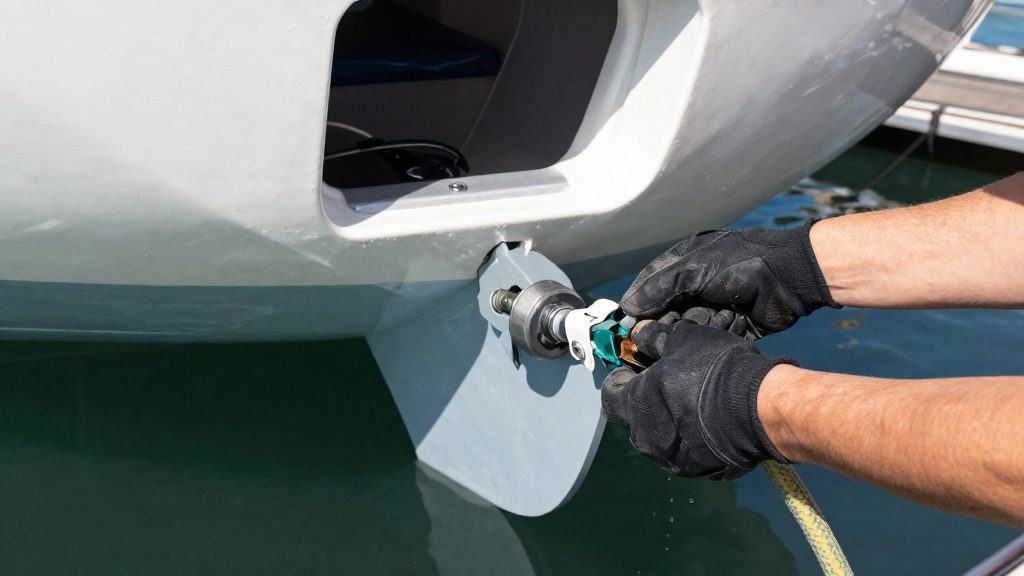
Water enters a hull through openings at or below the waterline. The most common routes are through-hull fittings and seacocks, the raw-water and cooling pipes that feed an engine, hose clamps that have loosened, drains, the rudder post and the propeller shaft seal. Transport Canada names these same components when it describes inspection points for small vessels, and a 2022 article from a Canadian boating magazine makes the same list.
Failures usually come from corrosion, vibration, ageing rubber hoses, or a knock that cracks a fitting. Some leaks are slow and show up only as a damp bilge. Others, such as a hose that slips off a fitting or a cracked through-hull, can admit water much faster than a standard bilge pump can remove it. The speed of the inflow determines how much time you have, so the first task is to judge how serious the leak is.
How do you react in the first minutes?
Transport Canada’s procedure starts with an announcement. Call out where the water is, for example “Water in the engine room”, so that everyone on board knows what is happening and can take a task. Then start the pumps or have someone start bailing by hand. Check that every bilge pump is actually running: a stuck float switch, a blown fuse or a pump with no power is a common reason a bilge fills unnoticed.
If generators or inverters are running, shut them down, as a 2022 Canadian boating magazine article recommends, to reduce electrical hazards in wet compartments. Put on lifejackets now rather than later, and keep everyone in the cockpit or on deck, away from the flooded area. Do not go below to look at the leak alone while the boat is still settling.
How do you find and slow the leak?
Once the pumps are working and people are safe, identify the source. Look first at the openings that are easiest to check: through-hull fittings, hose connections and clamps, and the shaft seal. If the leak comes through a seacock or a fitting that has a valve, close the valve, provided it is safe to reach and the leak is not coming from the valve body itself. If the water comes from the engine’s cooling or exhaust system, stop the engine and follow the engine manufacturer’s documentation before restarting it.
To slow the inflow, use what is on board: plugs, wedges, neoprene sheets, tape or sealants, as the 2022 article lists. A tapered wooden plug can close a hole in a pipe or a through-hull, and a sheet or cushion pressed over an opening can reduce the flow, but only if you can reach it without leaning into a fast-moving rush of water. Do not enter a flooded compartment that contains live electrical equipment, and do not stand on a sole that may give way.
When the flow is under control, keep watch on the repair. Temporary patches can shift or fail as the boat moves, so check the bilge level at regular intervals. A repair made in calm water with the boat secure is far more reliable than one made in a seaway, so pick a sheltered spot to do the work if you can.
When should you ground the boat or abandon ship?
Transport Canada advises considering grounding, or beaching, the vessel if you cannot bring the flooding under control. Beaching is a choice for shallow, sheltered water where the boat can rest without being broken up by waves or sharp rocks, and where everyone can reach the shore safely. Do not run the boat onto a rocky shore or into surf, because that can open the hull further.
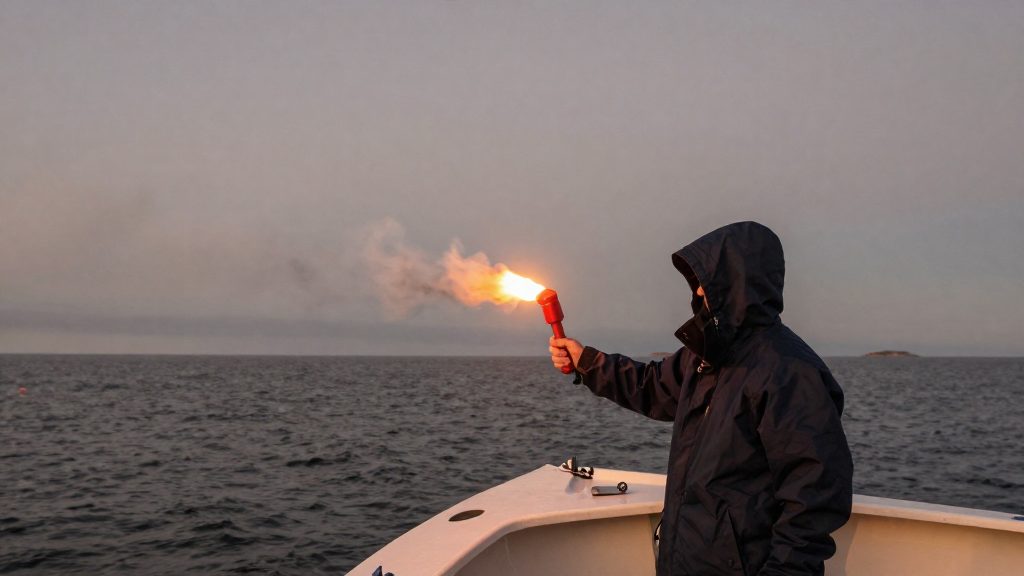
If the vessel’s stability is at risk, prepare to abandon ship. Warning signs include a list that increases as water moves to one side, water that rises faster than the pumps can remove it, and a boat that has lost buoyancy in the bow or stern. Take lifejackets, a means of calling for help such as a waterproof handheld VHF, and any grab bag or survival kit that is within reach. Leave while the boat is still stable enough to move away from it safely. The official sources consulted do not specify a fixed threshold for when to leave, so judge by the boat’s behaviour and the conditions around you.
How do you call for help?
VHF channel 16 is the marine distress channel. The Canadian Coast Guard states that it monitors channel 16 around the clock, and that on-water emergencies can be reported through marine VHF radio on channel 16 at any hour. Within Canada, the Coast Guard also lists a toll-free number, 1-800-267-7270, available 24 hours a day, 365 days a year, for reporting on-water emergencies.
Coast Guard rescue coordination centres are organised by region, and the Atlantic and Pacific coasts use separate lines. Check the Canadian Coast Guard website before your trip and save the number for the area where you boat, so you do not have to search for it during an emergency. If your radio has a digital selective calling (DSC) distress button, follow the set-up instructions in the radio’s documentation; the official sources consulted do not describe that procedure in detail.
Give the rescuers your vessel’s name, your position, the nature of the problem and the number of people on board. Keep the radio on channel 16 so that you can hear the reply, and send updates as the situation changes. A mobile phone can be a backup, but it may not reach a boat that is offshore, and a VHF call can also be heard by nearby boats that may be able to help.
Which bailing equipment must a Canadian boat carry?
Under the Small Vessel Regulations (SOR/2010-91), section 206, the required bailing equipment depends on the length of the vessel. A vessel up to 9 m must carry a bailer or a manual bilge pump. A vessel longer than 9 m and up to 12 m must carry a manual bilge pump or bilge-pumping arrangements. A vessel longer than 12 m must carry bilge-pumping arrangements. The regulation also contains exceptions for certain hull and cockpit types. Read the full text of the regulation on the Justice Laws website before you rely on an exception, and check the current version, since the text is amended from time to time.
Equipment that is legally required is not the same as equipment that works well. A hand pump that cannot reach the lowest point of the bilge, or a bailer stored in a locker you cannot open quickly, will not help in a real flood. Test the pump at the dock and make sure its hose and handle are where you can reach them.
How do you prevent flooding with regular checks?
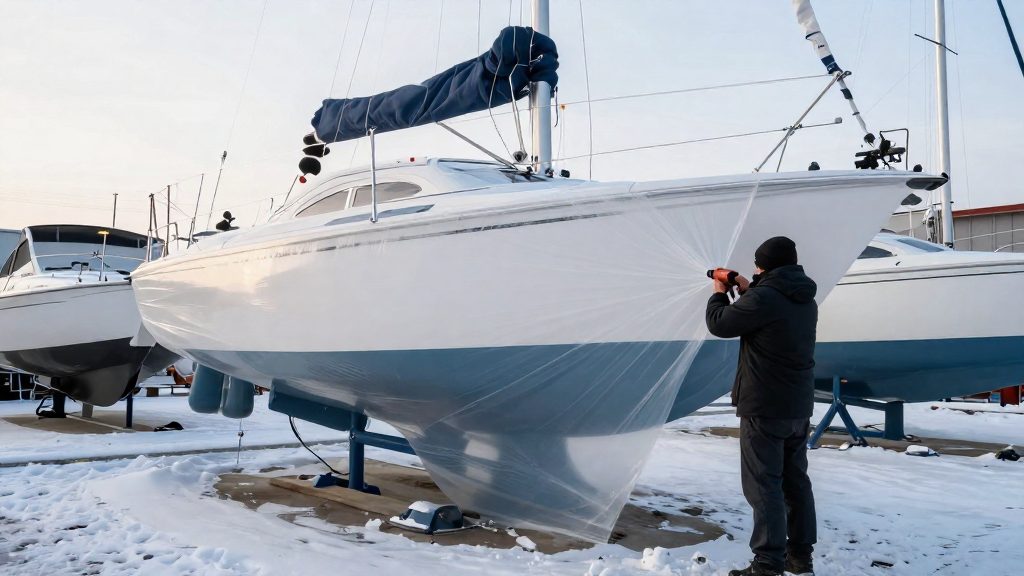
Most flooding emergencies start with a fitting that was never checked. Inspect the through-hulls, seacocks, piping, hose clamps, drains, rudder posts and shaft seals for leaks, corrosion and damage, and repair or replace any part that shows wear. A routine inspection before each season and after each haul-out is a good habit, and it complements the winter checks described in your boat’s maintenance documentation. Where the manufacturer specifies a service interval for a seacock or a shaft seal, follow that interval rather than waiting for a leak to appear.
Keep a damage control kit within easy reach, not stored at the back of a locker. It should hold the tools and materials for plugging holes and stopping leaks, such as wooden plugs of several sizes, wedges, a neoprene sheet, waterproof tape and a marine sealant that is suitable for your hull material. Check the kit at the start of each season, and replace anything that has dried out or degraded.
Finally, test your bilge pumps regularly. Run each pump with the boat in the water, confirm that the float switch lifts and the pump discharges overboard, and clean out debris from the bilge strainer.
What should you report after the incident?
Transport Canada’s procedure calls for an incident report form to be completed after a flooding event, and for the company and the authorities to be informed as necessary. Write down the time, the place, the probable cause, what you did and how long the boat took to come under control. These notes will help you explain the event to an insurer, a repair yard or an investigator.
The official sources consulted do not set out a deadline for recreational boaters to file a report, so check with the relevant authority if you are unsure whether a particular event must be reported. Before the boat returns to the water, have the source of the leak repaired properly, and have the fitting, hose or seal replaced to the manufacturer’s specifications rather than relying on the temporary patch.
Frequently asked questions
Should I shut the engine down when the boat is taking on water?
Stop the engine if the water is coming from its cooling or exhaust system, and follow the engine manufacturer’s documentation before restarting it.
Is a working bilge pump enough to stop a serious leak?
Not always. A pump can keep up with a small inflow, but a large breach can overwhelm it, which is why the procedure also requires you to find and slow the leak.
Does boat insurance cover damage from flooding?
That depends on your policy wording and on the cause of the flooding. Contact your insurer and keep your incident notes for the claim.
Can I call the Coast Guard with a cell phone instead of VHF?
You can use a cell phone as a backup, but VHF channel 16 is the distress channel that the Coast Guard monitors and that nearby boats can hear.