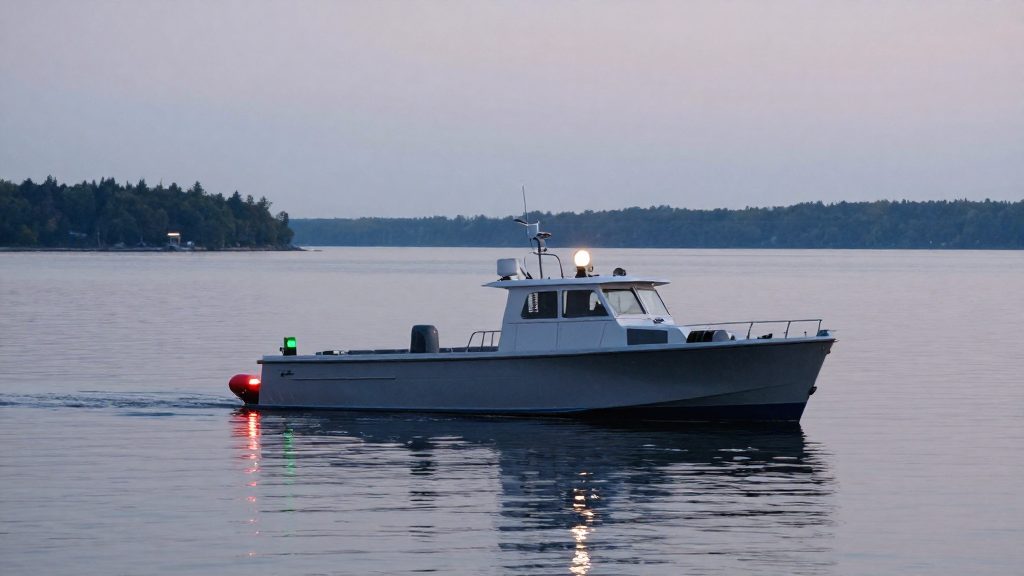
In Canada, navigation lights must be shown from sunset to sunrise, and Transport Canada also expects them to be shown in low visibility such as fog, smoke or falling snow. Which lights a boat carries depends on its length, how it is propelled and whether it is a power boat, a sailboat or a rowing boat. Under the Collision Regulations, a power-driven vessel under 12 metres may show an all-round white light and sidelights in place of the standard set, and a sailing vessel under 20 metres may combine its sidelights and stern light into one lantern at the top of the mast. The rules below come from the official text and can serve as a checklist before any evening outing.
When Must Navigation Lights Be Displayed?
Rule 20 of Schedule 1 to the Collision Regulations states that the rules on lights must be complied with from sunset to sunrise. Rules 23 and 25, which set the lights for power-driven and sailing vessels, apply to vessels underway, so the lights are the ones you show while the boat is moving. Transport Canada’s Safe Boating Guide (TP 511E) also addresses periods of low visibility, such as fog, smoke or falling snow, so you should not wait for full darkness before switching lights on.
The official sources consulted do not give a fixed clock time, because sunset and sunrise shift with the season and with your latitude. Before any trip that may run into the evening, look up the sunset and sunrise times for your area and your departure date, and allow a margin for a return that runs late or for fog that appears on the way back. Planning around the actual times is safer than relying on a habit of coming home before dark.
What Lights Does a Power Boat Need?
Under Rule 23(a), a power-driven vessel underway shows a masthead light forward, a second masthead light placed higher and further aft, sidelights, and a sternlight. A vessel under 50 metres does not need the second masthead light, so a typical recreational powerboat shows one forward masthead light, a green light on the starboard side, a red light on the port side and a white stern light. Rule 21 defines the masthead light as a white light placed over the fore-and-aft centreline of the vessel, and the sternlight as a white light placed as nearly as practicable at the stern.
Rule 22(c) sets the minimum visibility ranges for vessels under 12 metres. The masthead light, the sternlight, and any all-round white, red, green or yellow light must be visible at two miles, and each sidelight at one mile. Rule 22 also requires the lights to have the intensity specified in section 8 of Annex I. A light that looks bright on the dock can still fall short once it is installed, especially if a canopy, rigging or an added accessory partly blocks its arc. Check the arcs and mounting as you install, not only at the time of purchase.
How Do Power Boats Under 12 Metres Light Up?
Rule 23(d) allows a power-driven vessel under 12 metres to show an all-round white light and sidelights in place of the masthead, sidelight and stern light set. This option is designed for small power boats, and it is the one a Canadian boat under 12 metres will normally use.
Rule 23(d)(ii) goes further for a vessel under seven metres whose maximum speed does not exceed seven knots. It allows a single all-round white light, with sidelights shown if practicable. The Canadian modification in Rule 23(e) excludes Canadian power-driven vessels from this seven-metre option in any waters. A Canadian boat that is under seven metres and seven knots therefore cannot rely on the lone all-round light and should use the all-round light with sidelights instead. Check your boat’s length and maximum speed against the official text, not against a general summary. An all-round light must show an unbroken light over 360 degrees of the horizon (Rule 21(e)), so mount it where nothing blocks it.
What Changes in Great Lakes Basin Waters?
Rule 23(f) lets a power-driven vessel underway in the Great Lakes Basin use a single all-round white light, or two such lights placed no more than 800 millimetres apart horizontally, in place of the second masthead light and the stern light. The Canadian modifications also state that these all-round white lights must not be obscured. This provision applies only in the Great Lakes Basin. On other Canadian waters, the general rules and the under-12-metre option described above still govern, so a trip that crosses from one body of water to another requires you to follow the rules of each area you are in.
What Lights Does a Sailboat or Rowing Boat Show?
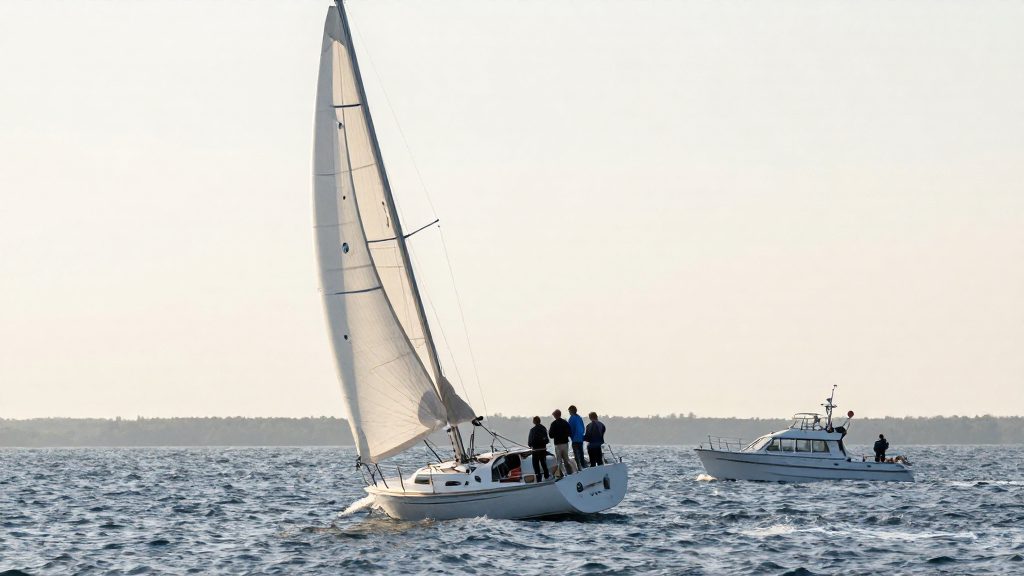
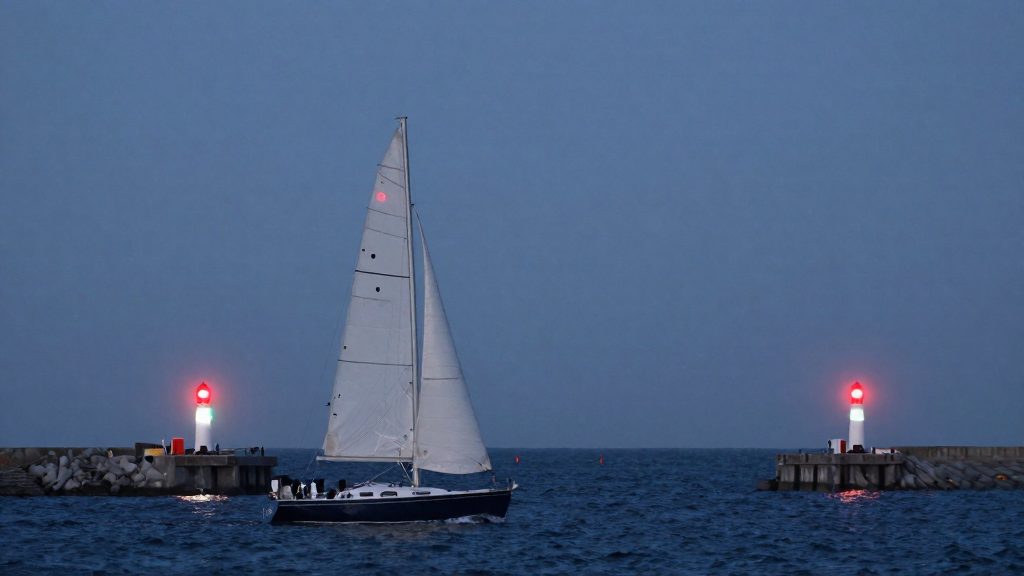
Under Rule 25(a), a sailing vessel underway shows sidelights and a sternlight. For a sailing vessel under 20 metres, Rule 25(b) allows these lights to be combined in one lantern carried at or near the top of the mast. This arrangement avoids the need to fit separate sidelights and a stern light on a small hull.
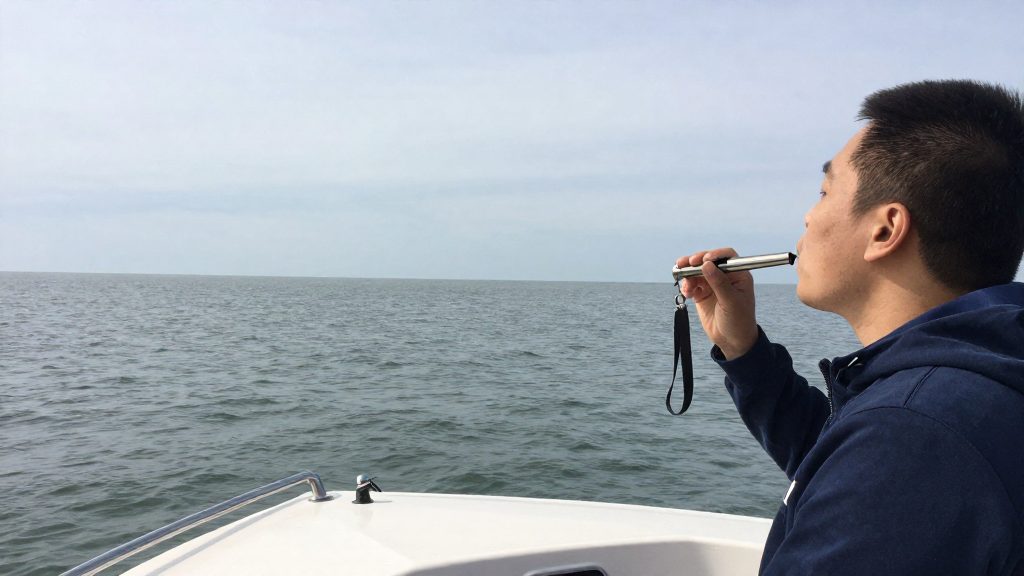
For a sailing vessel under seven metres, Rule 25(d)(i) requires the lights only if it is practicable to show them. If it is not, the vessel must have ready at hand an electric torch or lighted lantern showing a white light, exhibited in sufficient time to prevent a collision. Rule 25(d)(ii) gives the same logic for a vessel under oars: it may show the sailing lights, and if it does not, it must keep an electric torch or lighted lantern showing a white light ready at hand. The white light is not a substitute for watching the water. It is the signal that lets another vessel see you in time, so it should be shown well before the situation becomes urgent.
How Should You Check Lights Before a Night Trip?
Every light, shape and sound-signalling appliance required by the Regulations must meet the standards set out in Schedule 1 and its annexes, under section 6(1) of the Collision Regulations. Where a Canadian modification conflicts with the international text, the Canadian modification prevails, as section 3(3) provides. This means that a light you buy or fit should be checked against the Canadian text, not only against a label that says it is marine.
Before leaving the dock at night, switch on each light and confirm its colour and position. Check that the masthead light, the sidelights and the stern light are not hidden by a canopy, a cover or a line, and that the all-round light is unobstructed. Carry a spare torch or lantern with fresh batteries, because it serves both as a backup and as the white light required for a sailing or rowing vessel in some cases. For installation height, arc widths, electrical ratings and wiring, the official sources consulted do not give figures, so use the manufacturer’s documentation to get the exact specification and to confirm that the fitted light meets the standard.
When Should You Postpone a Night Trip?
Decide before you leave. If a required light is missing, dim, or cannot be mounted so that it meets the arc and range requirements, the safer choice is to stay at the dock until the repair is done. The same applies if the forecast or the conditions at departure point to fog, smoke or falling snow during the trip or on the return. A shorter route in daylight is often a better plan than an evening crossing that depends on lights you have not tested. Lights are only useful if they are working, visible to other vessels and checked before you depend on them.
Frequently asked questions
What should I do if a navigation light fails after dark?
Reduce the risk by keeping clear of traffic, returning to a safe place as soon as it is practical, and showing a bright white torch or lantern so that other vessels can see you while you do so. These are general seamanship steps; the official sources consulted do not set a specific procedure for this situation.
Do the same lights apply when my boat is anchored overnight?
The rules quoted above are written for vessels underway. The official sources consulted here do not set out the anchor-light requirements in full, so check Transport Canada’s current Safe Boating Guide before anchoring overnight.
Do commercial or fishing vessels follow the same rules?
The lighting rules discussed here apply to vessels in general, but the guide cited is written for recreational boating. Commercial and fishing vessels can have additional requirements, so check the rules that apply to your vessel category before using this checklist.