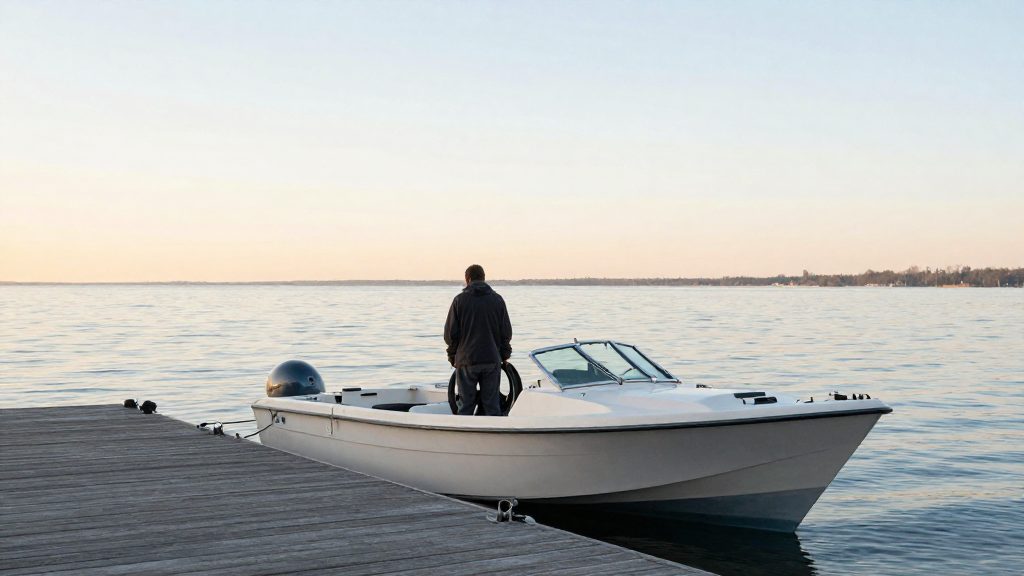
In Canada, anyone who operates a power-driven boat must have proof of competency on board. The most common proof is the Pleasure Craft Operator Card (PCOC), earned by passing a test with at least 75 per cent, after a course or self-study, through a Transport Canada accredited provider. Non-powered craft do not require proof, and the card does not expire. This guide explains who is covered, the routes to competency, how visitors are treated and what to carry, based on Transport Canada guidance and the Competency of Operators of Pleasure Craft Regulations.
Who needs proof of competency?
Section 3 of the Competency of Operators of Pleasure Craft Regulations sets the basic rule: no person may operate a pleasure craft unless they are competent under section 4 and carry proof of competency on board. The person in charge of a craft must also not allow someone else to operate it unless that person meets the competency requirements (Justice Laws Website, 2026). The duty therefore does not end with the person at the helm.
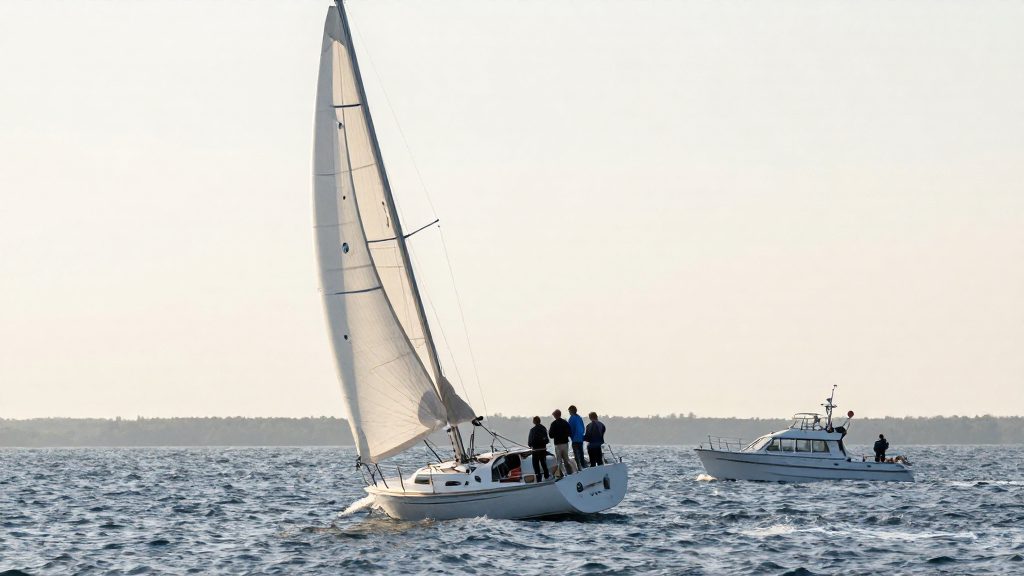
The requirement depends on propulsion. A craft without a motor does not need proof. Paddling a craft fitted with a motor does need proof, even if the motor is switched off. A sailboat with an auxiliary motor also needs proof, even when you are sailing and not using the motor (Transport Canada, 2026). If you are unsure whether a boat counts as power-driven, treat a fitted motor as the deciding factor and assume proof is required until you have checked the official guidance.
What counts as competency?
Under section 4(1), a person is competent if they have received a mark of at least 75 per cent on a test and have been issued a Pleasure Craft Operator Card. The PCOC is the card a course provider issues to attest to that result, and it is the document most boaters will carry (Justice Laws Website, 2026).
The regulations recognize two other routes. The first is a recreational boating safety course completed in Canada before April 1, 1999, discussed further below. The second is a rental route for people hiring a boat from a rental agency. It is limited to the rental period and is described in the final part of the section on what to carry on board.
How do you get a PCOC?
You have two ways to prepare for the test. You can take a course in person, online or by correspondence, and then pass the test at the end. Or you can study on your own and sit the test. Training and testing are available only through Transport Canada accredited providers, so confirm that a provider is accredited before you enrol (Transport Canada, 2026).
You may retake the test as often as needed, but only once in any 24-hour period. If you do not pass, plan your next attempt for the following day rather than trying again the same day.
Challenging the test without a course is allowed only in person, under the supervision of an accredited provider. Online challenges are not permitted (Transport Canada, 2026).
Course providers set their own fees, and according to Transport Canada none of those fees go to the federal government. Courses must be taken in Canada, and a certificate from another training system cannot be exchanged for a PCOC (Transport Canada, 2026). When comparing providers, check what the course covers and how the test is delivered, not only the cost.
Why is the card valid for life, and what if it is lost?
Transport Canada describes the PCOC as good for life, so there is no renewal date to track (Transport Canada, 2026). Because the card is your proof on board, a lost or damaged card should be replaced before your next outing. Contact the accredited provider that issued it. Only currently accredited providers can issue a replacement, and they charge a fee for it (Transport Canada, 2026).
If you hold a recreational boating safety course certificate from before April 1, 1999, you do not need a new course or test. If the certificate lacks a completion date and the provider still exists, the provider can issue one with the correct date. If that is not possible, you need a PCOC (Transport Canada, 2026).
When do visitors and non-residents need to comply?
The rules apply to a non-resident in two situations: when they operate in Canadian waters for more than 44 consecutive days, meaning from the 45th day onward, or when the craft is licensed or registered in Canada, including rentals and charters. A foreign-licensed boat operated for fewer than 45 consecutive days is exempt from the operating prohibition, but the operator must carry proof of residence on board at all times (Justice Laws Website, 2026; Transport Canada, 2026).
Proof of residence is a passport, a driver’s licence or another official government document that sets out the person’s place of residence (Justice Laws Website, 2026).
A non-resident is also treated as competent under section 4(2) if they hold a certificate that meets the requirements of their home state or country. The foreign document must meet those requirements to count, so holding a card is not enough by itself (Justice Laws Website, 2026).
What must you carry on board, and when are you exempt?
Proof of competency must be on board whenever you operate a power-driven craft (Justice Laws Website, 2026). Depending on your situation, that proof takes one of several forms:
- A PCOC, which is the usual document.
- A certificate on the official list of accepted certificates, carried together with photo ID (Transport Canada, 2026).
- For a non-resident, a PCOC, a completed rental boat safety checklist for a power rental, or an equivalent card from the home state or country (Transport Canada, 2026).
- For a rented craft, the rental boat safety checklist, completed and signed by you and the rental agency or its representative before you operate the boat. You may operate the craft only during the rental period (Justice Laws Website, 2026).
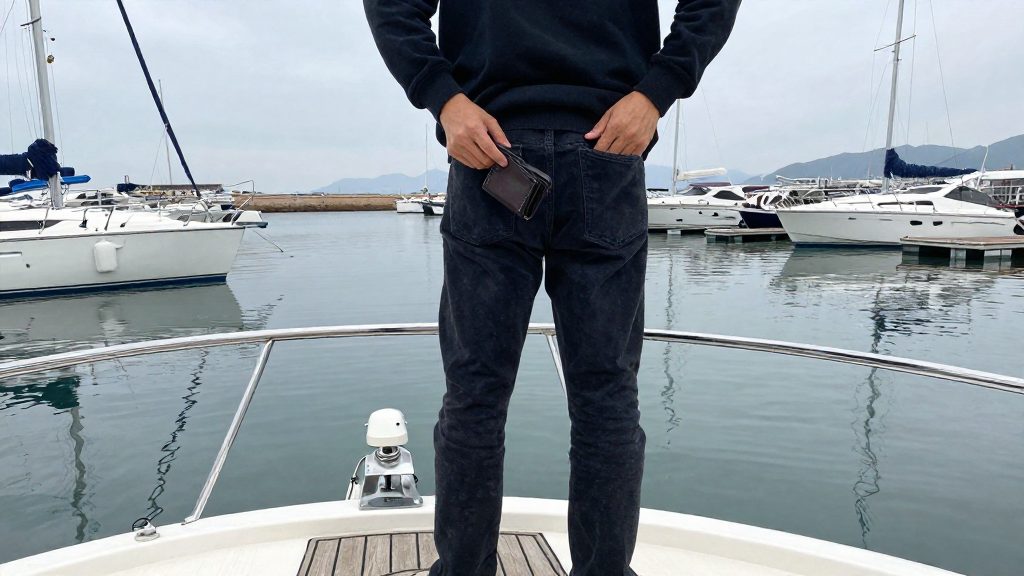
You are also exempt from carrying proof while operating under the supervision of an instructor as part of an accredited course (Justice Laws Website, 2026). Proof is useful only when you can produce it on the water, so keep your documents in a waterproof holder with your photo ID, not at home or in a vehicle.
When should you check your status before a trip?
Before you launch, work through four checks using the sections above. First, is the craft power-driven, including one with a motor that is fitted but switched off? Second, are you a Canadian resident, and if not, is the craft licensed or registered in Canada, or will you be in Canadian waters for more than 44 consecutive days? Third, does your document meet the requirements of its issuing jurisdiction, or is it on the official list? Fourth, do you have the right document on board, with proof of residence where that applies?
If any answer is unclear, read the current Transport Canada FAQ and the regulation text before you go. Rules can change, so confirm the wording you rely on rather than relying on memory or secondhand summaries.
Frequently asked questions
Do passengers need a Pleasure Craft Operator Card?
The operating prohibition in section 3(1) of the regulations applies to the person operating the craft. Passengers who are not operating the boat are not required to hold a card, but anyone who may take the helm should confirm their status first.
Is proof of competency required in Nunavut or the Northwest Territories?
According to Transport Canada, proof of competency is not currently required in Nunavut or Northwest Territories waters. Check the current guidance before you travel, since rules can change.
Will a Canadian PCOC be accepted in the United States?
The official sources consulted do not specify whether a Canadian PCOC is recognized abroad. Check with the authority of the country where you plan to boat before you travel.