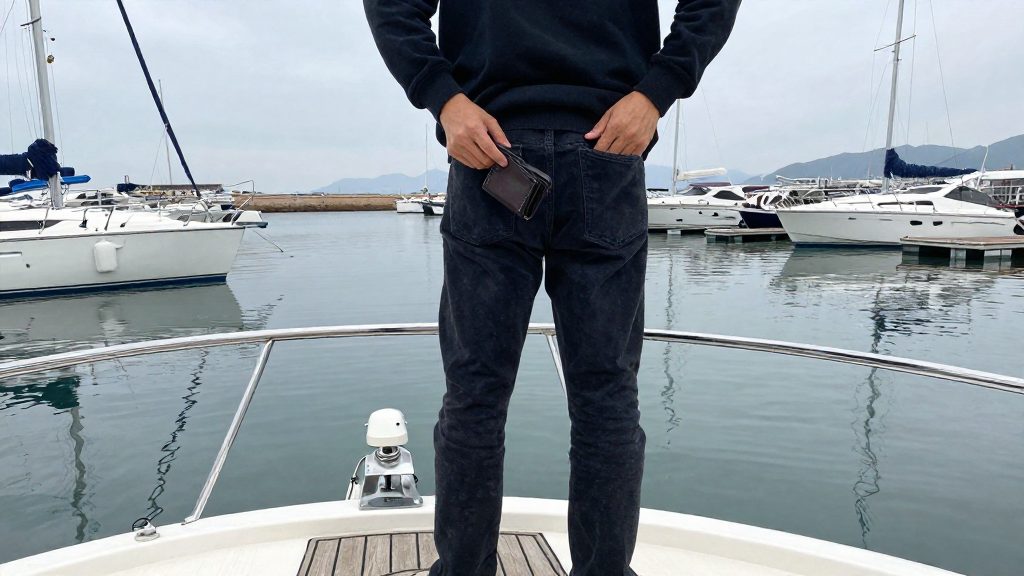
If you lose your Pleasure Craft Operator Card (PCOC), the replacement comes from the course provider that issued your original card. According to Transport Canada (2026), only currently accredited course providers may issue replacement cards, and they charge a fee for doing so. The process is therefore a matter of identifying one provider and contacting it, not of applying to a government office. Start as soon as you notice the loss, because nothing else you carry on board can take the place of the card itself.
Is a lost Pleasure Craft Operator Card still valid?
The card does not expire. Transport Canada (2026) states that a PCOC is good for life, so losing the physical card does not cancel the qualification it records. The difficulty is practical rather than legal. The original card is the proof the official sources describe, and the official sources consulted do not describe any temporary substitute issued while a replacement is pending. Until you have the new card, avoid operating a motorized boat unless you fall within one of the exemptions described below, because you would have no accepted proof of competency.
How do I request a replacement card?
Contact your course provider, tell it that your card was lost, and ask for a replacement. Have your full name and the approximate date and location of your course ready to help the provider find your record. The official sources consulted do not list the documents a provider requires, so ask directly which proof of identity it accepts. Ask too whether a replacement requires you to retake any part of the course, since the official sources consulted do not say.
Fees are set by each provider and vary. Transport Canada (2024) states that the Government of Canada does not collect any fee for boating safety courses, tests or cards, so the only charge you face is the provider’s own. Ask for the fee and the expected turnaround before you pay, and keep the answer in writing. The official sources consulted do not give a processing time, so you cannot assume the card will arrive by a given date.
How do I find my original course provider?
If you do not remember which provider issued your card, use Transport Canada’s Course Provider Lookup tool at https://eve.tc.canada.ca/en/pcoc-ccep. Search with whatever you remember, such as the city where you took the course or the name printed on your course paperwork. Matching a provider this way is the fastest route to the correct contact.
If the tool does not return a match, contact the Office of Boating Safety through the contact page on the Transport Canada website. Transport Canada directs all inquiries other than card replacement to that office. The Transport Canada page also lists the Infoline number 1-800-267-6687, which it gives for requesting the list of accredited providers. That list is a useful way to confirm whether a provider is still accredited before you contact it.
What if my course provider has closed?
The official sources consulted do not specify a replacement procedure for a provider that has closed or lost its accreditation. Because only currently accredited providers may issue replacements, a closed provider cannot issue one. In that case, write to the Office of Boating Safety with your full name, the approximate course date, and the name of the former provider, and ask which options apply to you. Keep a dated copy of your message and any reply.
Be cautious with third parties. Do not pay a company that offers to produce a replacement card unless you have confirmed, with Transport Canada, that it is an accredited provider. A card issued outside the accredited system would not be the replacement the official sources describe, and you could lose both your money and the time you need to get the correct document.
Can I use a photocopy or a photo as proof?
No. Transport Canada (2026) states that a paper or electronic copy of a PCOC is not acceptable as proof of competency. A photocopy, a scan, or a picture stored on your phone therefore does not satisfy the requirement, even if it is perfectly legible. Because the original is the only document that counts, keep it with you when you go out, and treat any copy as a personal reference rather than a substitute.
Who needs proof of competency on the water?
The requirement applies to anyone operating a recreational boat fitted with a motor. Transport Canada (2024) states that everyone who operates a power-driven boat needs proof of competency. Sailboats are covered when they carry an auxiliary motor, even when you are under sail. The rule therefore does not depend on whether the engine is running at the time you are checked.
Electric trolling motors need careful reading. The main Transport Canada page refers to pleasure craft fitted with a motor and does not name electric trolling motors specifically. Other summaries of the guidance say they are covered. Until you have confirmed the position with the Office of Boating Safety, assume that a boat with a trolling motor requires proof.
Two exemptions are set out in the official guidance. First, proof of competency is not required in the waters of Nunavut and the Northwest Territories at this time. That wording suggests the position may change, so check before you travel there. Second, visitors are exempt: a non-resident operating a boat brought into Canada for less than 45 consecutive days does not need a PCOC. This exemption carries a condition. Transport Canada (2026) states that proof of residence must be on board at all times, so a visitor who cannot show it should not assume the exemption applies.
When should you request a replacement?
Request the replacement as soon as you realize the card is missing, and before the first time you plan to operate a motorized boat in Canadian waters. The official sources consulted do not give a processing time, so do not plan a trip around the expectation that a replacement will arrive in time. If your departure is close, contact the provider by telephone as well as in writing, and note the date and the name of the person you spoke with. That record is useful if the replacement is delayed or if you later need to contact the Office of Boating Safety.
How can I avoid losing the card again?
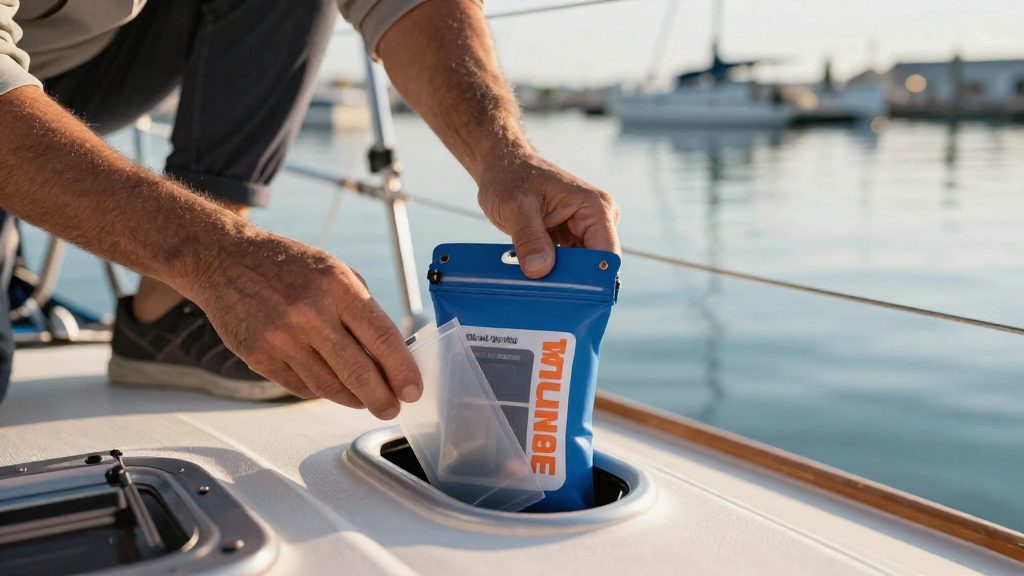
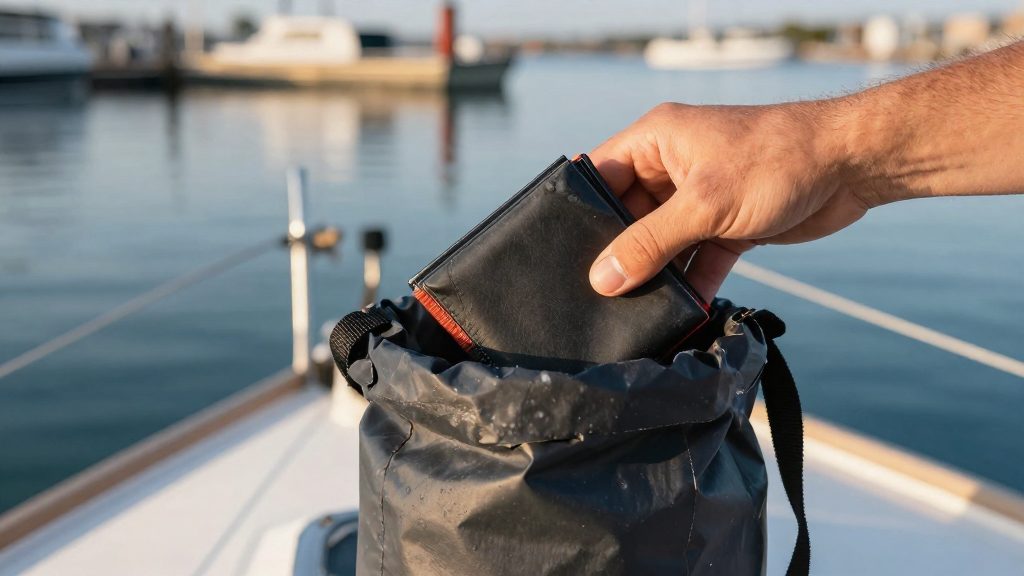
The following habits are practical suggestions rather than legal requirements. Store the original card in a waterproof pouch in the same place each season, and keep it apart from the loose papers you carry on the boat, so it is not lost when you clear out a locker or tidy the cabin. Record the provider’s name, the course date, and the provider’s contact details on a note at home or in your phone. With that information on hand, a future replacement is quicker, because you will not have to search for the provider as you did this time.
Frequently asked questions
What if my card was damaged rather than lost?
Transport Canada’s page refers to requesting a replacement from your course provider for lost or destroyed cards. The official sources consulted do not separately describe damaged cards, so contact your provider and ask whether it needs to see the damaged card.
Can any accredited provider issue my replacement card?
The official sources consulted refer to your course provider and do not say whether another accredited provider can issue a replacement. Ask your original provider first. If it has closed, contact the Office of Boating Safety.
Does the visitor exemption cover a rented boat?
The official sources consulted do not address rented boats. Before relying on the 45-day exemption for a rental, confirm the position with the Office of Boating Safety, and check that you meet the proof-of-residence condition.