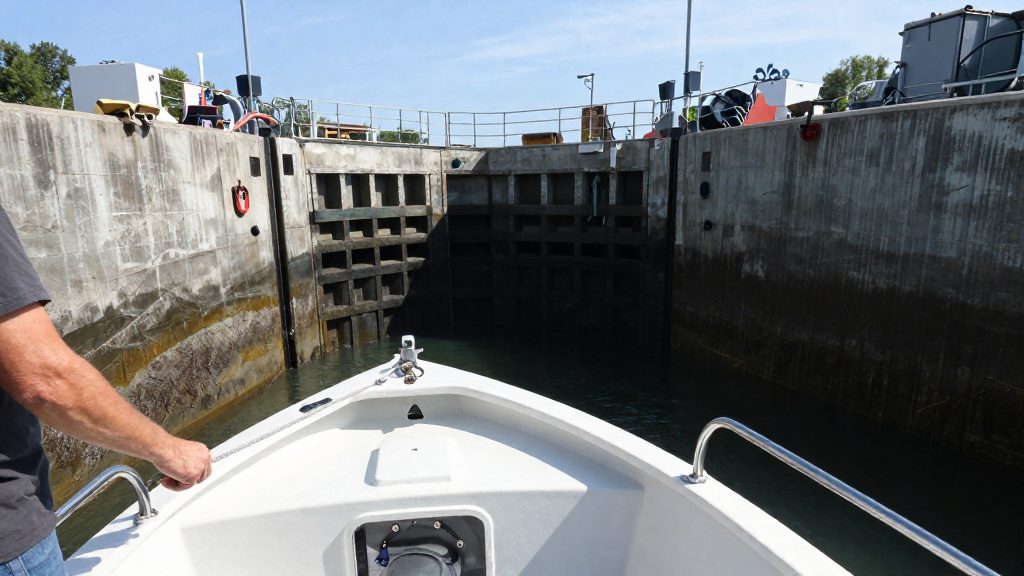
Planning a Trent-Severn Waterway trip comes down to four checks before you leave: whether your boat fits the channel and the locks, whether you need a Pleasure Craft Licence, which lockstation hours apply to your dates, and where the posted speed zones are. According to Parks Canada, the channel is 2.4 m deep at Locks 1 to 19 and 1.8 m deep at Locks 20 to 45, and the minimum fixed bridge clearance is 6.1 m. These are published minimums and conditions can change, so confirm them on the day you sail.
What is the Trent-Severn Waterway?
The Trent-Severn Waterway is a National Historic Site managed by Parks Canada. It runs between Trenton on Lake Ontario and Port Severn on Georgian Bay and links rivers, lakes and canals across central Ontario. The route is not one open channel: it is a chain of locks, flight locks, lift locks and a marine railway. The best-known lift is the Peterborough Lift Lock, which has the highest lift on the system at 19.8 m (65.4 ft), according to Parks Canada. Because much of the route is a managed canal system, your timing depends as much on lockstation schedules and crew availability as on distance.
Why do depths and clearances decide your route?
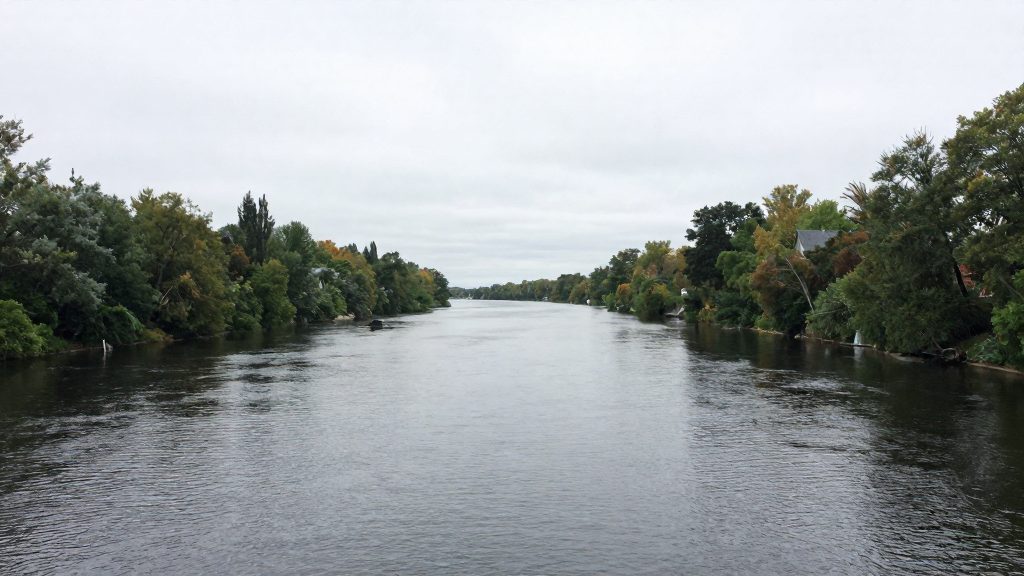
Channel depth is not uniform. Parks Canada gives 2.4 m (8 ft) under normal conditions for Locks 1 to 19 and 1.8 m (6 ft) for Locks 20 to 45, and warns that some stretches between Locks 19 and 45 may be shallower. The Murray Canal is listed at 2.7 m (9 ft), and the secondary route from Sturgeon Lake to Port Perry at about 1.22 m (4 ft). Parks Canada does not guarantee depths. Operators with a draft of 1.5 m (5 ft) or more are asked to call before navigating.
Overhead clearance is the other limit. The minimum fixed bridge clearance is 6.1 m (20 ft), so measure your highest point with the mast, antennas and any canopy in place, not the hull alone. Lock 45 at Port Severn is listed with an operational length of 25.4 m (84 ft) and a width of 7 m (23 ft). A boat that fits the lock on paper can still be a poor fit if it is close to those dimensions and carries a wide swim platform or davits, so check the overall beam and length against the Parks Canada figures before you commit to a route.
Can your boat use the Big Chute Marine Railway?
Big Chute is a marine railway that carries boats overland between two levels instead of through a lock. Parks Canada gives its limits as 90 tonnes, 30.3 m (100 ft) in length and 7.3 m (24 ft) in beam. Vessels over 68 tonnes, vessels with unusual hull configurations, and vessels that may be difficult to lift by sling must contact Trent-Severn Waterway headquarters first. For these vessels, Parks Canada asks for 48 hours’ notice through the Big Chute line. A boat that is near the limits should not arrive at the site expecting to be handled on the spot.
How do you lock through safely?
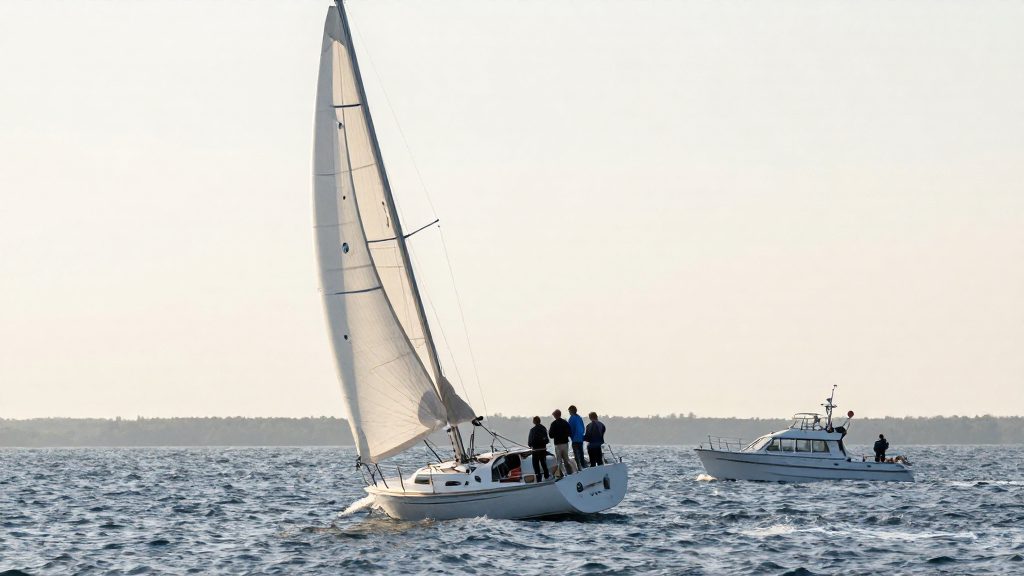
Locking is where most conflicts between boats happen, so slow down early and keep your hands and lines inside the boat. When you leave a lock, Parks Canada asks boaters to proceed slowly and watch for other boaters and paddlers, who may be sharing the same exit. Before departure, Parks Canada tells boaters to review its Boating Safely brochure, which covers locking through, buoys and beacons, speed zones and wake restrictions. Read it with your crew, not just the skipper.
Staffing also varies with the season. During peak season, lock and bridge stations operate on an upon arrival basis, and mobile crews move between stations to run lockages in series with grouped boats. In the shoulder season, some stations are run by mobile crews, and each station operated this way has a posted phone number that connects you to lock staff for an estimated lockage time. Call ahead in that period rather than waiting at the wall.
What licence and safety equipment do you need?
Transport Canada states that a boat needs a Pleasure Craft Licence if its engines total at least 10 horsepower (7.5 kW), even temporarily, and it is mainly operated and maintained in Canadian waters. A registered craft does not need a licence, and a Canadian craft cannot hold both. New, transferred and renewed licences are valid for 5 years. Transport Canada also notes that a craft without a valid licence may be fined $250. Carry a copy of the licence on board and display the vessel markings it requires.
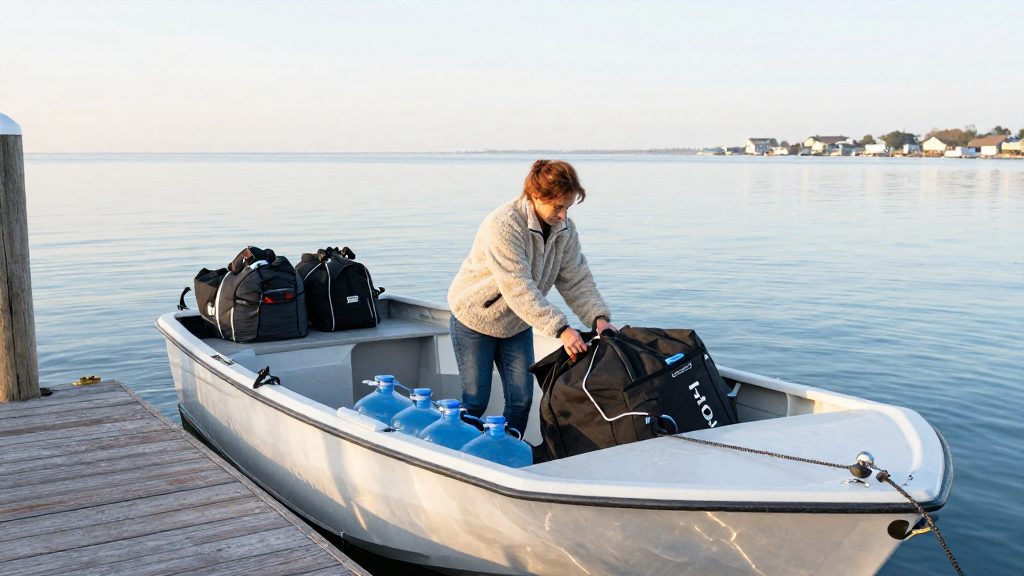
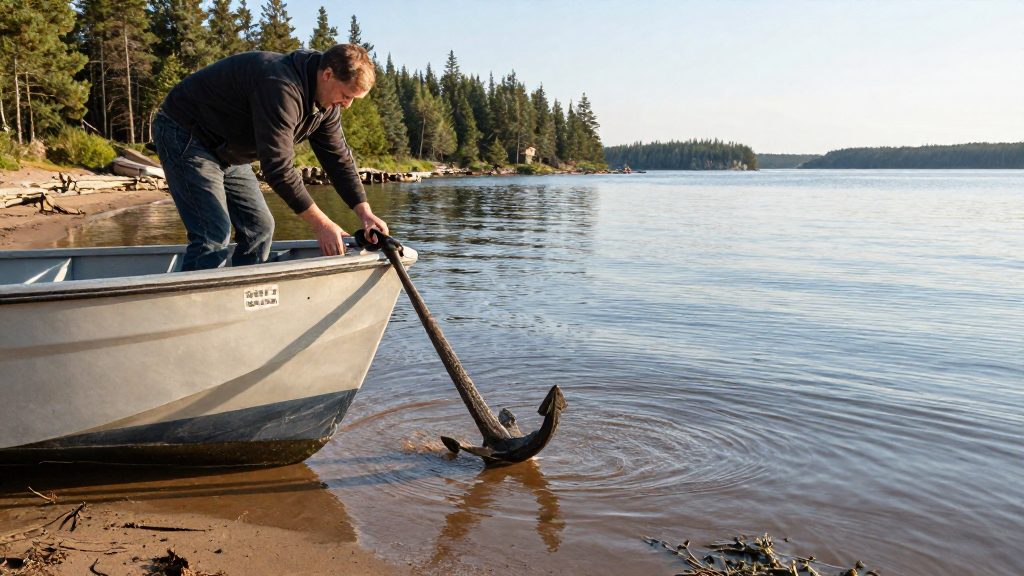
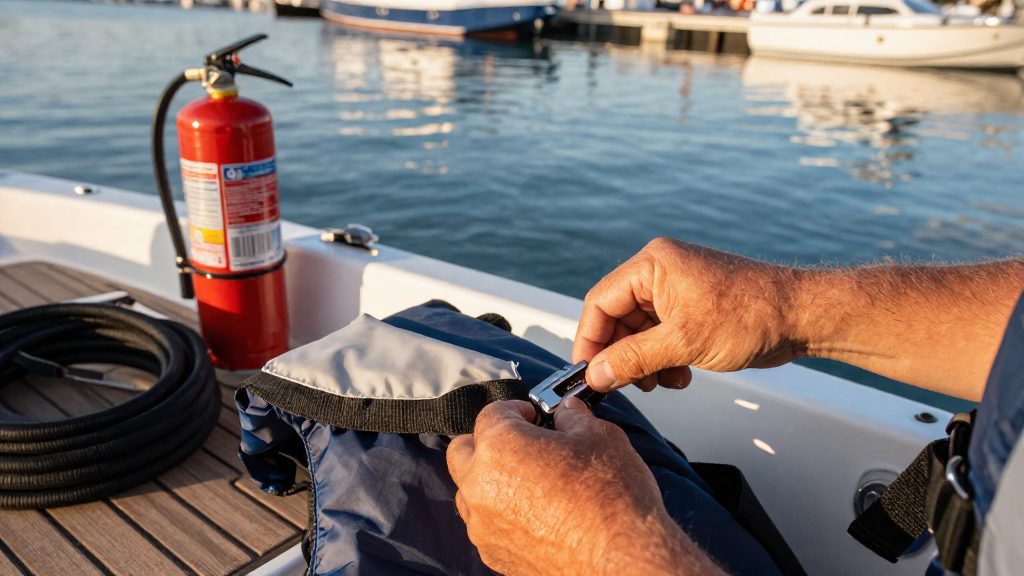
For motorized craft no greater than 6 m (19 ft 8 in), Transport Canada’s mandatory safety equipment page lists the following: one appropriately sized Canadian-approved personal flotation device or lifejacket for each person on board, which must be worn at all times if inflatable; a sound-signalling device; navigation lights for use between sunset and sunrise or in reduced visibility; a waterproof flashlight or three Canadian-approved flares; a 5BC fire extinguisher where the boat has an inboard motor, a fixed fuel tank, or a fuel-burning cooking, heating or refrigeration unit; a bailer or hand pump; a buoyant heaving line 15 m long; and a manual propelling device or anchor with at least 15 m of rope, cable or chain. Requirements change with length and power, and the page does not cite the regulation it summarizes, so check the current Small Vessel Regulations and the table for your boat’s size before departure.
How fast can you go, and how do you handle wake?
Parks Canada says more than 75 speed zones are posted along the navigation channels. Boundary markers show where a zone starts and ends, and circular signs repeat the limit inside it. On the two canals the posted limit is normally 10 km/h (6 mph), and police patrol these zones and may charge boaters who exceed the limit. Parks Canada states that the zones are regulated under the Boating Restriction Regulations. The official sources consulted do not provide a single consolidated list of every zone, so confirm the current text on the Justice Laws website before relying on a specific segment.
Wake is handled through conduct rather than a published height or speed figure. In no-wake zones, near shore, in narrow channels, and near other boats, swimmers or docks, Parks Canada says to operate as close to dead slow as possible while keeping control of your vessel. Several other restrictions apply on the navigation channel. Water-skiing and towing are not permitted there, and there is no swimming, diving or jumping in a navigation channel or within 40 m of a lock gate or dam. Fishing is not allowed within 10 m of a lock or approach wharf. Excessive noise is prohibited from 11 p.m. to 6 a.m., and open liquor is not allowed on a moving vessel.
When should you plan around lockstation hours?
Parks Canada identifies July and August as peak season on the waterway. Its 2026 hours page divides the navigation season into three blocks. From May 15 to June 18, lockstations run Monday to Thursday from 10:00 am to 3:30 pm, and Friday to Sunday and Victoria Day from 9:00 am to 6:30 pm. From June 19 to September 7, the schedule runs Monday to Thursday from 9:00 am to 5:30 pm, and Friday to Sunday plus Canada Day, Civic Holiday and Labour Day from 9:00 am to 6:30 pm. From September 8 to October 12, the schedule is Monday to Friday from 10:00 am to 3:30 pm, and Saturday, Sunday and Thanksgiving from 9:00 am to 4:30 pm.
Treat these blocks as the planning window, not a guarantee. Parks Canada states that opening, closing and lockage times are not guaranteed. The official sources consulted do not give a standard one-way duration for the trip, so estimate your own time from your cruising speed, the number of lockages and any waiting at the walls. These hours apply to 2026; the 2027 schedule was not available in the sources consulted, so check Parks Canada’s hours page before you book.
Where do you moor, and what permits apply?
Parks Canada lists lockage permits and mooring permits, with information on where to obtain them. Its navigation pages also describe overnight mooring docks, a maximum mooring time and a check-in and check-out process. The official sources consulted do not specify the permit requirements, the maximum mooring time or the check-in rules in detail, so confirm them with Parks Canada before you arrive at a dock. Parks Canada’s Trent-Severn Waterway headquarters in Peterborough can be reached at 705-750-4900, or toll-free at 1-888-773-8888, Monday to Thursday from 8:00 am to 4:00 pm, subject to availability.
Frequently asked questions
Do paddlers need a Pleasure Craft Licence or the full safety kit?
Transport Canada’s safety list says the licence and the flashlight or flare items do not apply to craft with no motor, such as a canoe or kayak. Any craft on the water still benefits from a lifejacket and a sound-signalling device.
Can you travel the waterway outside the navigation season?
The 2026 schedule ends on October 12, but the official sources consulted do not describe winter access rules. Confirm with Parks Canada before any late-season trip and do not assume lockstations will be open.
Where can I find the exact fines for speeding or wake offences?
The official sources consulted do not give verified amounts in a usable form. Check Parks Canada’s fines page and the consolidated Historic Canals Regulations on the Justice Laws website.